Posted on — Leave a comment

How Much Does a Custom Name Rug Actually Cost?

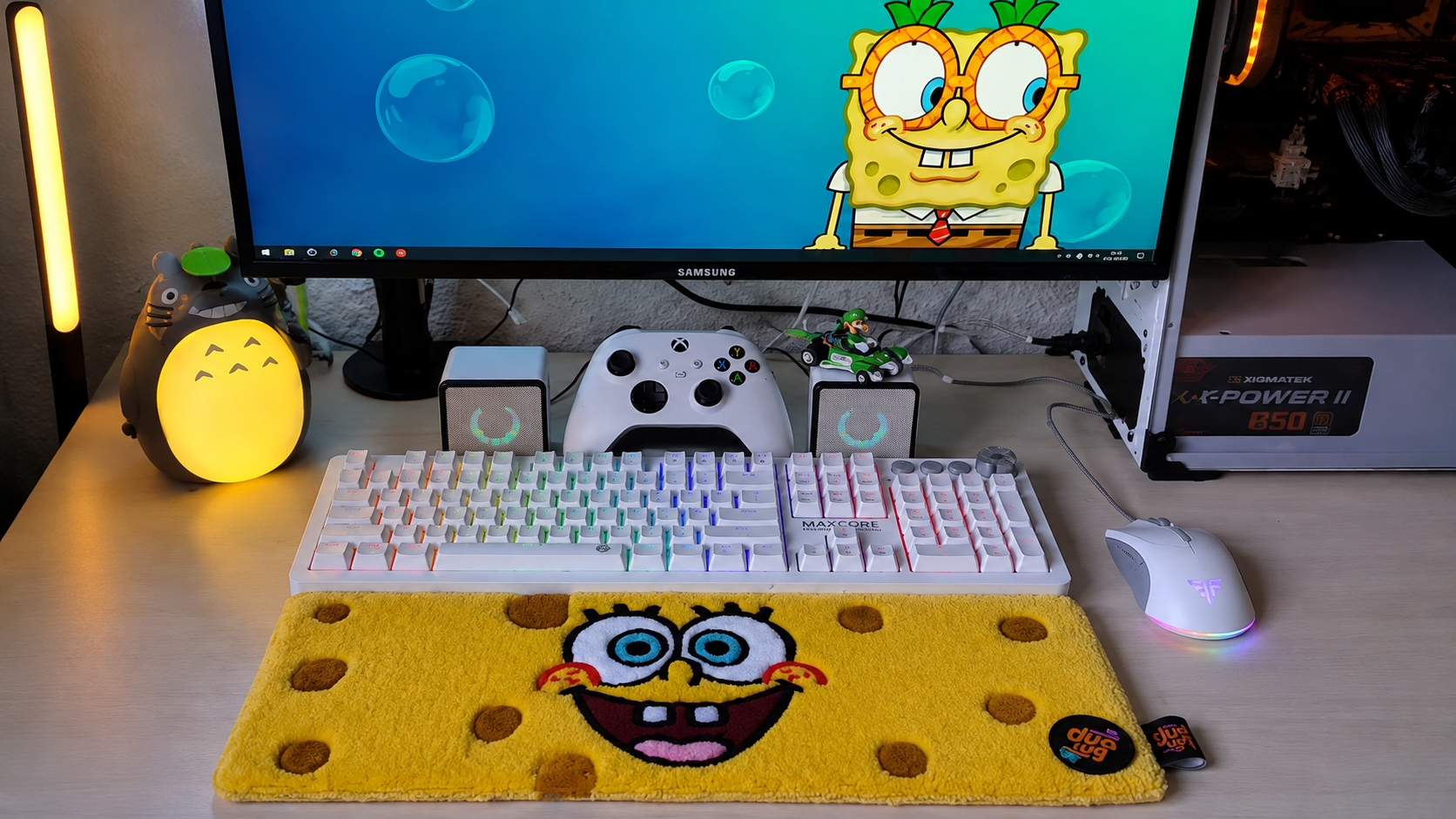
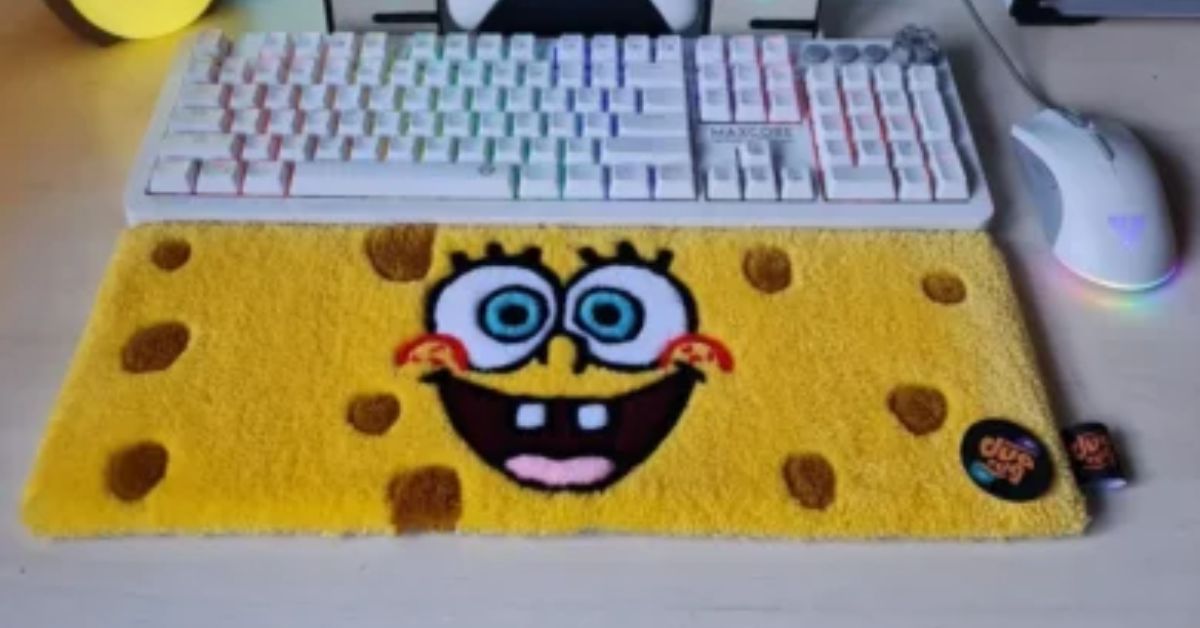
Yellow SpongeBob custom rug on a desk

Custom-name rugs proved to be very much in demand in the market for nurseries, children’s bedrooms, and entrance areas.

However, since each rug is custom made, there cannot be a price for all of them. Your final quote depends on a handful of specific factors and understanding them upfront helps you budget realistically before you order.

Quick Takeaways

  • No fixed price exists for custom name rugsyour final quote depends on size, material, design complexity, and customization requirements.
  • Size and material are typically the two biggest cost drivers.
  • Lettering and design complexity (use of fonts, additional decorations, colors), although not necessarily, as plain text designs have similar prices as standard custom carpets.
  • The technique of construction (whether the rug is made by tufting, knotting by hand, or printing) has an effect on the price and texture of the rug.

What Determines Your Custom Name Rug’s Final Quote
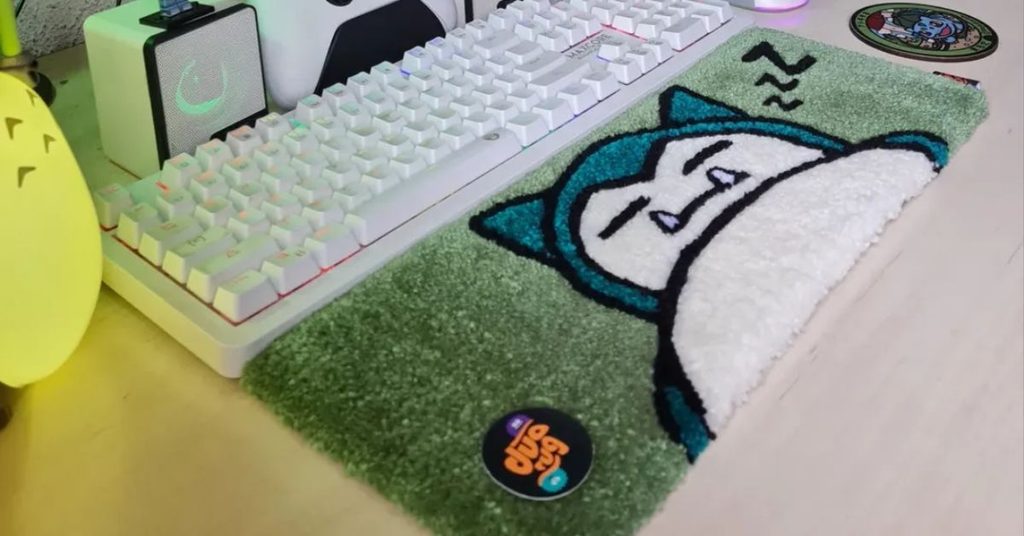
Custom name rug with cartoon design on a desk

The reason why personalized name rugs are quoted on price is because they are made to order and not produced in bulk like other products; hence, there are certain things that determine their prices:

Size

Bigger rugs require more raw materials and take more time to be made; therefore, size has a direct impact on pricing. A nursery accent rug is going to cost significantly less than an area rug intended for a larger space such as a living room floor.

Material

Choice of materials impacts not only the feel but also the price. Synthetic materials, such as acrylic or blends, usually are cheaper alternatives, while woolen and natural fiber materials cost more. Neither can be considered better in the absolute sense; it all depends on one’s budget, expected use of the rug, and its texture.

Design Complexity

A single name in a simple font is a more straightforward job than a design with multiple colors, decorative borders, or added motifs (stars, initials, small illustrations). More complexity generally means more production time, which can affect the quote, but it doesn’t automatically make a rug expensive. Many text-only designs are priced close to standard custom rugs of the same size.

Construction Type

Construction method also plays a role:

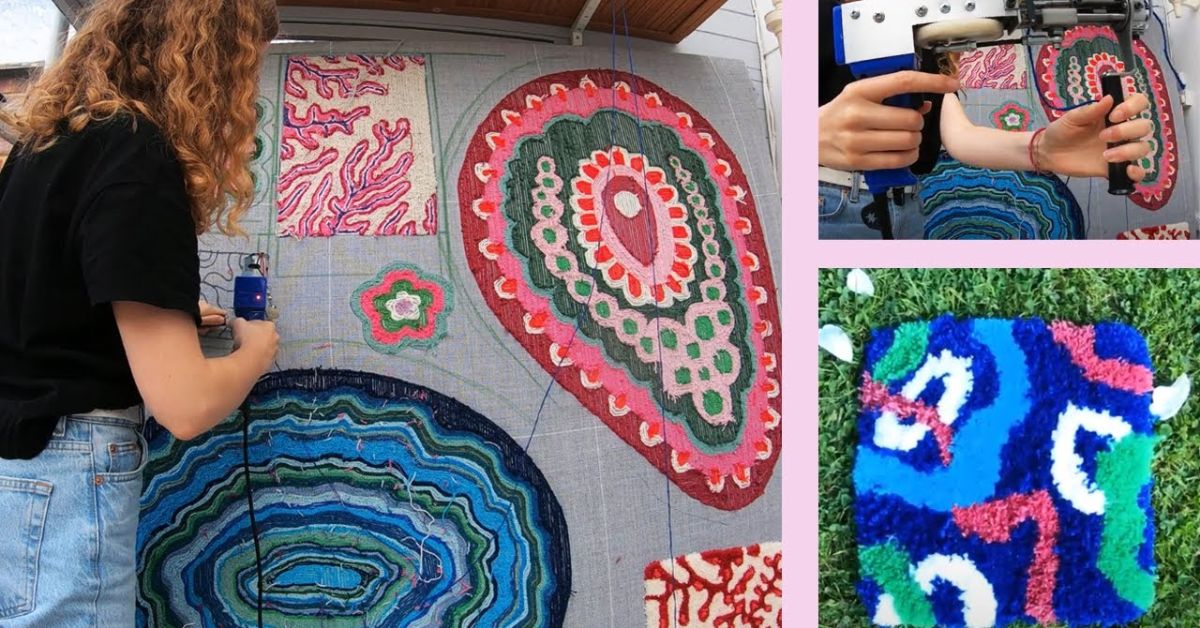
  • Hand-tufted rugs involve a tufting gun that punches yarn through a backing cloth, permitting elaborate lettering and shapes to be made.
  • Hand-knotted rugs require that every thread is woven by hand. The hand-woven process takes more time than other processes.
  • Printed rugs involves the pattern will be printed on the surface of the rug instead of woven or tufted onto the rug. This method tends to be more cost-effective and efficient

Each method affects the final look, texture, and durability of the rug, and in turn, its price.

Does Personalization Always Add to the Price?

Not necessarily. Whether adding a name increases the cost depends on how that name is executed. A simple, single-color text design often costs about the same as a comparable non-personalized custom rug of the same size and material. Where costs tend to rise is when personalization includes multiple colors, intricate fonts, or additional design elements layered around the name since these add production time regardless of the “name” itself.

If budget is a priority, keeping the lettering simple, one color, and a clean font is one of the more effective ways to keep the personalization itself from driving up the quote.

Budgeting for a Nursery or Kids’ Name Rug

Custom rugs for the nursery or children’s room are among the main reasons why customers decide to order a personalized name rug as either a baby shower gift or birthday present. These are typically smaller than living room area rugs, which works in your favor on size-driven cost.

That being said, children’s rooms may require more durable and easy-to-clean materials. It would be worthwhile to consider this when deciding on the rug material; for instance, a stain-resistant material may not be a bad idea considering the use the rug is going to have.

Instead of focusing on a certain figure, it would be more helpful to ask for an estimate according to your measurements and choice of design because custom-made items cost according to each individual order.

Custom Name Rug Price vs. Long-Term Value
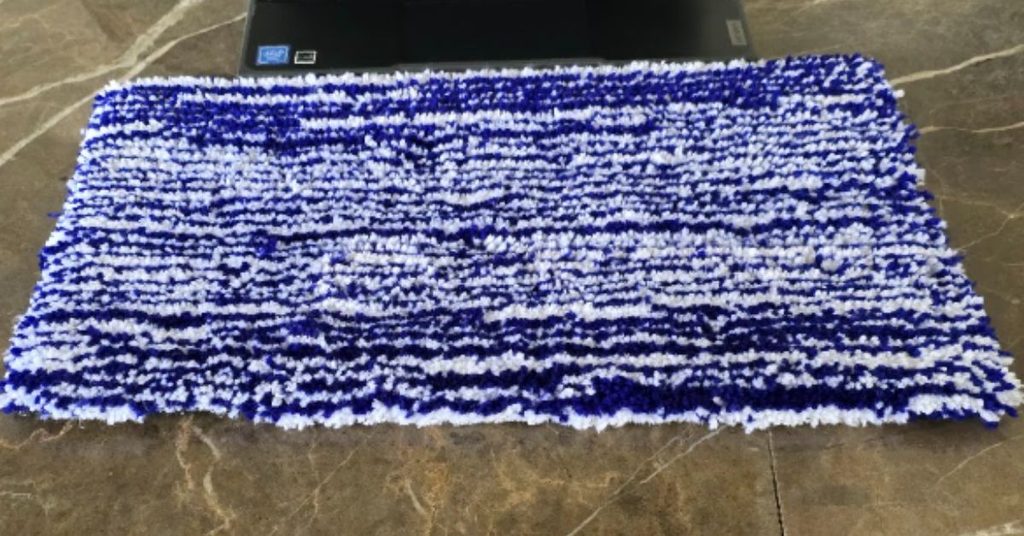
Blue and white textured custom rug

When comparing options, it helps to think beyond the upfront quote. The construction of the rug makes an actual difference to its durability. Hand-knotted and better quality hand-tufted rugs last longer than printed rugs; however, they tend to cost more upfront. Printed rugs may provide a solution which is not only affordable but also functional for areas with low traffic and for periods of limited time.

In the end, the best value depends on how long you intend to keep the rug, where you will keep the rug, and how durable it must be. In other words, what its expected life cycle is, not simply which one costs less.

Frequently Asked Questions

What information do I need to provide to personalize a rug?

You will have to give the full name, initials, or phrase, along with the desired font. Check for spelling errors before you finalize your order, because the rug is made specifically for you.

Can I choose the font and color for my custom name rug?

Yes, most sellers let you pick a font style and color combination. Available options vary by seller and design.

What backing options are available for a personalized rug?

They come with a backing of non-slip latex or rubber for the hard floor. Others make use of a woven or tufted backing together with a rug pad.

Are personalized rug sizes different from standard rugs?

Not really. You’ll find the same general categories: doormats, accent rugs, area rugs, and runners, plus the option to request custom dimensions.

Does adding a name increase the cost?

Not always. A simple, single-color name design often costs about the same as a comparable non-personalized rug. Costs rise mainly with added colors or design complexity.

Conclusion

The pricing of a custom rug is determined by size, materials used, complexity of design, and production process. There is no standard rate for pricing. To get an idea about the pricing of your desired rug, it would be better to take a quotation based on size, materials and design. In case you want to explore various options in this regard, you can visit the custom name rug collection at Pile & Loop.
Posted on — Leave a comment

PITB Custom Keyboard Rug: Workspace Branding

PITB custom keyboard rug at Punjab e-Commerce Hub Lahore

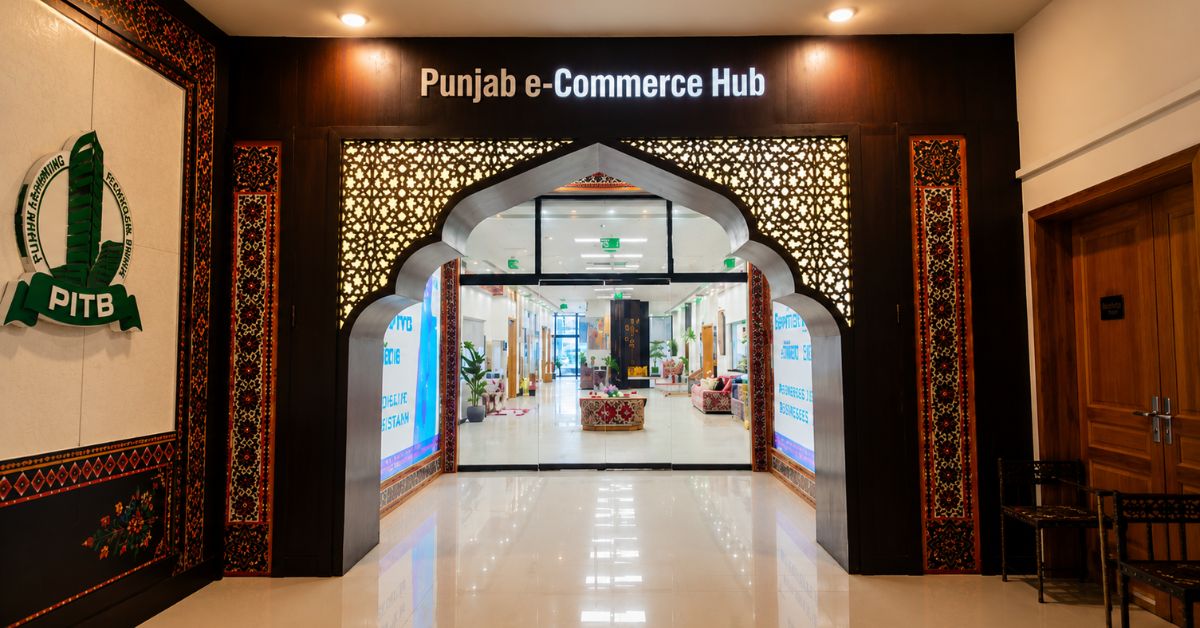
As you enter the Punjab e-Commerce Hub in Lahore through its arched gate, the first impression one gets is that of a sense of purpose. The arch itself is adorned with truck art, with red and gold decorations typical of truck art all around the arched gate. Past it, the hub opens into a bright, modern space built to showcase what Punjab’s digital economy can look like.

This is PITB’s territory. For years, the Punjab Information Technology Board has been striving to facilitate e-Governance and digital efforts in the province for many years. The e-Commerce Hub is one of the perfect examples of that effort, because the e-Commerce Hub is literally the physical embodiment of the “Made in Punjab” project, which means that it’s a place where branding comes naturally.

So when Pile & Loop worked with PITB on a custom keyboard rug, the brief wasn’t to design something loud. It was to design something that belonged on a desk inside that building.

PITB’s Identity and the Idea Behind the Custom Keyboard Rug

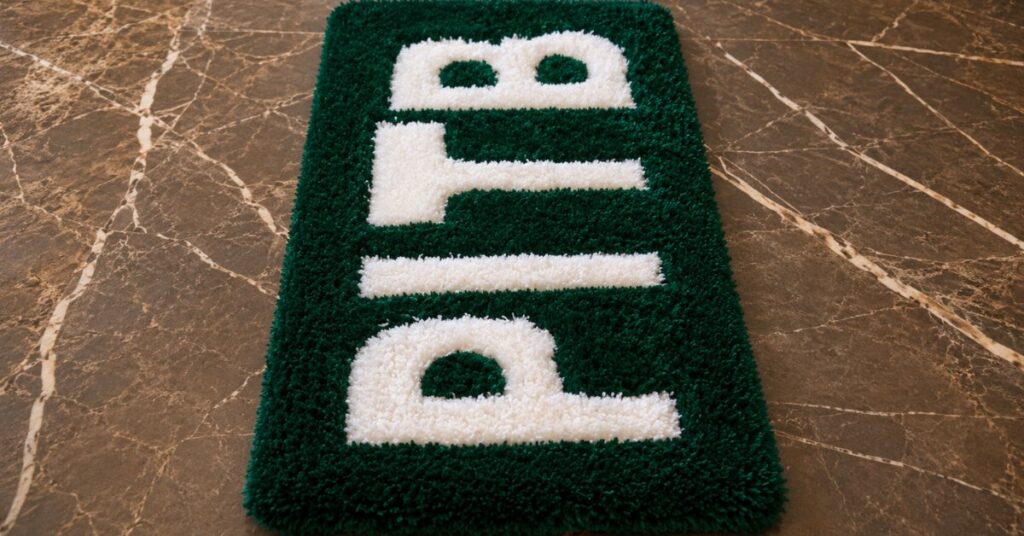
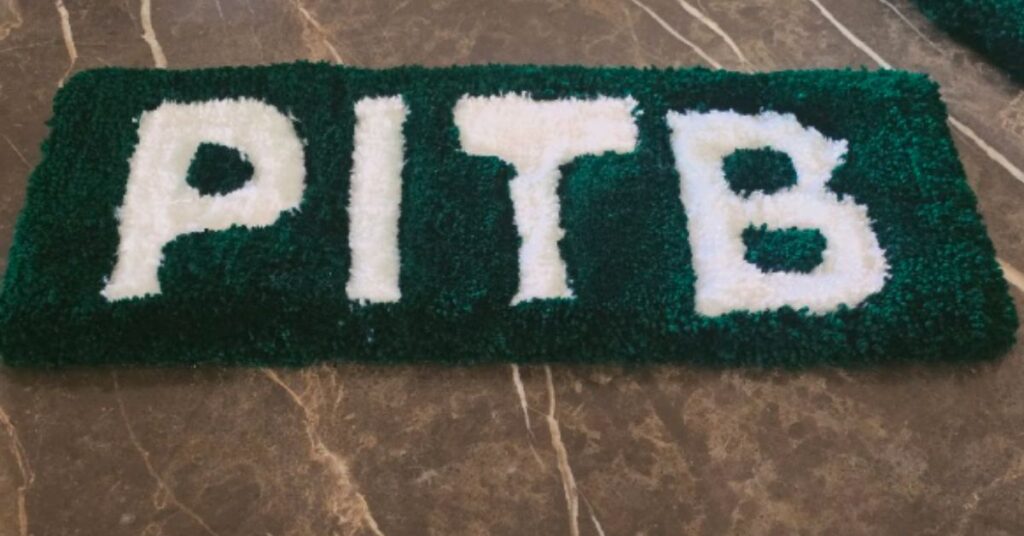
PITB custom keyboard rug with white logo on green background

PITB’s logo is instantly recognizable within Punjab’s public sector: a circular seal with a green line-art building at its centre, ringed by the words ‘Punjab Information Technology Board,’ and anchored by a green ribbon banner spelling out PITB in bold white letters  

However, a keyboard rug asks a different question: what does that identity look like at the scale of a desk, sitting under someone’s hands every day?

For PITB, the answer turned out to be simple. Strip the mark down to its core  the initials, the green, the white  and let it do its job in a smaller, more tactile format.

The result is a rug that reads clearly from across a room but still feels like it belongs next to a keyboard and mouse, not a flagpole.

Logo, Colour, and Workspace Branding

The finished rug keeps things direct: bold white letters spelling PITB, set against a deep green field, tufted with a clean, blocky edge that holds up even at a glance. Instead, there’s no attempt to cram the full seal or tagline onto it, just the initials and the two colors that anyone at PITB would recognize instantly.

It is the restraint in the design which allows it to be seen as workspace branding and not just another logo mat. The color fits the institutional image well enough to make it seem official, while the size and texture of the design make it an object and not just signage. Located within the E-commerce Hub itself, which is a combination of modern interiors along with traditional Punjabi designs, the rug is in line with the very same instinct – modern design, distinctly local and distinctly PITB.

Why Custom Keyboard Rugs Fit Institutional and Corporate Workspaces

Government offices and corporate headquarters don’t usually think about branding at desk level. Walls, signage, and stationery get the attention; the actual workstation is treated as neutral ground.

However, a custom keyboard rug changes that math. Positioned against the keyboard and mouse, it sits inside the one part of the workspace an employee or visitor interacts with constantly, without turning the desk into a billboard. For an institution like PITB where the surrounding environment already uses colour and pattern to say something about the organization a keyboard rug is simply the next logical surface.

It also travels well across different kinds of workspaces. A visitor desk that’s shared at a hub, director’s office, and workstation for the training room all can accommodate this object within their spaces in exactly the same manner.

Small Branded Details, Bigger Institutional Identity

PITB custom keyboard rug with green and white logo

No single object builds an institution’s presence on its own. It’s built from the colours on the wall, the pattern at the entrance, the materials in the lobby, and yes, the small details on a desk that most visitors never consciously register but still absorb.

A keyboard rug is one of the smallest of those details, but it’s also one of the most personal  it sits exactly where someone’s hands rest for hours at a time. For PITB, adding it to the e-Commerce Hub extends the same visual thinking that shaped the building’s entrance and interiors down to individual workstations, rather than stopping at the walls.

What This Means for Corporate and Institutional Clients

PITB’s rug is a useful example of what a custom keyboard rug can do outside of a typical corporate office: reinforce an institutional identity at the one scale most branding never reaches.

Custom keyboard rugs can help organizations:

  • Bring official colours and identity elements into everyday workstations
  • Extend a building’s visual language down to individual desks
  • Create consistency across shared spaces like hubs, lobbies, and training rooms
  • Offer a distinctive, low-cost way to reinforce brand presence without adding signage

At Pile & Loop, we think about brand identity the same way PITB approached this project  as something that should show up in the details people actually interact with, not just the ones they walk past.

Have an institution, brand, or workspace in mind for a custom keyboard rug? Get in touch with Pile & Loop to bring your identity onto the desk.

Posted on — Leave a comment

Best Keyboard Rug for Gaming Desks: What to Look For

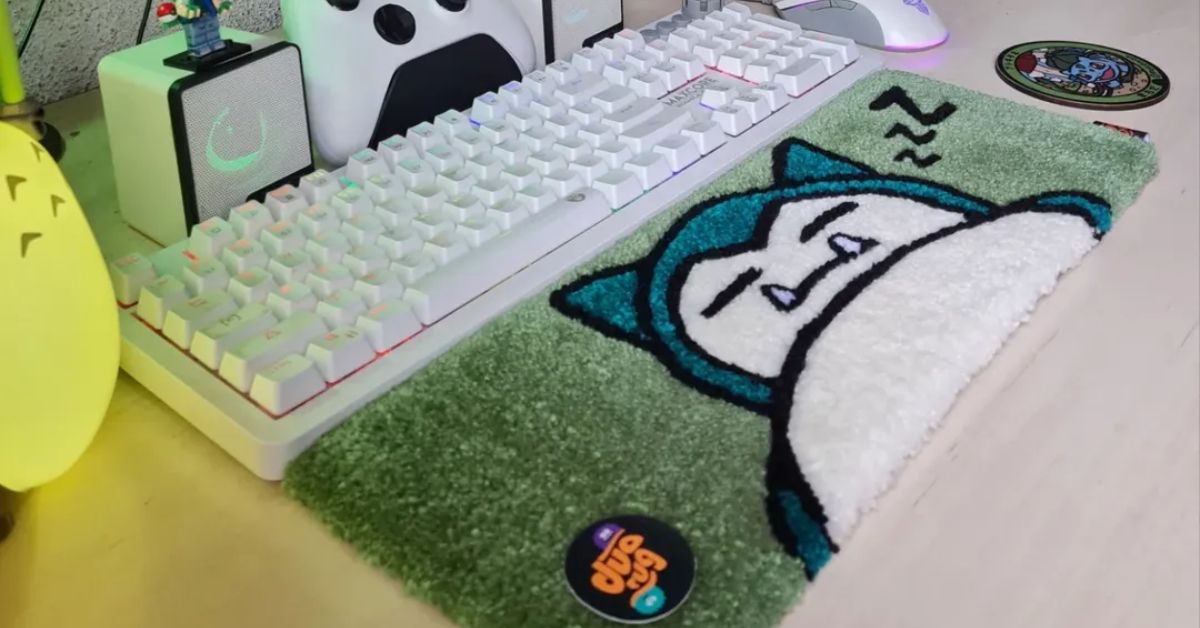
SpongeBob keyboard rug in a gaming setup

Quick Takeaways

  • A Gaming Keyboard Rug sits on your desk, under your keyboard and mouse — it’s a different product from a floor rug
  • Size according to your desk space requirement whether you need keyboard-sized, full-size or L-shaped desk coverage.
  • The surface texture influences your wrist comfort and mouse glide ability.
  • Personalization is the primary factor that makes players prefer the keyboard rug rather than the standard desk mat because the player can add their design, tag, and RGB compatible colors to it.
  • For streamers, a keyboard rug is something that is going to be seen on camera, so you should consider this an aesthetic choice, too.

Most gaming desk guides talk about the floor. However, the one part of the surface that receives the least attention is right below your hands, where your wrists lay resting for hours at end.

This is where a keyboard rug will help, which is nothing but a soft rug laid on your desk surface below your keyboard and mouse.

That is how you should consider things like size, comfort, personalization options, and streaming when choosing one for yourself.

What Is a Best Keyboard Rug?

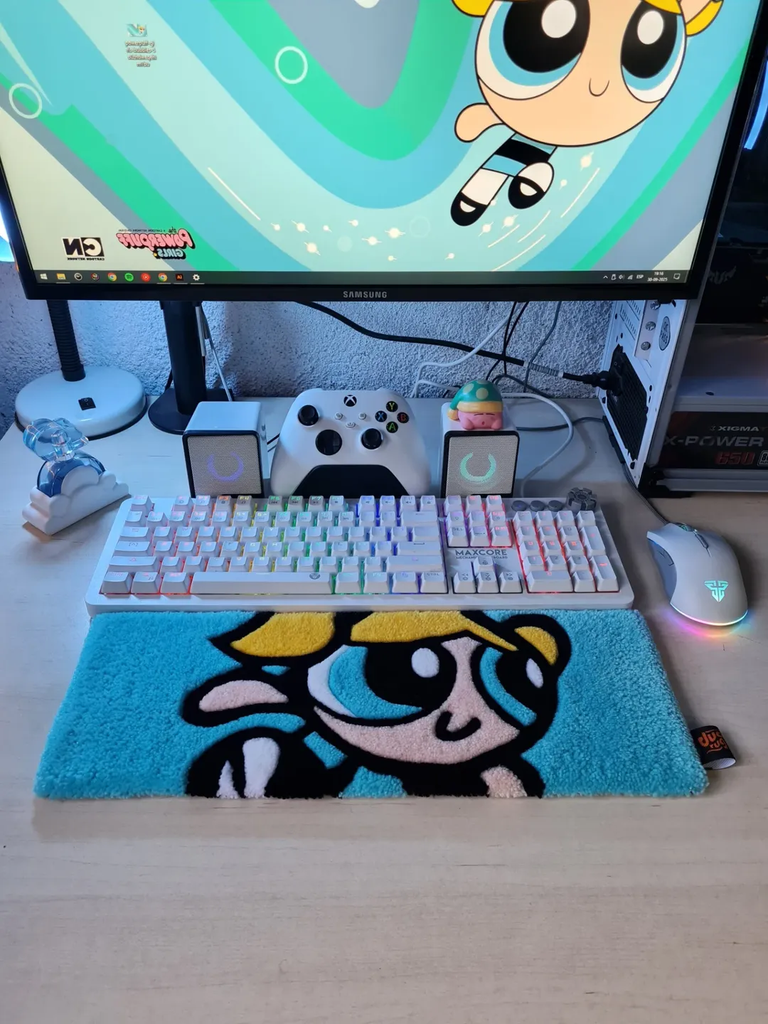
Blue keyboard rug on a gaming desk setup

A keyboard rug is an accessory for the desk and not a floor rug. The keyboard rug lays flat on the surface of your desk and lies below the keyboard and mouse. While a floor rug must be designed to withstand the effects of footsteps and the movements of your chair, a keyboard rug need only be able to withstand activities that take place on your desk, such as typing and use of the mouse.

Desk Accessory, Not a Floor Rug

Because a keyboard rug lives on the desk, it’s sized and chosen differently than anything meant for the floor. Pile height, backing, and surface texture all matter here, but for different reasons — comfort under your wrists and consistent mouse tracking, rather than durability against rolling chair wheels.

Sizing a Keyboard Rug to Your Desk

Size is determined by the amount of coverage you need on your desk surface.

Keyboard-Only vs Full-Desk Coverage

Some people want a rug that covers just the keyboard and mouse footprint — enough room to type and move the mouse comfortably. Others prefer a full-desk rug that extends across the entire surface, giving a more unified look and covering monitor stands, speakers, and accessories too. Neither is more “correct” — it comes down to how much of your desk surface you want to visually and physically change.

Fitting Around Monitor Arms, Speakers & Cable Channels

If your desk has a monitor arm clamp, a speaker stand, or a built-in cable channel, measure around those before choosing a size. A rug that runs right up to a clamp base can bunch or lift unevenly, and a rug that covers a cable channel can make routing and re-routing cables more of a hassle than it needs to be. Measuring your actual desk layout — not just the desk’s overall dimensions — will save you a return.

Single Desk vs L-Shaped Desk Sizing

An L-Shaped desk is a little more difficult to measure since you will be trying to determine whether to get a rug that fits just the keyboard end of the desk or whether to get one that can stretch to fit both ends, with the keyboard being one of them. When using the second part of an L-Shaped desk for a controller, tablet, or monitor, take it into consideration.

Desk Comfort: What You Feel Under Your Wrists

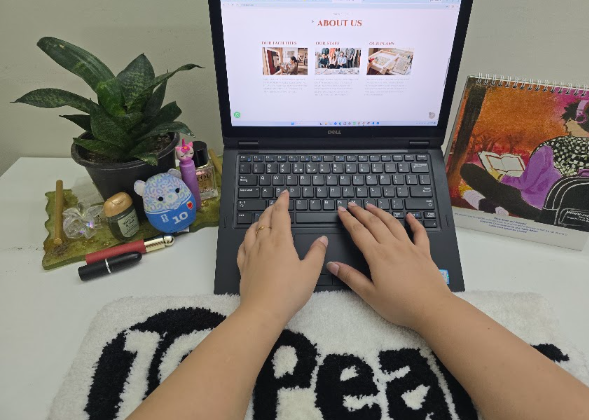
Hands typing on a laptop with a soft keyboard rug underneath

This is the part a floor rug can’t help with — how the surface feels during a long typing or gaming session.

Thickness and Wrist Support During Long Sessions

A thin, flat weave will feel closer to a standard desk mat, while a slightly thicker rug adds more cushioning under the wrists. Thicker isn’t automatically better, though — a rug that’s too plush can shift under your hands while typing, which some people find distracting during fast-paced gameplay. If you type or game for hours at a stretch, testing a mid-range thickness first is a reasonable starting point before going thicker or thinner.

Surface Texture and Mouse Tracking

Mouse tracking is sensitive to surface texture. A tighter weave results in more reliable tracking compared to loose and high-pile weave which can affect the capability of the optical or laser sensors from detecting the motion. In case accurate control of your mouse is important in your gaming style. Choose a surface that is flat and has tighter weave for the mouse area even though the entire rug may have a different texture.

Customization: Making the Desk Match Your Setup

For a lot of people, this is the real draw of a keyboard rug over a generic desk mat — it’s a way to bring your own design directly onto your desk.

Using Your Own or Licensed Artwork

If you have artwork you own the rights to — original art, a design you’ve licensed, or something a designer made for you. A custom keyboard rug is a way to put it somewhere you’ll see it every session. Pile & Loop’s keyboard rugs collection, which the brand also lists under gaming desk rugs and gaming setup rugs, supports designs made from customer-owned or authorized artwork.

Gamer Tags, Logos & Team Branding

A keyboard rug is also a straightforward way to add a gamer tag, personal logo, or team emblem to your desk without covering a wall or shelf. For competitive teams or small studios, this can extend to matching rugs across multiple desks — a shared visual identity that’s more subtle than branded wall decor.

Coordinating Colors with RGB Lighting

If your setup is built around RGB lighting, color coordination is worth thinking through before ordering. A dark, neutral base (charcoal, black, deep blue) tends to let LED lighting stand out more than a busy or light-colored rug would. Keep in mind that a digital color preview and a dyed or printed physical product won’t always match exactly — it’s worth asking the seller what to expect before finalizing a custom color.

Built for Gaming & Streaming Desks

If your desk setup is ever on camera, the keyboard rug isn’t just something you feel — it’s something your audience sees too.

On-Camera Desk Appearance for Streamers

Streamers will find that the desk surface is featured in their webcam shots and overheads more than the floor surface. Using a keyboard rug that matches the branding of your stream will be an easy and convenient way to create a constant visual effect without having to make a full change to your desk.

Matching Rugs for Team or Studio Setups

For teams or studios running multiple desks, ordering matching or coordinated keyboard rugs is a simple way to create a consistent look across every station — useful for group streams, tournament setups, or shared studio spaces where visual consistency matters.

FAQs

What size keyboard rug do I need for my desk? 

Measure the area occupied by your keyboard and mouse including some inches of margin, or measure your entire desk if you want complete coverage.

Does a keyboard rug affect mouse sensor accuracy?

Yes, if the surface is loose or high-pile. A tighter, flatter weave tracks more consistently.

Can I get a custom keyboard rug with my own design? 

Yes. Pile & Loop offers custom keyboard rugs using customer-owned or authorized artwork, gamer tags, logos, or color matching. Ask through their contact page.

Is a keyboard rug the same as a desk mat? 

No. A desk mat is thin and built mainly for mouse tracking. A keyboard rug is softer and more customizable.

How do I size a keyboard rug for an L-shaped desk?

Determine whether you only require the keyboard area or the whole L-shaped section. The second surface is required in case you use it for a monitor or any other equipment.

Bottom Line — Shop Pile & Loop’s Keyboard Rugs

The right keyboard rug comes down to matching size to your desk layout, choosing a texture that supports both comfort and accurate mouse tracking, and — if it matters to you — personalizing it to fit your setup or your stream. Ready to find the right one for your desk? Browse Pile & Loop’s keyboard rugs, or get in touch to ask about custom options.

Posted on — Leave a comment

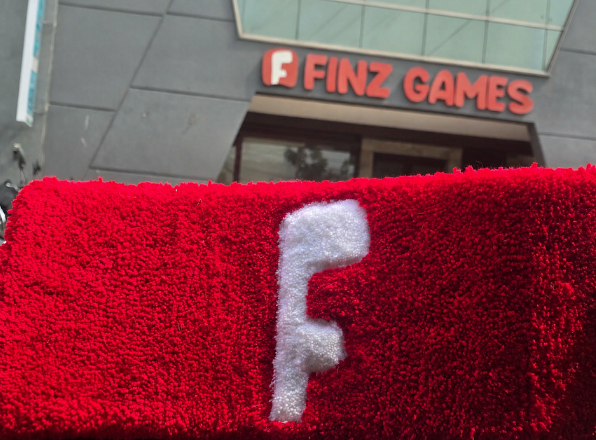
Custom Keyboard Rugs & Workspace Branding: A Visit to Finz Games.

We recently visited Finz Games for a business discussion and introduced the team to Pile & Loop’s Custom Keyboard RugS concept.

The visit gave us a closer look at how modern workspaces are becoming more personal and visually intentional. While businesses often think about branding through walls, signage, screens, and stationery, there are smaller details within a workstation that can contribute to the same identity.

One of them is the keyboard rug.

Their Workspace & Use Case

A workstation is not only a space to sit and work from. It is a combination of various accessories, including the keyboard, mouse, monitor, and others, which create a workspace tailored to the people’s style of working and even their personality.

For creative and tech-oriented employees, the workstations themselves might also contribute to the personality of the office environment.

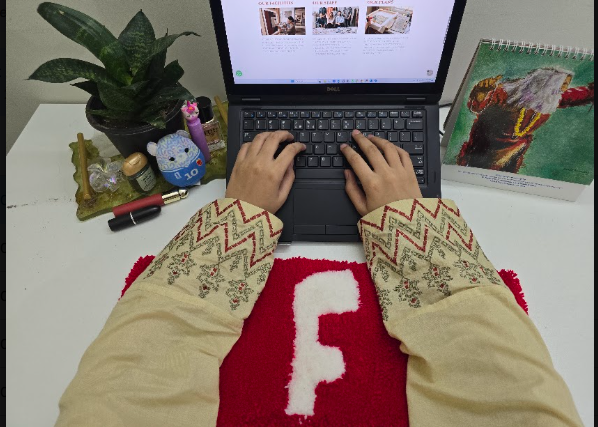
A custom keyboard rug fits naturally into this environment. Positioned against the keyboard and mouse, it adds a defined visual element to the setup while creating an opportunity to bring brand identity directly into the workspace.

For Finz Games, our conversation around custom keyboard rugs opened up that possibility: taking an everyday part of a workstation and giving it a more distinctive, brand-led character.

Why Custom Keyboard Rugs Fit Modern Workspaces

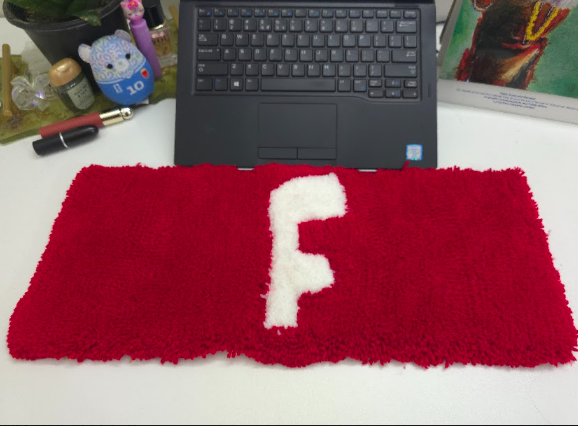
Custom keyboard rug beneath a laptop on a modern workspace desk

Modern branding is not always about making a statement as loudly as possible.

Sometimes, it is more about maintaining consistency in small details.

A keyboard rug can incorporate brand colors, logos, patterns, illustrations, or other visual elements that connect the workstation to the wider brand identity. Because it sits naturally within the setup, the branding can feel integrated rather than added on.

For teams, this can also create a visual connection between individual workstations. Keyboard rugs can follow a shared design language while still allowing room for different layouts, patterns, or creative treatments.

The result is a workspace that feels considered without looking overly branded.

Customization Meets Workspace Aesthetics

Person using a laptop with a custom keyboard rug on a workspace desk

One of the biggest advantages of a custom keyboard rug is the freedom to create something around the brand rather than choosing a standard design.

A company can keep things minimal with its signature colors and logo, or explore a more expressive direction through patterns, artwork, typography, or illustrations.

The design can also complement the existing aesthetic of the workspace.

A clean, minimal office may call for a simple and understated design. A creative studio or gaming-focused environment may have more room for bold graphics and distinctive visual elements.

The point is not simply to put a logo on a keyboard rug. It is to create a piece that feels like it belongs on that desk.

Why Small Branded Details Matter

A strong workspace identity is rarely created by one large element.

It comes together through multiple details—the colors, objects, layouts, and visual choices that people encounter throughout their day.

A customized keyboard rug is a small part of that bigger picture, but it gives businesses another way to bring their identity into an everyday workspace.

For employees, it can add personality to an individual setup. For teams, coordinated designs can create a sense of visual connection, and for businesses, it can extend brand thinking into spaces where work actually happens.

A Creative Option for Corporate Gifting

The same customization makes keyboard rugs an interesting option for business gifting.

Instead of choosing a generic branded item, companies can create a keyboard rug around a specific brand, campaign, team, event, or individual.

It can be designed to feel personal while still carrying a connection to the business behind it.

A custom keyboard rug can be a practical gift for employees, team members, or clients while still keeping your brand visible.

What Businesses Can Learn

The details within a workspace can influence how connected it feels to a brand.

Custom keyboard rugs can help businesses:

  • Bring brand colors and visual identity into individual workstations
  • Add personality and character to modern desk setups
  • Create visual consistency across team workspaces
  • Explore more creative forms of branded merchandise
  • Offer a distinctive and customizable corporate gifting option

At Pile & Loop, we believe brand identity can live in the details people interact with every day.

Whether you’re looking to create custom keyboard rugs for your team, add a more personalized touch to your workspace, or develop a distinctive corporate gifting idea, we can help turn your brand into a design that belongs on the desk.

Have a brand, concept, or design in mind? Get in touch with Pile & Loop to create custom keyboard rugs for your business.

Posted on — Leave a comment

Hand-Tufted vs. Machine-Made Rugs: What’s the Difference?

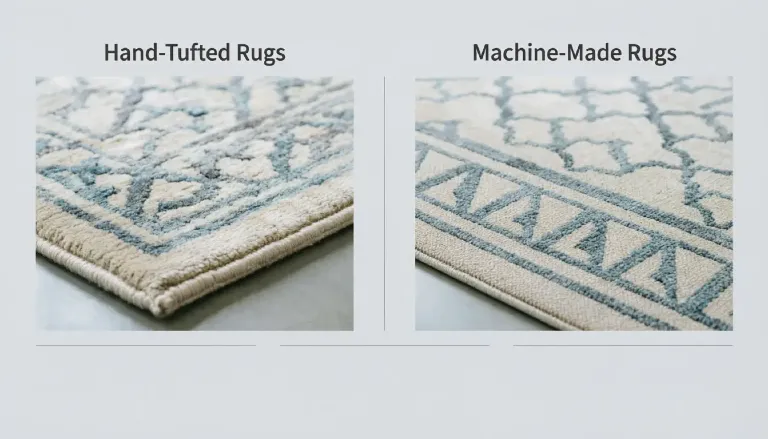
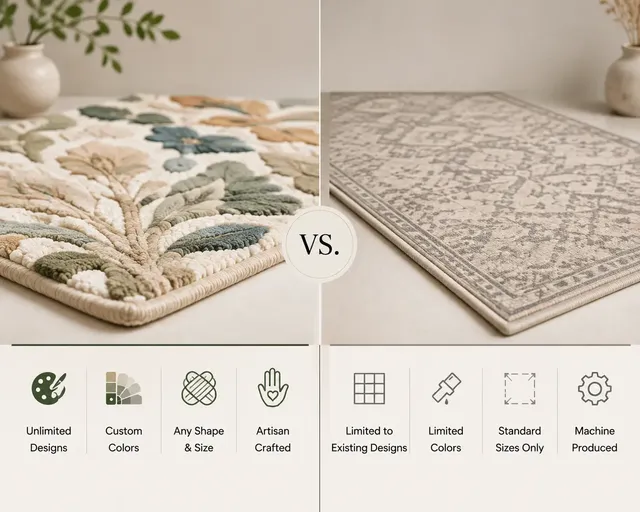
Hand-tufted vs. machine-made rugs comparison

Hand-Tufted vs. Machine-Made Rugs is an important comparison when choosing the right rug for your home. While both options may look similar, their construction methods, lifespan, customization, and pricing can differ significantly.

Quick Takeaways

  • Hand-tufted rugs are created by hand with the use of a tufting gun and canvas; machine-tufted rugs are made by computerized machines that control the power loom.
  • Feel and density vary by yarn, pile height, and construction quality in both types — neither is automatically plusher.
  • Machine-made rugs are generally the more budget-accessible option; lifespan for either type depends heavily on material and construction quality.
  • Hand-tufted rugs stand out for customization because makers can create different sizes, colors, and patterns based on customer needs.

How Hand-Tufted Rugs Are Made

To make a hand-tufted rug, an artisan first stencils the design onto a canvas. The artisan then uses a handheld tufting gun to punch loops of yarn through the fabric. To punch loops of yarn through the fabric — a process Fine Rug Collection’s construction guide compares to filling in a stenciled outline by hand. After tufting, the rug needs a stable backing. The maker applies a layer of latex adhesive to the back. They then add another backing fabric, usually made of cotton or canvas.

This technique falls somewhere in between hand-knotted and machine-made techniques. While being more time-efficient and less costly than the hand-knotting method, it still includes a manual process of the rug by the individual.

Materials vary by maker — wool, cotton, and synthetic blends are all used in hand-tufted construction, and the specific fiber has more to do with feel and durability than the tufting process itself.

How Machine-Made Rugs Are Made

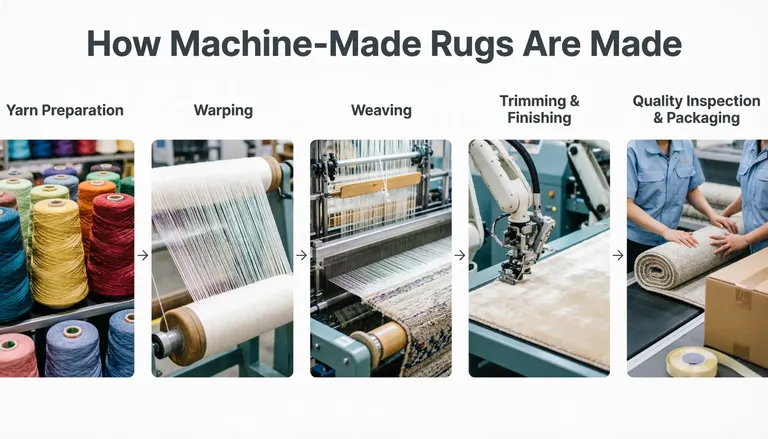
Machine-made rug construction

The machine-made carpet is made on an automatic loom operated by a computer program that dictates the design from a pattern file through colors and positions very quickly.

This automated process is what makes machine-made rugs fast to produce and widely available in consistent sizes and colorways. 

The material used may vary from one manufacturer to another, and it may be either artificial material such as polypropylene, nylon, or polyester, or natural materials such as wool and blends of wool. In this case, the material type is more critical than the loom.

Hand-Tufted vs. Machine-Made rugs: Side-by-Side Comparison

FactorHand-TuftedMachine-Made
ConstructionHand-guided tufting gun through a stenciled canvas, glued backingComputer-controlled power loom, programmed pattern
Common materialsVaries by maker — wool, cotton, and synthetic blends are all usedVaries by manufacturer — synthetic fibers and wool/wool-blend options both exist
Texture & feelVaries by yarn, pile height, and density — can range from tight to plushVaries by yarn, pile height, and density — can range from tight to plush
CustomizationSizes, colors, and patterns can typically be made to orderSome brands offer limited size/color options, but flexibility is generally narrower
Durability factorsBacking adhesive is a known long-term wear point; overall lifespan depends on fiber and construction qualityDepends heavily on fiber quality and construction density
PriceGenerally a higher investment, reflecting labor and materialsGenerally more accessible, especially at larger sizes
Often considered forDesign-forward spaces, made-to-order needsBudget-conscious or frequently-changed spaces

Look and Feel: What You’ll Notice Underfoot

The quality of the underfoot of a rug is determined not by how it is manufactured but by the type of yarn used. The height of pile, and the density of tufting/weaving. Some handmade rugs are manufactured using a thick and plush pile, but some handmade rugs are thinner and flatter. So do machine-made rugs. 

Cheap machine-made rugs have thin and flat piles due to cost savings, while expensive machine-made rugs will be as plush as hand-tufted rugs.

For the purpose of comparing the characteristics under the foot for two specific rugs, it is better to measure their pile thickness and density.

Customization: Where Hand-Tufted Pulls Ahead

Customization: Where Hand-Tufted Pulls Ahead

Hand-tufting starts with the hand-stencil base, hence making it very easy for you to have your own customized sizes, colors, or designs.

In case your room is oddly shaped or has certain color schemes or designs which you cannot find in any factory-made carpets, this is the right way for you.

Machine-made rugs aren’t necessarily locked to a fixed catalog — some manufacturers do offer size or colorway variations within a given design. However, since the production process of a loom is designed for high-speed manufacturing, the level of customization is limited compared to the hand-tufted process.

Can you get a machine-made rug in a custom size or color?

Sometimes, yes — a handful of machine-made rug lines offer select size or color variants. It’s just not as common or as adaptable as the customization process used in most hand-tufted carpets, where the design is designed based on your specifications and not based on an existing production line.

Durability and Lifespan

However, both of these carpets can be durable if cared for properly. Both of them wear differently, depending on use. The durability of a hand-tufted rug depends largely on the quality of the latex backing and the fiber used — regular rug care like vacuuming and rotation makes a real difference either way.

The amount of shedding that occurs in any particular rug, as well as how long it goes on, is based on the yarn quality, density of tufts, and quality of finishing of the backing. This is why shedding varies significantly from one handmade tufted rug to another. 

Do hand-tufted rugs shed more than machine-made rugs?

Some new rugs may shed loose fibers during initial use, depending on factors such as yarn quality, pile density, and finishing. 

This isn’t universal or automatic just because the construction uses an adhesive backing — yarn quality, tuft density, and finishing all affect how much a specific rug sheds. 

Machine-made rugs shed too, particularly those that are of lower density or lower quality, and it is advisable to read the specific information about any particular rug you are purchasing.

Which type holds up better in high-traffic areas?

Neither type is automatically better for high-traffic areas — it depends more on the specific rug’s material and construction quality than on whether it’s hand-tufted or machine-made.

A durable, densely constructed rug in either category can hold up to regular foot traffic, while a lower-quality rug in either category will wear faster. USTIDE’s comparison guide offers one perspective, positioning hand-tufted rugs as a good fit for moderate-use spaces like bedrooms and home offices, and machine-made rugs as a common choice for high-traffic spots like hallways and entryways, partly because they tend to be lower-cost to replace. 

That’s one retailer’s general guidance rather than a fixed rule — if heavy daily traffic is a top concern, it’s worth checking the specific rug’s fiber and density rather than relying on construction type alone.

Price and Long-Term Value

The cost of both will depend on size, materials, and brand. However, based on the price comparison among various rug vendors, it seems that hand-tufted rugs will cost slightly more than machine-made rugs.

Machine-made rugs are more easily accessible. This is one of the reasons why they are favored by renters and people who like to change the appearance of their rooms frequently. There is no “better value,” and this will depend on your expectations of the lifespan of the rug, its frequency of use, and preference between custom and inexpensive rugs.

Hand-Tufted vs. Machine-Made Rugs: Which One Suits You?

  • On a budget or renting a place: Machine-made rugs will be a better choice.
  • Living room with high traffic or living room with pets and kids: For these cases, consider the rug’s material, construction quality, and maintenance needs rather than choosing based only on whether it is machine-made or hand-tufted. However, a carpet, either machine-made or handmade, from thick material would surely be noticed.
  • Design-forward room where texture and craftsmanship matter: A hand-tufted rug’s hand-finished character and made-to-order flexibility tend to stand out here.
  • A room with an unusual size or a very specific color scheme: Hand-tufted’s made-to-order flexibility is the better fit — check our rug size guide if you’re not sure what dimensions to look for.

A rug pad can help improve grip and add cushioning underfoot, depending on the rug and flooring type for both floor types, for added comfort and grip underfoot.

Frequently Asked Questions

Is a hand-tufted rug worth the extra cost?

It depends on priorities — the cost generally reflects made-to-order flexibility and craftsmanship. For larger or frequently used rooms, it may be more appropriate to use a fine machine-made rug.

What is the average lifespan of machine-made rugs?

The lifespan of a machine-made rug varies depending on fiber type, construction quality, maintenance, and level of use.

Are hand-tufted rugs and hand-knotted rugs the same thing?

Hand-knotted rugs are created by knotting one after another without the use of any glue, while hand-tufted rugs are created by the use of punching needles in a tufting machine and then sealed by latex glue from the back side.

How do you clean a hand-tufted rug?

Vacuuming is very important; however, ensure that you do it at a low level. Lastly, it is important to clean any spills as soon as they happen.

Can hand-tufted rugs be used outdoors or in damp spaces like bathrooms?

No, Hand-tufted rugs are generally intended for indoor use, as long-term moisture may affect the latex backing over time.

The Bottom Line

There’s no universal “better” rug between hand-tufted and machine-made — it comes down to how the room is used, and what matters most to you: feel, customization, durability, or price.

If a custom size, color, artwork, or design is part of what you’re after, hand-tufted construction can offer more flexibility for made-to-order designs. Pile & Loop offers custom hand-tufted rugs built around exactly those options, if you’d like a rug shaped around your room rather than the other way around.

Posted on — Leave a comment

What Is the Best Rug for a Gaming Setup?

Best rug for a gaming setup with keyboard and desk

Quick Takeaways

  • Size your rug with your chair’s full roll radius in mind, not just your desk footprint
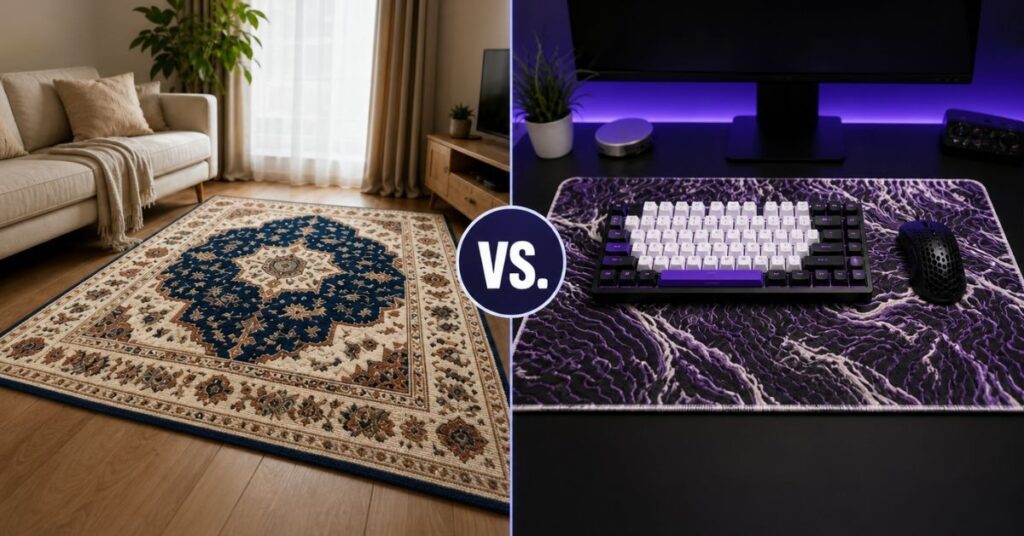
  • A floor rug and a keyboard rug solve different problems
  • Low pile rugs are normally easier to roll up and maintain than high pile rugs. 
  • A regular cleaning routine helps a gaming rug hold up over time
  • Custom sizing and personalization are worth asking about if you want the floor and desk to match your setup

You’ve dialed in your monitor, your chair, your lighting. The floor and desk surface are usually the last things anyone thinks about — and the first things that start showing wear after months of rolling, spinning, and snack breaks.

Here’s how to think through pile height, sizing, durability, and cleaning, plus where floor rugs and keyboard rugs fit differently into a setup.

The best rug for a gaming setup may use a floor rug for the chair area and a keyboard rug to add a soft, personalised feature directly to the desk. 

Size: Think About the Roll, Not Just the Desk

The most common sizing mistake is measuring the desk footprint and stopping there. Your chair moves — forward to reach the keyboard, back to lean, side to side to grab something off a shelf. If the rug does not fully cover the area, then the chair may grab the edge of the rug or roll onto bare flooring.

An easy way to understand this is to sit down in your chair and get into the postures you normally do during your sessions and mark the furthest points in each direction.

As general guidance (not an exact rule — measure your own setup, since chairs and desks vary), rug and furniture retailers commonly suggest:

  • Extending the rug roughly 24–30 inches behind a desk chair so the back casters stay on the rug when you lean back or push away from the desk
  • Leaving about 18–24 inches of rug beyond the desk footprint on each side
  • Single-desk setup: a rug that extends comfortably past your chair’s forward and backward roll is usually enough
  • L-desk or multi-monitor setup: you’re likely covering more floor space, so a larger area rug (rather than a compact mat) tends to work better
  • Shared or streaming-corner setup: size for the full visible area, since this rug is also part of what’s on camera

For the desk itself, a keyboard rug only needs to cover the area under your keyboard and mouse, so sizing here is about desk fit rather than chair movement.

Comfort: What You Feel Under Bare Feet vs. Under Wheels

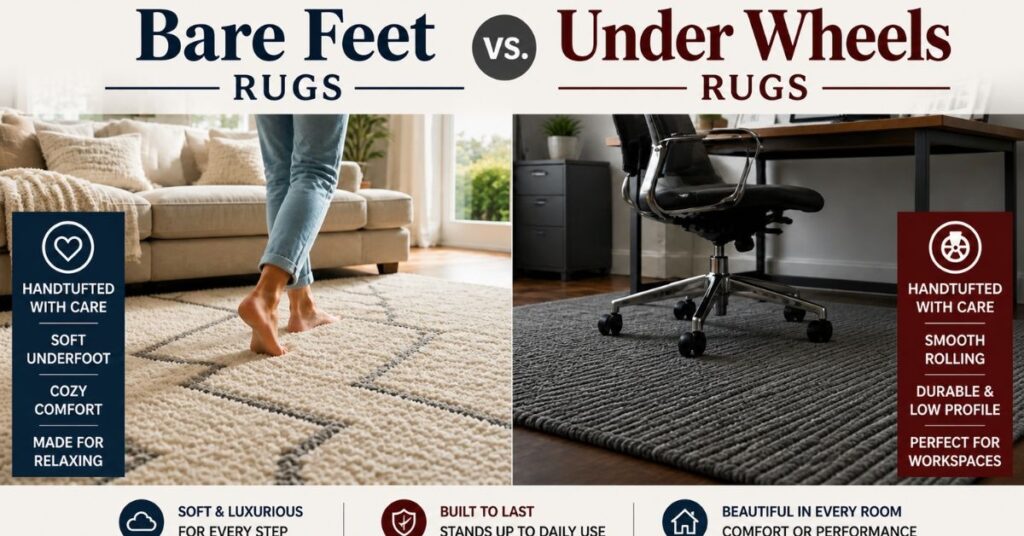
Best rug for a gaming setup: soft floor rug vs. low-pile chair-friendly rug

Thick-pile rugs may be cozy to walk on, but they will cause chair wheels to stick and will flatten out the rug.

If you work or play around while sitting on a rolling chair, then smooth rugs are ideal.

Durability: Designed For Repeated Use, Not Just Walking On

A living room rug deals with people walking across it a few times a day. A rug under a rolling chair deals with the same handful of square feet getting rolled over and shifted against, repeatedly, over a long period. This type of wear differs from foot traffic use. Select a rug that is suitable for high-traffic and rolling chairs.

Questions to ask before purchase:

  • Is the pile dense enough to prevent snagging of rolling chairs?
  • Is it backed with a non-slip surface to avoid slipping on hardwood floors?
  • Is it described as appropriate for high traffic or rolling chairs?

Cleaning: A Routine, Not a Project

A regular cleaning routine helps any rug — gaming setup or otherwise — hold up over time.

General guidance from rug and carpet care resources includes:

  • Weekly (or 2-3 times a week in frequently used areas): Vacuum using suction or low-pile settings to remove dust before it settles into the rug’s fibers.
  • When necessary: clean stains using a damp cloth, but do not rub them.
  • Periodically: rotate the rug so wear and any fading don’t concentrate in one spot.
  • Every 12 to 18 months: Consider having a professional cleaning for the tough stains.

Always check the rug’s tag because certain fibers require a specific cleaning process.

Setup Style: Matching the Rug to the Room

Having all this in mind, you will be able to concentrate on the design aspects.

  • RGB/neon colors: the perfect combination for a dark carpet (charcoal, black, dark blue).
  • Minimalistic designs: a simple and non-patterned rug will help you avoid distractions.
  • Filming locations: choose a carpet that will look especially good in camera.
  • Room with a theme: a carpet with a design sets the theme of the room without wall posters.

Floor Rugs vs. Keyboard Rugs: Two Different Jobs

Floor rug vs keyboard rug for a gaming setup comparison
  • A floor rug covers the area under your chair and desk. When choosing one for a gaming setup, look for a low-to-medium pile, a construction described as suitable for high-traffic or rolling-chair use, and non-slip backing, whichever brand or collection you’re shopping from.
  • A keyboard rug sits directly on your desk under your keyboard and mouse. Pile & Loop’s keyboard rugs collection — which the brand also markets as gaming desk rugs and gaming setup rugs — includes designs made using customer-owned or authorized artwork, so you can personalize the desk with imagery you have the rights to use.

If you’re building a setup from the ground up, pairing a neutral floor rug with a personalized keyboard rug lets you add personality on the desk without the whole room feeling overdone.

Custom Gaming Setup Rug Options

This being a personal gaming setup, customized options become important. In case you wish for your rug to blend in with your setup, ask the manufacturers if they can provide:

  • Personalization using artwork, a gamer tag, initials, or a logo you own the rights to
  • Nonstandard sizes apart from standard ones
  • Colors which coordinate with your existing lighting (a perfect match cannot always be guaranteed between a digital representation and an actual, handmade or dyed product, so make sure you know what the seller can do)
  • Bulk or matching orders, useful for streamers outfitting a studio or teams ordering matching setups

Pile & Loop offers custom keyboard rug options — reach out via their contact page to ask what’s currently available for personalization on the desk side.

FAQ’s

What size rug do I need for a gaming chair? 

There’s no single fixed number, but a common starting point is to size the rug so the chair’s back casters stay on it even when you lean back or push away from the desk — often cited as roughly 24-30 inches of rug behind the chair. Test it against your own chair, since sizes vary.

Do gaming rugs need non-slip backing?

An ordinary area rug can be used to place your gaming spot because of its non-slip surface that prevents it from sliding while you are playing on it.

Can a regular area rug work for a gaming setup? 

Often, yes — as long as the pile height and construction suit high-traffic, rolling-chair use. A rug meant for light foot traffic may wear out faster under constant chair movement.

What’s the difference between a gaming rug and a keyboard rug? 

A gaming rug is placed beneath the chair and table, while the keyboard rug is placed on the desk, below the keyboard and mouse.

Bottom Line

The perfect gaming rug is based on your chair’s freedom of movement, going for a low to medium pile carpet that is suited for heavy foot traffic and rolling chair movement, together with easy maintenance.

Ready to find the right one for your desk? Browse Pile & Loop’s keyboard rugs, or get in touch to ask about custom options.

Sources

Posted on — Leave a comment

Custom Rug in Pakistan: Design, Size & Price Guide 

Custom rug in Pakistan featuring colorful hand-tufted designs, modern patterns, and handmade rug craftsmanship.

Quick Takeaways

  • Pile & Loop creates custom hand-tufted rugs based on your confirmed design, size, and quantity requirements.
  • We check the size, shape, and design to be certain that your custom rug can be made.
  • Your quotation depends on the rug’s size, shape, colors, quantity, and design complexity.
  • The ordering process in Pile & Loop runs from design submission through to dispatch and tracking, with an advance payment required before production begins.

Meet Pile & Loop

Searching for a custom rug in Pakistan usually means sifting through fixed catalog sizes and finished designs that almost — but don’t quite — work for the space you have in mind. Looking for a custom rug in Pakistan? Pile & Loop creates hand-tufted rugs based on your design, size, and quantity requirements. 

This guide covers what you can bring to us for customization, how to think through sizing before you reach out, the exact steps your order will go through, what shapes the final price, and how production, payment, and delivery are handled — so you know what to expect at every stage.

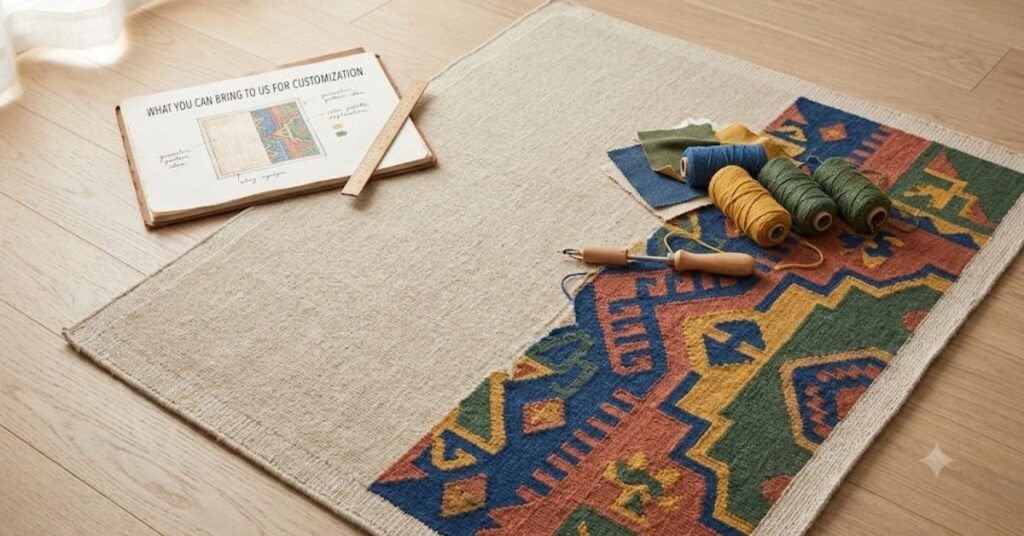
What You Can Customize in a Custom Rug

What can you customize in a custom rug: design, colors, and materials at Pile & Loop Pakistan

Every custom rug in Pakistan starts with the details you provide. When you get in touch, you can share:

  • A design, logo, or inspiration — an existing pattern, a brand logo, a reference image, or a concept you’d like developed further.
  • Preferred size and shape — the dimensions and form you’re working with for your space.
  • Colors — the palette you want the rug to follow.
  • Quantity — whether you need a single piece or multiple rugs to the same specification.

It’s worth being clear on one point: nothing is guaranteed until our team has looked at it. Every design, size, shape, and color request is checked before we confirm it can be produced as a hand-tufted rug — which is why the first step of an order is always a review, not an automatic yes.

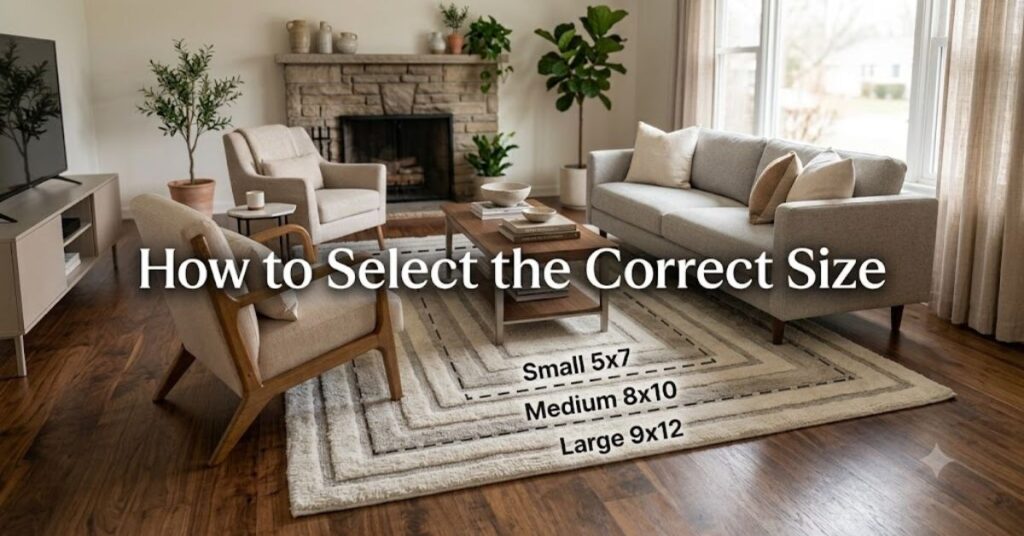
How to Select the Correct Size for your custom rug

How to select the correct rug size for the living room - 5*7 and 8*10 rug dimension guide

Getting the size right before you submit your request saves time on both sides. A few things worth working through first:

  1. Measure the actual floor area, not just a rough sense of the room — note the full space and the specific area you want the rug to cover.
  2. Decide how it should sit with your furniture or layout — whether it needs to sit fully under a seating arrangement, define a walkway, or cover a specific footprint like a logo mat or entrance piece.
  3. Consider the shape the space calls for — a standard rectangle isn’t always the right fit; an unusual layout might call for a different shape entirely.
  4. Bring a size range if you’re not fixed on an exact number — this gives our team room to confirm what’s feasible without back-and-forth.

Once you have your measurement and shape in mind, you will be ready to send them to us so we can begin processing your request.

The Confirmed Pile & Loop Ordering Process

Pile & Loop follows the same clear sequence for every custom hand-tufted rug.

  1. Share your requirements — send us your design, logo, or inspiration, along with preferred size, shape, colors, quantity, delivery city, and deadline.
  2. Review — our team checks your request against what our hand-tufted process can produce and confirms it back to you.
  3. Design direction — where applicable, a digital mockup or design direction is prepared for your review.
  4. Approval — you approve the design and the quotation before anything moves forward.
  5. Advance payment — the required advance payment is received, and production begins only after this step.
  6. Production and quality check — the rug is handmade, finished, and quality-checked.
  7. Remaining payment — the balance is completed before dispatch, unless management has approved an alternative arrangement.
  8. Dispatch — the rug is packed, dispatched, and tracking details are shared with you.

Factors Affecting Price

We don’t publish flat prices for custom rugs in Pakistan, because no two orders draw on the same combination of details. What does shape your quotation is the specific information you provide at the start:

  • Size and shape of the rug you’re requesting.
  • Colors involved in the design.
  • Quantity — a single piece versus a batch order.
  • Design complexity — how detailed the pattern, logo, or artwork is.

Your quotation is prepared once our team has confirmed these details, so you’ll know your price before approving anything or making an advance payment.

Confirmed Production, Payment & Delivery

Once your design and quotation are approved, here’s how the rest of the order is handled:

  • Payment structure — an advance payment is required before production starts. The remaining balance is due before dispatch, unless management has approved a different arrangement for your order.
  • Production — your rug is handmade as a hand-tufted piece and goes through a quality check once finished.
  • Dispatch and tracking — once your rug clears quality checks and any remaining payment is settled, it’s packed, dispatched to your delivery city, and tracking details are shared with you.

Exact production and delivery timeframes depend on your specific order and will be confirmed by our team directly rather than quoted as a general estimate.

Why Choose Pile & Loop

Why choose Pile & Loop for custom rugs

Choosing a custom rug means trusting the process as well as the product. With Pile & Loop, that process is built around clarity at every step:

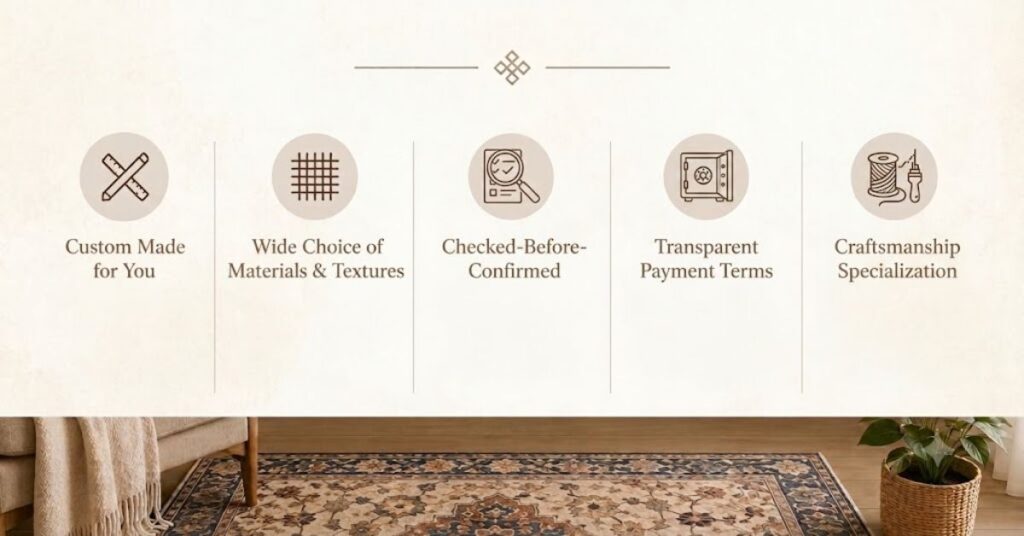
  • A checked-before-confirmed approach — we look at what you’re asking for before anything is agreed, so you’re not left guessing.
  • A defined path from request to delivery — every order follows the same sequence, from design submission through to tracked dispatch.
  • Transparent payment terms — you know upfront what’s required before production and before dispatch.
  • Specialization in hand-tufted craftsmanship — our focus stays on doing one construction method well, rather than spreading across every rug type.

FAQs

Can I send my own design or logo for a custom hand-tufted rug?

Yes. Feel free to forward us the design, the logo, or even just an image that inspires you. Our team will review your design or logo for feasibility before confirming production.

How do I know what size or shape is possible? 

Share your intended size and shape when you reach out. Our team will review your requested size and shape for feasibility before confirming the quotation.

How is the price for a custom rug determined?

We calculate your price based on size, shape, colors, quantity, and design. We will provide a quote after the order details are reviewed.

Do I need to pay the full amount upfront? 

No. An advance payment is required before production begins. You must pay the remaining balance before shipment, unless another arrangement has been made by management for your order.

How will I know my rug is on its way? 

Once your rug is quality-checked, packed, and dispatched, tracking details are shared with you directly.

What if I need multiple rugs to the same design? 

Quantity is one of the details you share at the start of your request, and it’s factored into both our review and your quotation.

Conclusion

Ordering a custom hand-tufted rug in Pakistan from Pile & Loop starts with the details only you can provide — your design, size, shape, colors, and quantity. From there, our process takes over: your request is reviewed, a quotation is prepared and approved, and a clear path through production, payment, and dispatch follows. Nothing is assumed until it’s been checked, and nothing moves forward until you’ve approved it.

Get Your Custom Rug Quote

Ready to start? Send us your design, sizes, shapes, colors, quantity, delivery location, and deadline for your custom order.

Visit pileandloop.com or contact us on WhatsApp / call at +92 305 1329462.

Posted on — Leave a comment

What Is Tufting? A Complete Beginner’s Guide

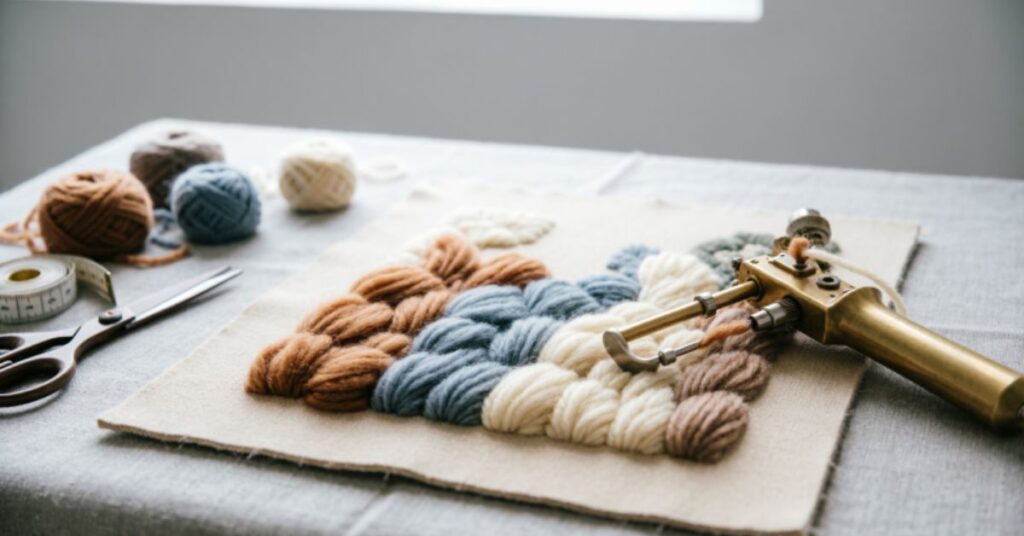
tufting tools for rug making, tufting gun, and yarn on rug, what is tufting beginner guide

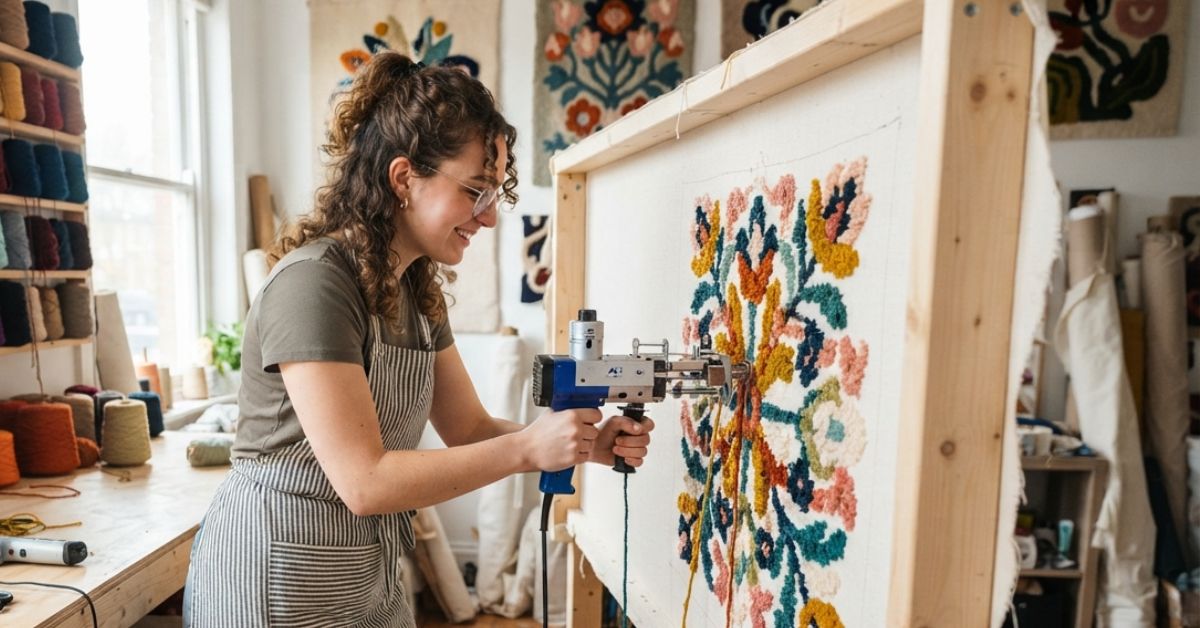
Have you ever watched someone creating a beautiful handmade rug using simple yarn and fabric and wondered how they made it? If you decide to learn this skill yourself, then some questions like “What is tufting? What tools does it need, and can a novice learn it?” might arise.

This is an ancient technique that uses a tufting gun to insert yarn into stretched fabric, resulting in rugs, wall decorations, cushions, and other handmade products.

This guide will cover all the essential information on tufting – what it entails, the equipment required, the difference between cut pile and loop pile, startup costs, and whether tufting can be turned into a profitable hobby.

What Is a Tufting Gun?

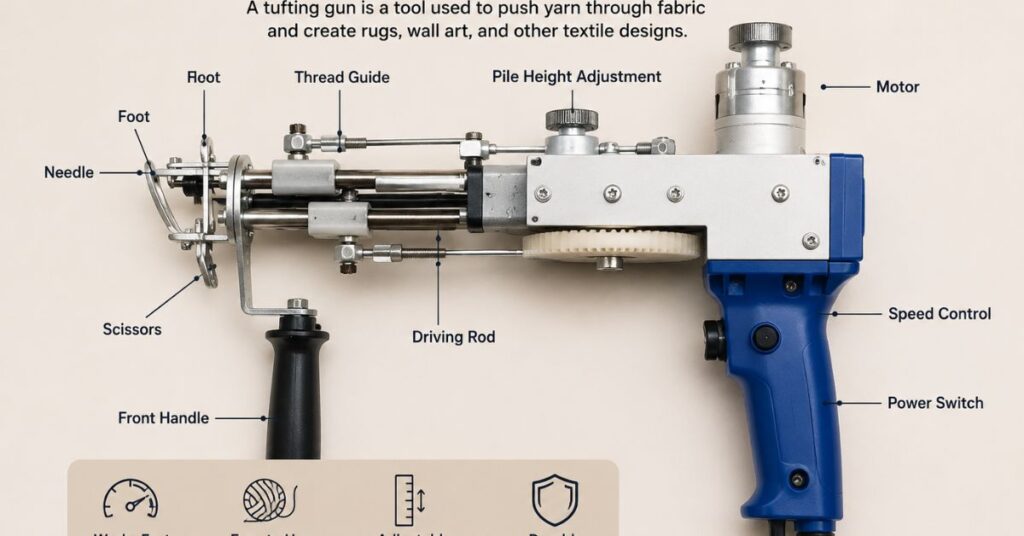
The tufting gun is an electrical hand tool used to push the yarn through the primary tufting material very quickly and efficiently. As opposed to pulling each yarn through the fabric by hand, the gun makes it easier and faster to put down a row of yarns.

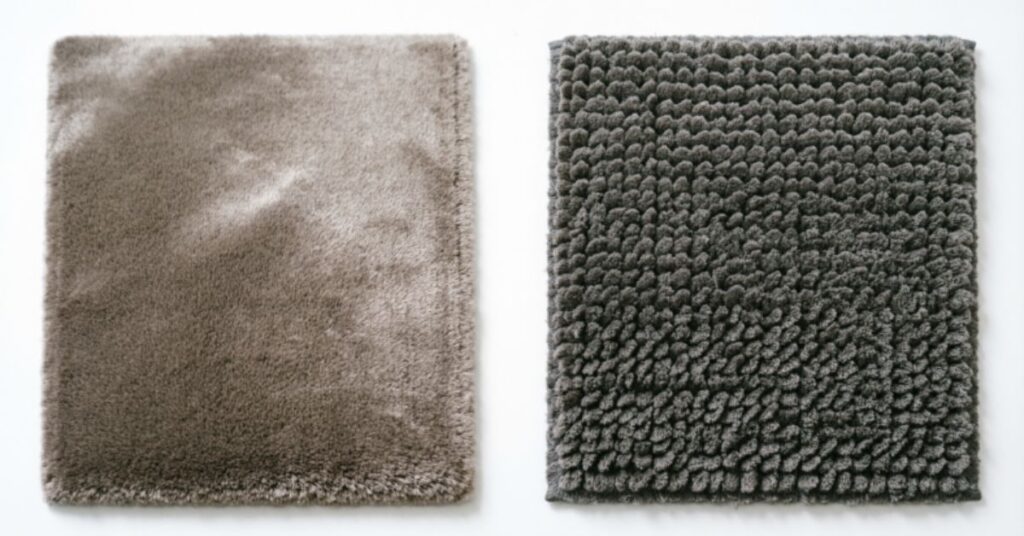
They come in two major types, namely cut pile guns and loop pile guns. The cut pile gun works by cutting the yarn as it is fed into the fabric, hence making the texture smooth. On the other hand, the loop-pile gun keeps the yarn in loops. If you are starting tufting, then you should use the cut pile gun.

How Does Tufting Work?

Tufting is easy to learn. First, the fabric used for tufting is put onto the frame, and then the design is drawn on it. The tufting gun ensures that the yarn is fed through the fabric in accordance with the pattern lines. 

Once the entire process is over, glue is used on the back side to hold the yarn in position. Do not hurry, particularly if you are still learning. A stable pace of working and even spacing between lines will provide a better result.

1. Stretch the Fabric

First, stretch the primary tufting fabric and secure it to a frame. The fabric needs to be tight for the tufting gun to remain stable. Otherwise, the yarn may not be placed uniformly, which may make it difficult to create the pattern.

2. Draw Your Design

Now create the design and place it on the fabric. This can be done by drawing directly on the fabric or projecting a design to trace the outline. Beginners should begin with easy patterns, thick lines, and large designs.

3. Load the Yarn

Insert the yarn based on the manufacturer’s instructions for easy feeding. It is advisable to begin with acrylic yarn since it is cheap and is available in different colors.

4. Start Tufting

Switch on the gun, and follow your plan. Move slowly and maintain uniform spaces between lines. Don’t worry if you’re not able to perform this task immediately; sometimes it takes a little time to acquire that ability.

5. Secure the Back

Check for any extra yarns on the backside before trimming. Then use the glue to hold down the tufts and allow the glue to dry.

6. Add the Backing

Lastly, put on a good rug backing to the back of your rug. This will make your rug look neat and will also add durability to it. Once you have done all this, let it dry and then trim the front side of your rug.

What Is the Difference Between Cut Pile and Loop Pile?

The major difference between them is the way that the yarn lies on the surface of the carpet. In the cut pile, it is cut yarn, and in the loop pile, it is loops of yarn. The decision to choose one over another will be based on aesthetics.

What Is a Cut Pile?

The cut pile is formed through the process of snipping the loops, which exposes individual yarns on the surface of the rug, making the rug feel soft and plush. The cut pile is commonly used to create colorful rug designs and personalized rugs.

For beginners, a cut pile may be chosen as it allows trimming the surface after the tufting process, making the process more accurate.

What Is a Loop Pile?

Loop pile keeps the loops intact without cutting them off, thus creating a surface with a unique appearance different from the one created by the cut pile technique. It can work very well for geometrical designs and textured designs as well. Neither technique is superior to the other. It all depends on the design and the type of craft product that you wish to create.

Is Tufting Hard for Beginners?

Tufting itself isn’t hard to do; it just takes practice. For many newbies, the biggest challenge is getting comfortable with using the tufting gun with proper spacing on the tightly stretched fabric.

The best technique for learning is starting with something simple. Choose a basic design and practice it in something small before trying to work on a big custom rug. With practice, you will become more comfortable with the gun, curves, and straight lines.

What Can You Make With Tufting?

Tufting is not limited to just rugs. After learning the tufting basics, you can try out several creative projects, including:

  • Custom-made rugs
  • Wall hangings and textile art 
  • Coasters and small mats
  • Cushion covers
  • Decorative patches
  • Custom gifts
  • Home decor

A good way for beginners to start is by working on small projects, as they require minimal yarn, fabric, time, and glue. With practice, one can work on more elaborate projects.

How Much Does It Cost to Start Tufting?

The cost to start tufting can range widely. This is because it largely depends on the quality of equipment that you will choose to use, as well as how much of it you will be making yourself. The basic package typically ranges from $150 to $400.

Is Tufting a Hobby or Can you Make Money from It?

Tufting is an enjoyable activity that also can earn you money. If you become good at tufting, you can sell the rugs or take orders.

While some craftsmen concentrate on making rugs that may have names, logos, or even cartoons of their favorite animals and cartoon characters, other rug-makers make special wall hangings and other decorative pieces.

Making money isn’t just about making good rugs; it involves materials, time, costs, marketing, shipping, and dealing with clients. The first step is to improve your craft and make a portfolio to get large custom orders.

Is Tufting a Good Hobby for Beginners?

Yes, It’s a great hobby for people who enjoy playing with colors and designs, making something from your imagination come to life. These are some aspects that require both time and money; however, the results make all the efforts and investments worth it. Through experimentation and mistakes, you will learn the art of tufting.

FAQs

Does tufting require sewing skills?

No. You do not require any experience in sewing to take up tufting. The only thing required is knowledge of how to handle the tufting gun as well as knowing what materials are used.

How long does it take to make a tufted rug?

Making small rugs will take some hours, but complicated rugs may take some days to complete since it requires time to do all the trimming, gluing, and drying of the material.

Can you use a tufting gun without a frame?

A frame is essential for most tufting gun projects because the primary fabric needs to stay tight. Without proper tension, inserting yarn evenly becomes much more difficult.

Is a tufting gun loud?

Yes. Tufting guns have high motor speeds and make lots of noise. It is important to rest and wear protective hearing protection. 

Which yarn can be used for tufting?

Acrylic is perfect for beginners because of its low cost and range of color choices. Wool or a wool mix creates another texture experience.

Conclusion

Tufting is an art form that is used to create rugs and wall hangings using fabrics and yarn. This art doesn’t require much time or prior experience, but it requires some equipment and a bit of practice.

Now that you understand tufting, the materials involved in the process, and cut versus loop pile, you are ready to start your first project. Do not make things difficult for yourself and choose something easy and simple. In time, tufting may develop into a great hobby and perhaps even a custom rug business.