Posted on — Leave a comment

Best Keyboard Rug for Gaming Desks: What to Look For

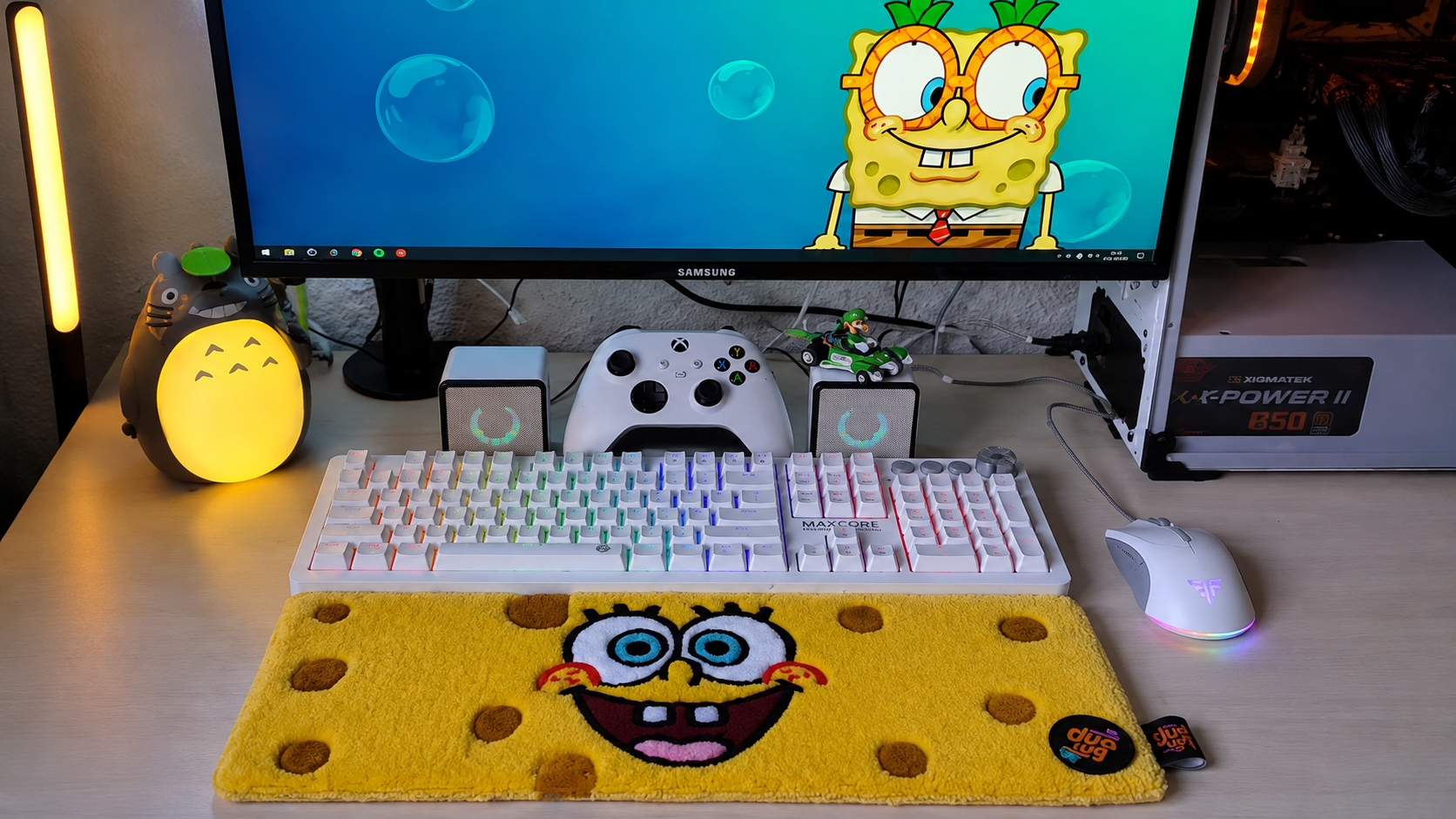
SpongeBob keyboard rug in a gaming setup

Quick Takeaways

  • A Gaming Keyboard Rug sits on your desk, under your keyboard and mouse — it’s a different product from a floor rug
  • Size according to your desk space requirement whether you need keyboard-sized, full-size or L-shaped desk coverage.
  • The surface texture influences your wrist comfort and mouse glide ability.
  • Personalization is the primary factor that makes players prefer the keyboard rug rather than the standard desk mat because the player can add their design, tag, and RGB compatible colors to it.
  • For streamers, a keyboard rug is something that is going to be seen on camera, so you should consider this an aesthetic choice, too.

Most gaming desk guides talk about the floor. However, the one part of the surface that receives the least attention is right below your hands, where your wrists lay resting for hours at end.

This is where a keyboard rug will help, which is nothing but a soft rug laid on your desk surface below your keyboard and mouse.

That is how you should consider things like size, comfort, personalization options, and streaming when choosing one for yourself.

What Is a Best Keyboard Rug?
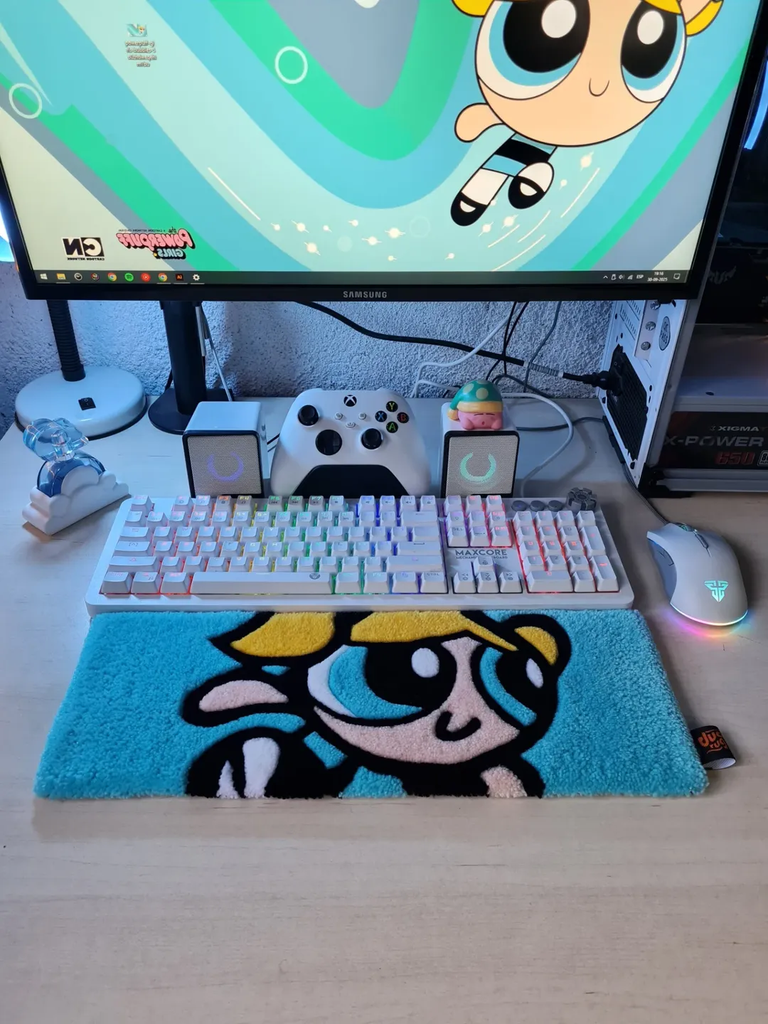
Blue keyboard rug on a gaming desk setup

A keyboard rug is an accessory for the desk and not a floor rug. The keyboard rug lays flat on the surface of your desk and lies below the keyboard and mouse. While a floor rug must be designed to withstand the effects of footsteps and the movements of your chair, a keyboard rug need only be able to withstand activities that take place on your desk, such as typing and use of the mouse.

Desk Accessory, Not a Floor Rug

Because a keyboard rug lives on the desk, it’s sized and chosen differently than anything meant for the floor. Pile height, backing, and surface texture all matter here, but for different reasons — comfort under your wrists and consistent mouse tracking, rather than durability against rolling chair wheels.

Sizing a Keyboard Rug to Your Desk

Size is determined by the amount of coverage you need on your desk surface.

Keyboard-Only vs Full-Desk Coverage

Some people want a rug that covers just the keyboard and mouse footprint — enough room to type and move the mouse comfortably. Others prefer a full-desk rug that extends across the entire surface, giving a more unified look and covering monitor stands, speakers, and accessories too. Neither is more “correct” — it comes down to how much of your desk surface you want to visually and physically change.

Fitting Around Monitor Arms, Speakers & Cable Channels

If your desk has a monitor arm clamp, a speaker stand, or a built-in cable channel, measure around those before choosing a size. A rug that runs right up to a clamp base can bunch or lift unevenly, and a rug that covers a cable channel can make routing and re-routing cables more of a hassle than it needs to be. Measuring your actual desk layout — not just the desk’s overall dimensions — will save you a return.

Single Desk vs L-Shaped Desk Sizing

An L-Shaped desk is a little more difficult to measure since you will be trying to determine whether to get a rug that fits just the keyboard end of the desk or whether to get one that can stretch to fit both ends, with the keyboard being one of them. When using the second part of an L-Shaped desk for a controller, tablet, or monitor, take it into consideration.

Desk Comfort: What You Feel Under Your Wrists
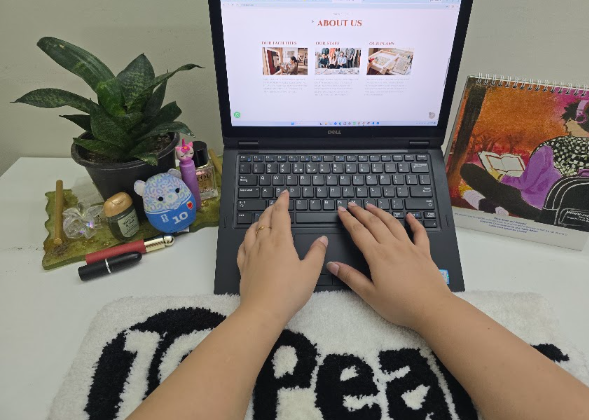
Hands typing on a laptop with a soft keyboard rug underneath

This is the part a floor rug can’t help with — how the surface feels during a long typing or gaming session.

Thickness and Wrist Support During Long Sessions

A thin, flat weave will feel closer to a standard desk mat, while a slightly thicker rug adds more cushioning under the wrists. Thicker isn’t automatically better, though — a rug that’s too plush can shift under your hands while typing, which some people find distracting during fast-paced gameplay. If you type or game for hours at a stretch, testing a mid-range thickness first is a reasonable starting point before going thicker or thinner.

Surface Texture and Mouse Tracking

Mouse tracking is sensitive to surface texture. A tighter weave results in more reliable tracking compared to loose and high-pile weave which can affect the capability of the optical or laser sensors from detecting the motion. In case accurate control of your mouse is important in your gaming style. Choose a surface that is flat and has tighter weave for the mouse area even though the entire rug may have a different texture.

Customization: Making the Desk Match Your Setup

For a lot of people, this is the real draw of a keyboard rug over a generic desk mat — it’s a way to bring your own design directly onto your desk.

Using Your Own or Licensed Artwork

If you have artwork you own the rights to — original art, a design you’ve licensed, or something a designer made for you. A custom keyboard rug is a way to put it somewhere you’ll see it every session. Pile & Loop’s keyboard rugs collection, which the brand also lists under gaming desk rugs and gaming setup rugs, supports designs made from customer-owned or authorized artwork.

Gamer Tags, Logos & Team Branding

A keyboard rug is also a straightforward way to add a gamer tag, personal logo, or team emblem to your desk without covering a wall or shelf. For competitive teams or small studios, this can extend to matching rugs across multiple desks — a shared visual identity that’s more subtle than branded wall decor.

Coordinating Colors with RGB Lighting

If your setup is built around RGB lighting, color coordination is worth thinking through before ordering. A dark, neutral base (charcoal, black, deep blue) tends to let LED lighting stand out more than a busy or light-colored rug would. Keep in mind that a digital color preview and a dyed or printed physical product won’t always match exactly — it’s worth asking the seller what to expect before finalizing a custom color.

Built for Gaming & Streaming Desks

If your desk setup is ever on camera, the keyboard rug isn’t just something you feel — it’s something your audience sees too.

On-Camera Desk Appearance for Streamers

Streamers will find that the desk surface is featured in their webcam shots and overheads more than the floor surface. Using a keyboard rug that matches the branding of your stream will be an easy and convenient way to create a constant visual effect without having to make a full change to your desk.

Matching Rugs for Team or Studio Setups

For teams or studios running multiple desks, ordering matching or coordinated keyboard rugs is a simple way to create a consistent look across every station — useful for group streams, tournament setups, or shared studio spaces where visual consistency matters.

FAQs

What size keyboard rug do I need for my desk? 

Measure the area occupied by your keyboard and mouse including some inches of margin, or measure your entire desk if you want complete coverage.

Does a keyboard rug affect mouse sensor accuracy?

Yes, if the surface is loose or high-pile. A tighter, flatter weave tracks more consistently.

Can I get a custom keyboard rug with my own design? 

Yes. Pile & Loop offers custom keyboard rugs using customer-owned or authorized artwork, gamer tags, logos, or color matching. Ask through their contact page.

Is a keyboard rug the same as a desk mat? 

No. A desk mat is thin and built mainly for mouse tracking. A keyboard rug is softer and more customizable.

How do I size a keyboard rug for an L-shaped desk?

Determine whether you only require the keyboard area or the whole L-shaped section. The second surface is required in case you use it for a monitor or any other equipment.

Bottom Line — Shop Pile & Loop’s Keyboard Rugs

The right keyboard rug comes down to matching size to your desk layout, choosing a texture that supports both comfort and accurate mouse tracking, and — if it matters to you — personalizing it to fit your setup or your stream. Ready to find the right one for your desk? Browse Pile & Loop’s keyboard rugs, or get in touch to ask about custom options.
Posted on — Leave a comment

Custom Rug in Pakistan: Design, Size & Price Guide 

Custom rug in Pakistan featuring colorful hand-tufted designs, modern patterns, and handmade rug craftsmanship.

Quick Takeaways

  • Pile & Loop creates custom hand-tufted rugs based on your confirmed design, size, and quantity requirements.
  • We check the size, shape, and design to be certain that your custom rug can be made.
  • Your quotation depends on the rug’s size, shape, colors, quantity, and design complexity.
  • The ordering process in Pile & Loop runs from design submission through to dispatch and tracking, with an advance payment required before production begins.

Meet Pile & Loop

Searching for a custom rug in Pakistan usually means sifting through fixed catalog sizes and finished designs that almost — but don’t quite — work for the space you have in mind. Looking for a custom rug in Pakistan? Pile & Loop creates hand-tufted rugs based on your design, size, and quantity requirements. 

This guide covers what you can bring to us for customization, how to think through sizing before you reach out, the exact steps your order will go through, what shapes the final price, and how production, payment, and delivery are handled — so you know what to expect at every stage.

What You Can Customize in a Custom Rug

What can you customize in a custom rug: design, colors, and materials at Pile & Loop Pakistan

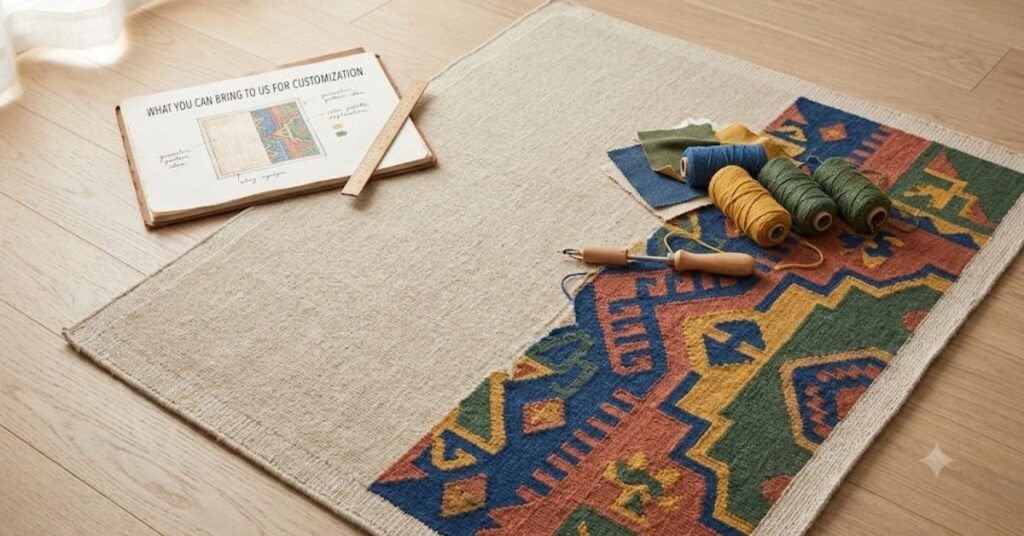
Every custom rug in Pakistan starts with the details you provide. When you get in touch, you can share:

  • A design, logo, or inspiration — an existing pattern, a brand logo, a reference image, or a concept you’d like developed further.
  • Preferred size and shape — the dimensions and form you’re working with for your space.
  • Colors — the palette you want the rug to follow.
  • Quantity — whether you need a single piece or multiple rugs to the same specification.

It’s worth being clear on one point: nothing is guaranteed until our team has looked at it. Every design, size, shape, and color request is checked before we confirm it can be produced as a hand-tufted rug — which is why the first step of an order is always a review, not an automatic yes.

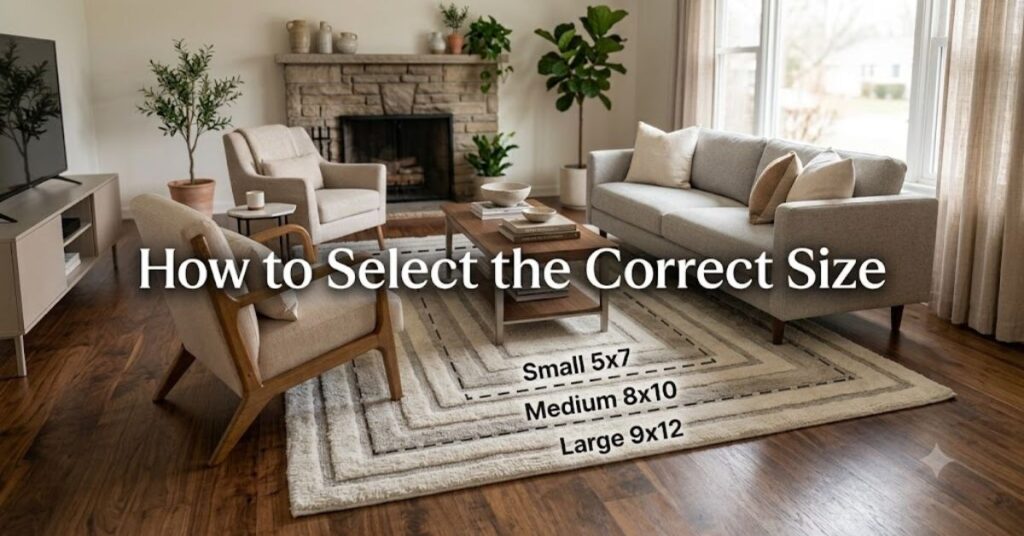
How to Select the Correct Size for your custom rug

How to select the correct rug size for the living room - 5*7 and 8*10 rug dimension guide

Getting the size right before you submit your request saves time on both sides. A few things worth working through first:

  1. Measure the actual floor area, not just a rough sense of the room — note the full space and the specific area you want the rug to cover.
  2. Decide how it should sit with your furniture or layout — whether it needs to sit fully under a seating arrangement, define a walkway, or cover a specific footprint like a logo mat or entrance piece.
  3. Consider the shape the space calls for — a standard rectangle isn’t always the right fit; an unusual layout might call for a different shape entirely.
  4. Bring a size range if you’re not fixed on an exact number — this gives our team room to confirm what’s feasible without back-and-forth.

Once you have your measurement and shape in mind, you will be ready to send them to us so we can begin processing your request.

The Confirmed Pile & Loop Ordering Process

Pile & Loop follows the same clear sequence for every custom hand-tufted rug.

  1. Share your requirements — send us your design, logo, or inspiration, along with preferred size, shape, colors, quantity, delivery city, and deadline.
  2. Review — our team checks your request against what our hand-tufted process can produce and confirms it back to you.
  3. Design direction — where applicable, a digital mockup or design direction is prepared for your review.
  4. Approval — you approve the design and the quotation before anything moves forward.
  5. Advance payment — the required advance payment is received, and production begins only after this step.
  6. Production and quality check — the rug is handmade, finished, and quality-checked.
  7. Remaining payment — the balance is completed before dispatch, unless management has approved an alternative arrangement.
  8. Dispatch — the rug is packed, dispatched, and tracking details are shared with you.

Factors Affecting Price

We don’t publish flat prices for custom rugs in Pakistan, because no two orders draw on the same combination of details. What does shape your quotation is the specific information you provide at the start:

  • Size and shape of the rug you’re requesting.
  • Colors involved in the design.
  • Quantity — a single piece versus a batch order.
  • Design complexity — how detailed the pattern, logo, or artwork is.

Your quotation is prepared once our team has confirmed these details, so you’ll know your price before approving anything or making an advance payment.

Confirmed Production, Payment & Delivery

Once your design and quotation are approved, here’s how the rest of the order is handled:

  • Payment structure — an advance payment is required before production starts. The remaining balance is due before dispatch, unless management has approved a different arrangement for your order.
  • Production — your rug is handmade as a hand-tufted piece and goes through a quality check once finished.
  • Dispatch and tracking — once your rug clears quality checks and any remaining payment is settled, it’s packed, dispatched to your delivery city, and tracking details are shared with you.

Exact production and delivery timeframes depend on your specific order and will be confirmed by our team directly rather than quoted as a general estimate.

Why Choose Pile & Loop

Why choose Pile & Loop for custom rugs

Choosing a custom rug means trusting the process as well as the product. With Pile & Loop, that process is built around clarity at every step:

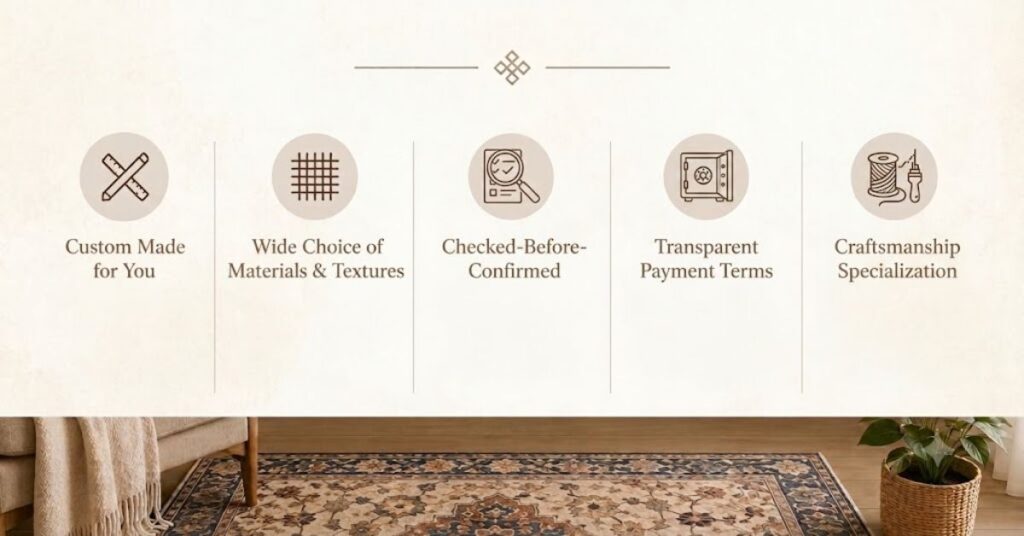
  • A checked-before-confirmed approach — we look at what you’re asking for before anything is agreed, so you’re not left guessing.
  • A defined path from request to delivery — every order follows the same sequence, from design submission through to tracked dispatch.
  • Transparent payment terms — you know upfront what’s required before production and before dispatch.
  • Specialization in hand-tufted craftsmanship — our focus stays on doing one construction method well, rather than spreading across every rug type.

FAQs

Can I send my own design or logo for a custom hand-tufted rug?

Yes. Feel free to forward us the design, the logo, or even just an image that inspires you. Our team will review your design or logo for feasibility before confirming production.

How do I know what size or shape is possible? 

Share your intended size and shape when you reach out. Our team will review your requested size and shape for feasibility before confirming the quotation.

How is the price for a custom rug determined?

We calculate your price based on size, shape, colors, quantity, and design. We will provide a quote after the order details are reviewed.

Do I need to pay the full amount upfront? 

No. An advance payment is required before production begins. You must pay the remaining balance before shipment, unless another arrangement has been made by management for your order.

How will I know my rug is on its way? 

Once your rug is quality-checked, packed, and dispatched, tracking details are shared with you directly.

What if I need multiple rugs to the same design? 

Quantity is one of the details you share at the start of your request, and it’s factored into both our review and your quotation.

Conclusion

Ordering a custom hand-tufted rug in Pakistan from Pile & Loop starts with the details only you can provide — your design, size, shape, colors, and quantity. From there, our process takes over: your request is reviewed, a quotation is prepared and approved, and a clear path through production, payment, and dispatch follows. Nothing is assumed until it’s been checked, and nothing moves forward until you’ve approved it.

Get Your Custom Rug Quote

Ready to start? Send us your design, sizes, shapes, colors, quantity, delivery location, and deadline for your custom order.

Visit pileandloop.com or contact us on WhatsApp / call at +92 305 1329462.

Posted on — Leave a comment

What Is Tufting? A Complete Beginner’s Guide

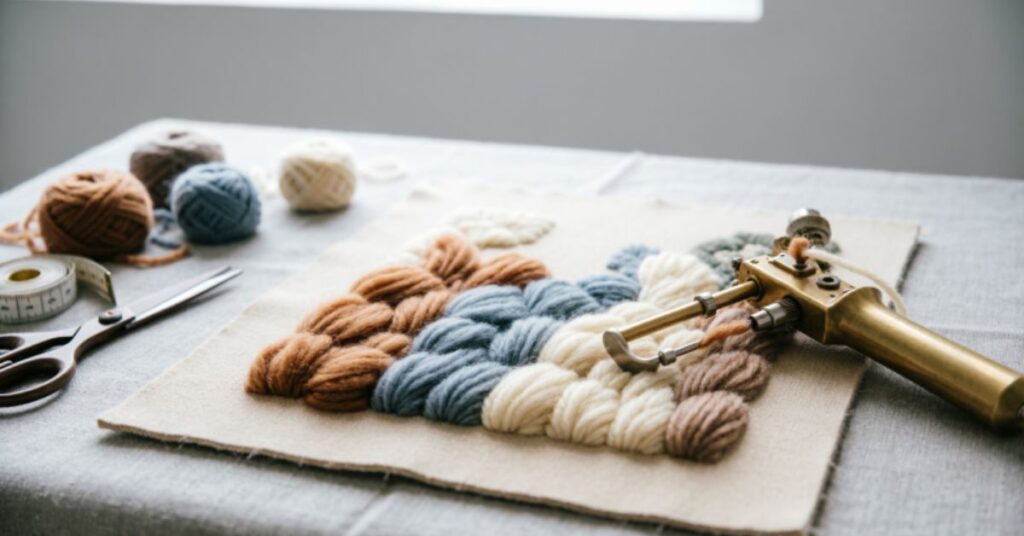
tufting tools for rug making, tufting gun, and yarn on rug, what is tufting beginner guide

Have you ever watched someone creating a beautiful handmade rug using simple yarn and fabric and wondered how they made it? If you decide to learn this skill yourself, then some questions like “What is tufting? What tools does it need, and can a novice learn it?” might arise.

This is an ancient technique that uses a tufting gun to insert yarn into stretched fabric, resulting in rugs, wall decorations, cushions, and other handmade products.

This guide will cover all the essential information on tufting – what it entails, the equipment required, the difference between cut pile and loop pile, startup costs, and whether tufting can be turned into a profitable hobby.

What Is a Tufting Gun?

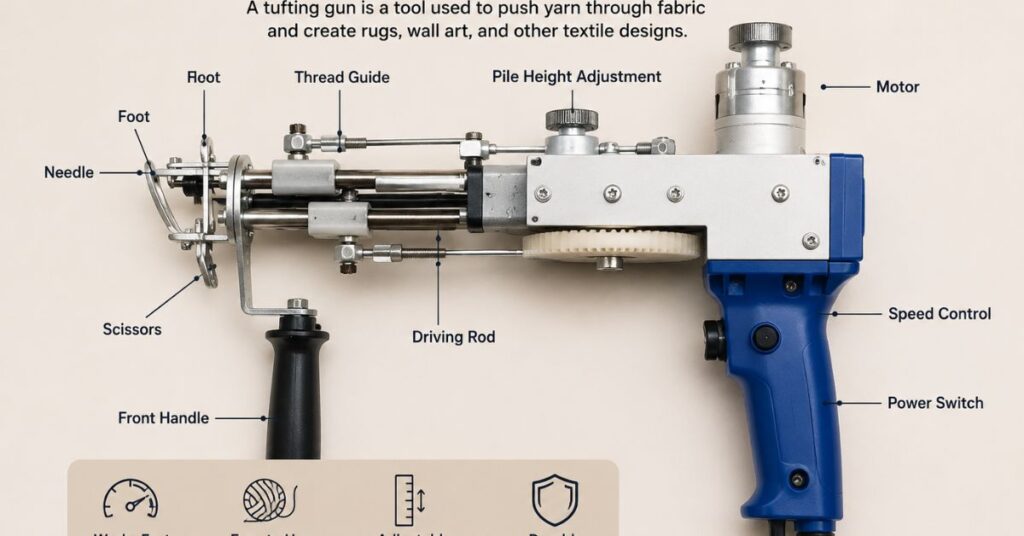
The tufting gun is an electrical hand tool used to push the yarn through the primary tufting material very quickly and efficiently. As opposed to pulling each yarn through the fabric by hand, the gun makes it easier and faster to put down a row of yarns.

They come in two major types, namely cut pile guns and loop pile guns. The cut pile gun works by cutting the yarn as it is fed into the fabric, hence making the texture smooth. On the other hand, the loop-pile gun keeps the yarn in loops. If you are starting tufting, then you should use the cut pile gun.

How Does Tufting Work?

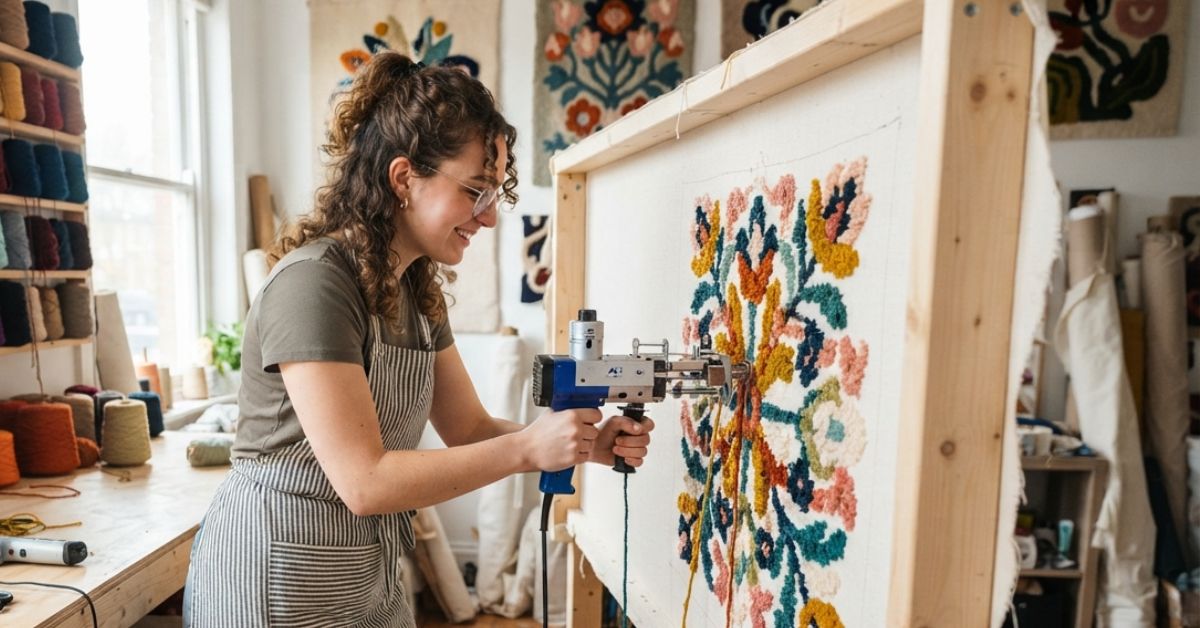
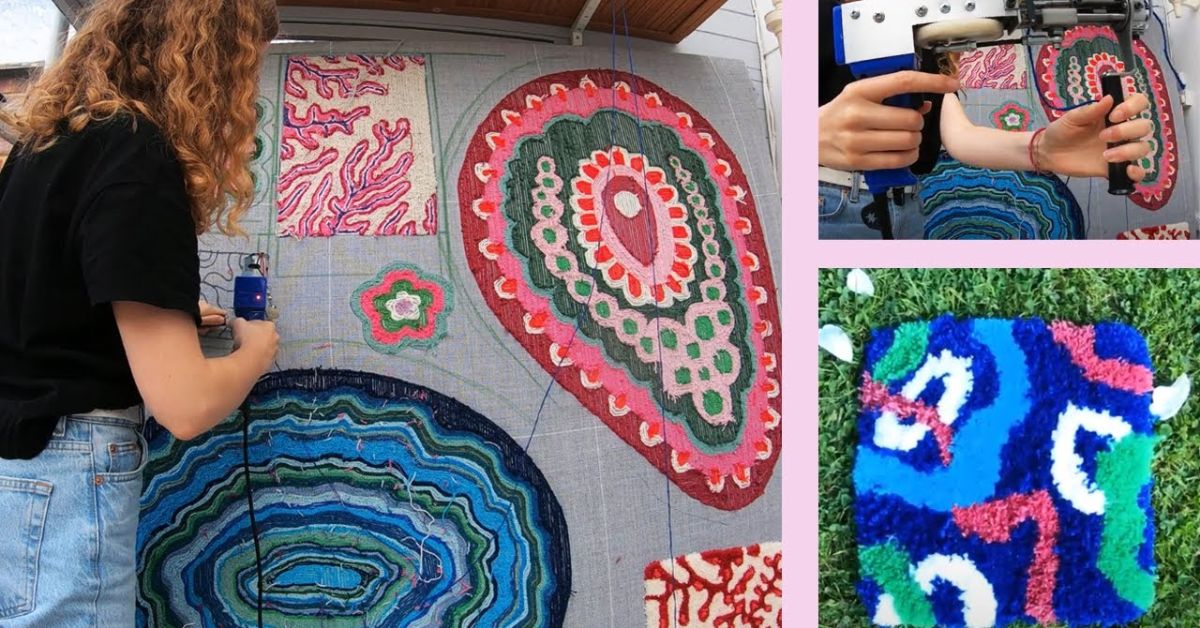
Tufting is easy to learn. First, the fabric used for tufting is put onto the frame, and then the design is drawn on it. The tufting gun ensures that the yarn is fed through the fabric in accordance with the pattern lines. 

Once the entire process is over, glue is used on the back side to hold the yarn in position. Do not hurry, particularly if you are still learning. A stable pace of working and even spacing between lines will provide a better result.

1. Stretch the Fabric

First, stretch the primary tufting fabric and secure it to a frame. The fabric needs to be tight for the tufting gun to remain stable. Otherwise, the yarn may not be placed uniformly, which may make it difficult to create the pattern.

2. Draw Your Design

Now create the design and place it on the fabric. This can be done by drawing directly on the fabric or projecting a design to trace the outline. Beginners should begin with easy patterns, thick lines, and large designs.

3. Load the Yarn

Insert the yarn based on the manufacturer’s instructions for easy feeding. It is advisable to begin with acrylic yarn since it is cheap and is available in different colors.

4. Start Tufting

Switch on the gun, and follow your plan. Move slowly and maintain uniform spaces between lines. Don’t worry if you’re not able to perform this task immediately; sometimes it takes a little time to acquire that ability.

5. Secure the Back

Check for any extra yarns on the backside before trimming. Then use the glue to hold down the tufts and allow the glue to dry.

6. Add the Backing

Lastly, put on a good rug backing to the back of your rug. This will make your rug look neat and will also add durability to it. Once you have done all this, let it dry and then trim the front side of your rug.

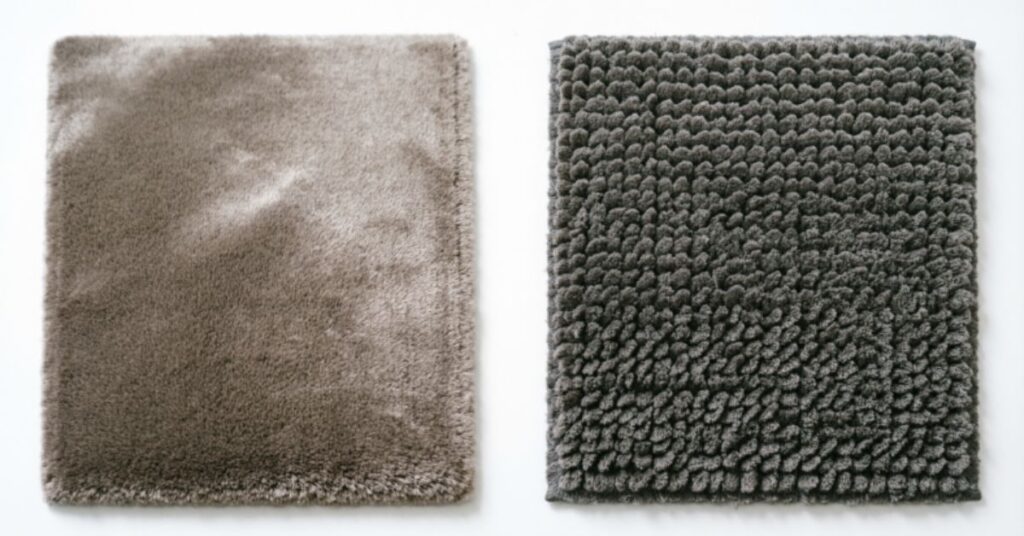
What Is the Difference Between Cut Pile and Loop Pile?

The major difference between them is the way that the yarn lies on the surface of the carpet. In the cut pile, it is cut yarn, and in the loop pile, it is loops of yarn. The decision to choose one over another will be based on aesthetics.

What Is a Cut Pile?

The cut pile is formed through the process of snipping the loops, which exposes individual yarns on the surface of the rug, making the rug feel soft and plush. The cut pile is commonly used to create colorful rug designs and personalized rugs.

For beginners, a cut pile may be chosen as it allows trimming the surface after the tufting process, making the process more accurate.

What Is a Loop Pile?

Loop pile keeps the loops intact without cutting them off, thus creating a surface with a unique appearance different from the one created by the cut pile technique. It can work very well for geometrical designs and textured designs as well. Neither technique is superior to the other. It all depends on the design and the type of craft product that you wish to create.

Is Tufting Hard for Beginners?

Tufting itself isn’t hard to do; it just takes practice. For many newbies, the biggest challenge is getting comfortable with using the tufting gun with proper spacing on the tightly stretched fabric.

The best technique for learning is starting with something simple. Choose a basic design and practice it in something small before trying to work on a big custom rug. With practice, you will become more comfortable with the gun, curves, and straight lines.

What Can You Make With Tufting?

Tufting is not limited to just rugs. After learning the tufting basics, you can try out several creative projects, including:

  • Custom-made rugs
  • Wall hangings and textile art 
  • Coasters and small mats
  • Cushion covers
  • Decorative patches
  • Custom gifts
  • Home decor

A good way for beginners to start is by working on small projects, as they require minimal yarn, fabric, time, and glue. With practice, one can work on more elaborate projects.

How Much Does It Cost to Start Tufting?

The cost to start tufting can range widely. This is because it largely depends on the quality of equipment that you will choose to use, as well as how much of it you will be making yourself. The basic package typically ranges from $150 to $400.

Is Tufting a Hobby or Can you Make Money from It?

Tufting is an enjoyable activity that also can earn you money. If you become good at tufting, you can sell the rugs or take orders.

While some craftsmen concentrate on making rugs that may have names, logos, or even cartoons of their favorite animals and cartoon characters, other rug-makers make special wall hangings and other decorative pieces.

Making money isn’t just about making good rugs; it involves materials, time, costs, marketing, shipping, and dealing with clients. The first step is to improve your craft and make a portfolio to get large custom orders.

Is Tufting a Good Hobby for Beginners?

Yes, It’s a great hobby for people who enjoy playing with colors and designs, making something from your imagination come to life. These are some aspects that require both time and money; however, the results make all the efforts and investments worth it. Through experimentation and mistakes, you will learn the art of tufting.

FAQs

Does tufting require sewing skills?

No. You do not require any experience in sewing to take up tufting. The only thing required is knowledge of how to handle the tufting gun as well as knowing what materials are used.

How long does it take to make a tufted rug?

Making small rugs will take some hours, but complicated rugs may take some days to complete since it requires time to do all the trimming, gluing, and drying of the material.

Can you use a tufting gun without a frame?

A frame is essential for most tufting gun projects because the primary fabric needs to stay tight. Without proper tension, inserting yarn evenly becomes much more difficult.

Is a tufting gun loud?

Yes. Tufting guns have high motor speeds and make lots of noise. It is important to rest and wear protective hearing protection. 

Which yarn can be used for tufting?

Acrylic is perfect for beginners because of its low cost and range of color choices. Wool or a wool mix creates another texture experience.

Conclusion

Tufting is an art form that is used to create rugs and wall hangings using fabrics and yarn. This art doesn’t require much time or prior experience, but it requires some equipment and a bit of practice.

Now that you understand tufting, the materials involved in the process, and cut versus loop pile, you are ready to start your first project. Do not make things difficult for yourself and choose something easy and simple. In time, tufting may develop into a great hobby and perhaps even a custom rug business.