
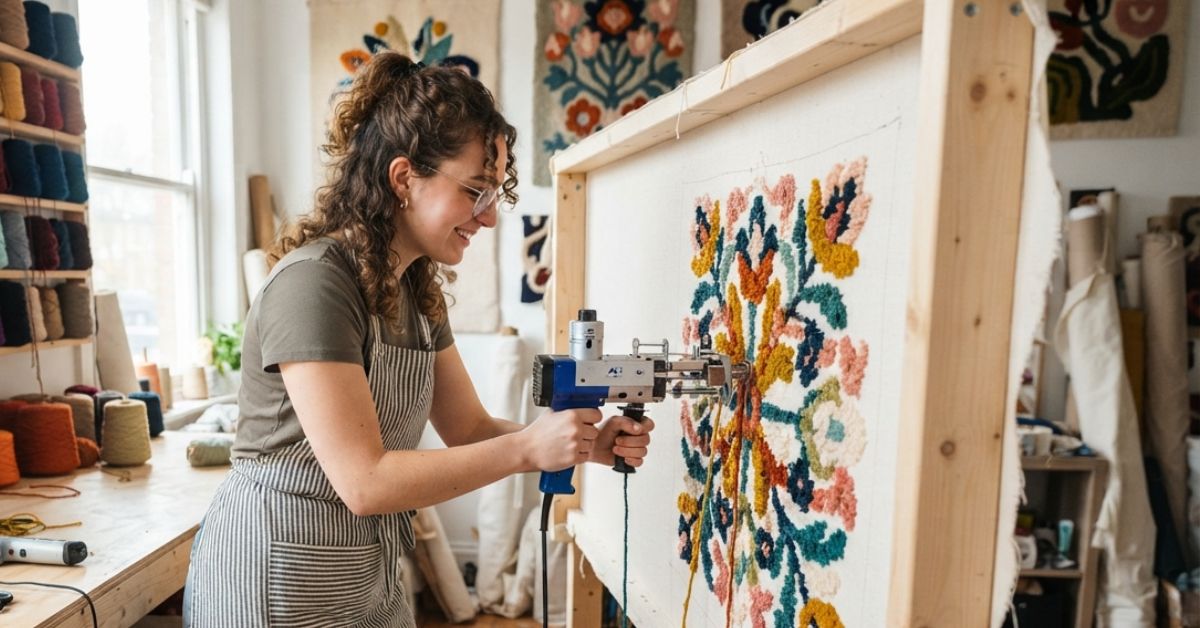
Have you ever watched someone creating a beautiful handmade rug using simple yarn and fabric and wondered how they made it? If you decide to learn this skill yourself, then some questions like “What is tufting? What tools does it need, and can a novice learn it?” might arise.
This is an ancient technique that uses a tufting gun to insert yarn into stretched fabric, resulting in rugs, wall decorations, cushions, and other handmade products.
This guide will cover all the essential information on tufting – what it entails, the equipment required, the difference between cut pile and loop pile, startup costs, and whether tufting can be turned into a profitable hobby.
What Is a Tufting Gun?
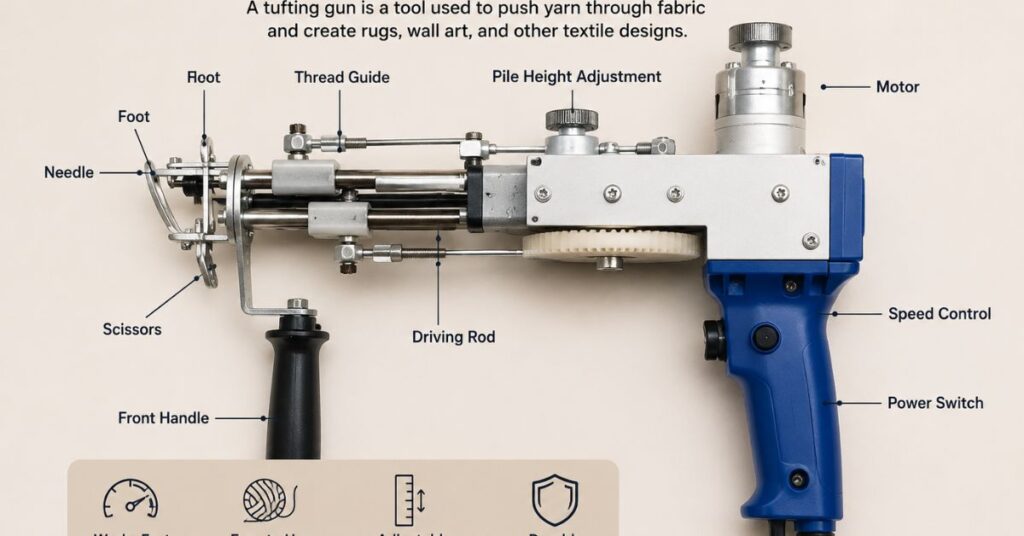
The tufting gun is an electrical hand tool used to push the yarn through the primary tufting material very quickly and efficiently. As opposed to pulling each yarn through the fabric by hand, the gun makes it easier and faster to put down a row of yarns.
They come in two major types, namely cut pile guns and loop pile guns. The cut pile gun works by cutting the yarn as it is fed into the fabric, hence making the texture smooth. On the other hand, the loop-pile gun keeps the yarn in loops. If you are starting tufting, then you should use the cut pile gun.
How Does Tufting Work?
Tufting is easy to learn. First, the fabric used for tufting is put onto the frame, and then the design is drawn on it. The tufting gun ensures that the yarn is fed through the fabric in accordance with the pattern lines.
Once the entire process is over, glue is used on the back side to hold the yarn in position. Do not hurry, particularly if you are still learning. A stable pace of working and even spacing between lines will provide a better result.
1. Stretch the Fabric
First, stretch the primary tufting fabric and secure it to a frame. The fabric needs to be tight for the tufting gun to remain stable. Otherwise, the yarn may not be placed uniformly, which may make it difficult to create the pattern.
2. Draw Your Design
Now create the design and place it on the fabric. This can be done by drawing directly on the fabric or projecting a design to trace the outline. Beginners should begin with easy patterns, thick lines, and large designs.
3. Load the Yarn
Insert the yarn based on the manufacturer’s instructions for easy feeding. It is advisable to begin with acrylic yarn since it is cheap and is available in different colors.
4. Start Tufting
Switch on the gun, and follow your plan. Move slowly and maintain uniform spaces between lines. Don’t worry if you’re not able to perform this task immediately; sometimes it takes a little time to acquire that ability.
5. Secure the Back
Check for any extra yarns on the backside before trimming. Then use the glue to hold down the tufts and allow the glue to dry.
6. Add the Backing
Lastly, put on a good rug backing to the back of your rug. This will make your rug look neat and will also add durability to it. Once you have done all this, let it dry and then trim the front side of your rug.
What Is the Difference Between Cut Pile and Loop Pile?
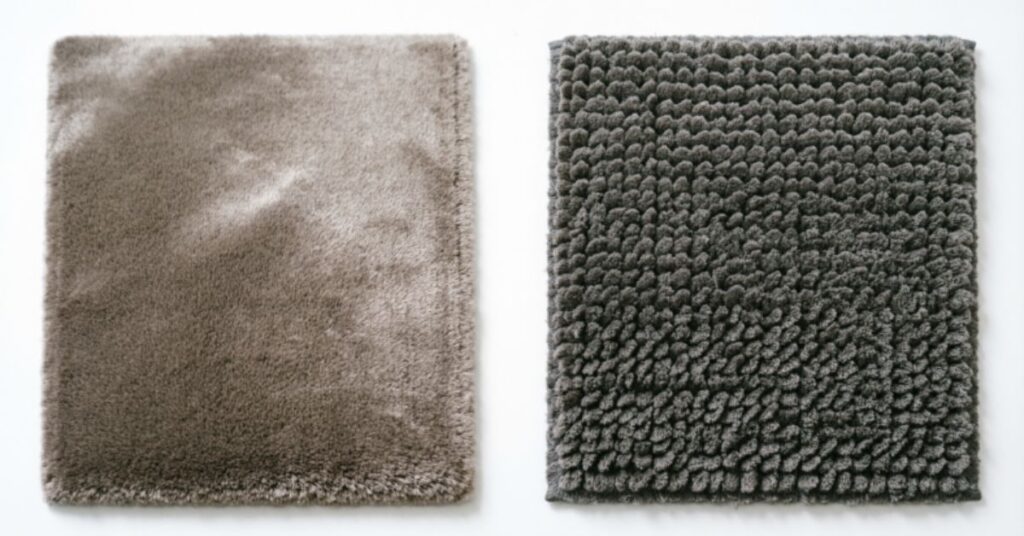
The major difference between them is the way that the yarn lies on the surface of the carpet. In the cut pile, it is cut yarn, and in the loop pile, it is loops of yarn. The decision to choose one over another will be based on aesthetics.
What Is a Cut Pile?
The cut pile is formed through the process of snipping the loops, which exposes individual yarns on the surface of the rug, making the rug feel soft and plush. The cut pile is commonly used to create colorful rug designs and personalized rugs.
For beginners, a cut pile may be chosen as it allows trimming the surface after the tufting process, making the process more accurate.
What Is a Loop Pile?
Loop pile keeps the loops intact without cutting them off, thus creating a surface with a unique appearance different from the one created by the cut pile technique. It can work very well for geometrical designs and textured designs as well. Neither technique is superior to the other. It all depends on the design and the type of craft product that you wish to create.
Is Tufting Hard for Beginners?
Tufting itself isn’t hard to do; it just takes practice. For many newbies, the biggest challenge is getting comfortable with using the tufting gun with proper spacing on the tightly stretched fabric.
The best technique for learning is starting with something simple. Choose a basic design and practice it in something small before trying to work on a big custom rug. With practice, you will become more comfortable with the gun, curves, and straight lines.
What Can You Make With Tufting?
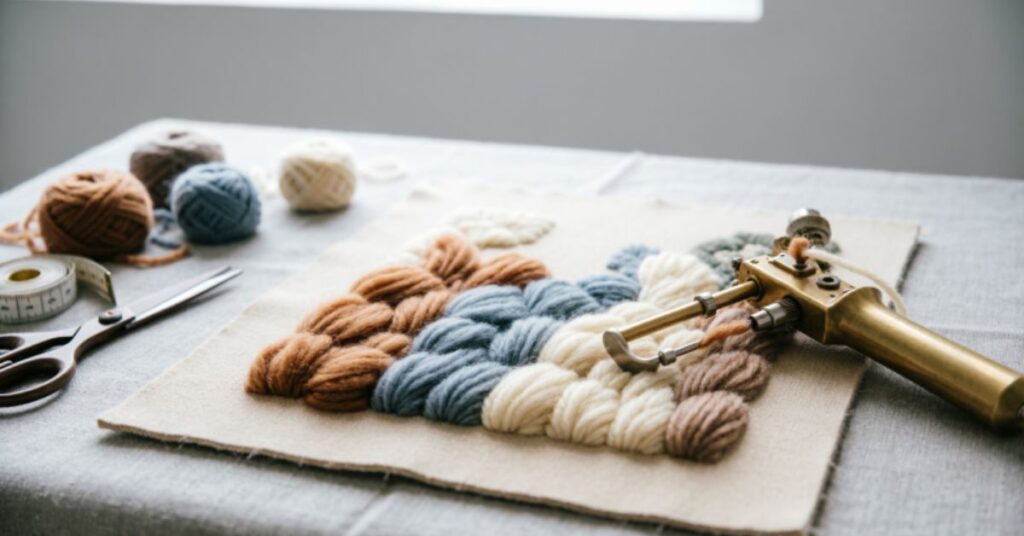
Tufting is not limited to just rugs. After learning the tufting basics, you can try out several creative projects, including:
- Custom-made rugs
- Wall hangings and textile art
- Coasters and small mats
- Cushion covers
- Decorative patches
- Custom gifts
- Home decor
A good way for beginners to start is by working on small projects, as they require minimal yarn, fabric, time, and glue. With practice, one can work on more elaborate projects.
How Much Does It Cost to Start Tufting?
The cost to start tufting can range widely. This is because it largely depends on the quality of equipment that you will choose to use, as well as how much of it you will be making yourself. The basic package typically ranges from $150 to $400.
Is Tufting a Hobby or Can you Make Money from It?
Tufting is an enjoyable activity that also can earn you money. If you become good at tufting, you can sell the rugs or take orders.
While some craftsmen concentrate on making rugs that may have names, logos, or even cartoons of their favorite animals and cartoon characters, other rug-makers make special wall hangings and other decorative pieces.
Making money isn’t just about making good rugs; it involves materials, time, costs, marketing, shipping, and dealing with clients. The first step is to improve your craft and make a portfolio to get large custom orders.
Is Tufting a Good Hobby for Beginners?
Yes, It’s a great hobby for people who enjoy playing with colors and designs, making something from your imagination come to life. These are some aspects that require both time and money; however, the results make all the efforts and investments worth it. Through experimentation and mistakes, you will learn the art of tufting.
FAQs
Does tufting require sewing skills?
No. You do not require any experience in sewing to take up tufting. The only thing required is knowledge of how to handle the tufting gun as well as knowing what materials are used.
How long does it take to make a tufted rug?
Making small rugs will take some hours, but complicated rugs may take some days to complete since it requires time to do all the trimming, gluing, and drying of the material.
Can you use a tufting gun without a frame?
A frame is essential for most tufting gun projects because the primary fabric needs to stay tight. Without proper tension, inserting yarn evenly becomes much more difficult.
Is a tufting gun loud?
Yes. Tufting guns have high motor speeds and make lots of noise. It is important to rest and wear protective hearing protection.
Which yarn can be used for tufting?
Acrylic is perfect for beginners because of its low cost and range of color choices. Wool or a wool mix creates another texture experience.
Conclusion
Tufting is an art form that is used to create rugs and wall hangings using fabrics and yarn. This art doesn’t require much time or prior experience, but it requires some equipment and a bit of practice.
Now that you understand tufting, the materials involved in the process, and cut versus loop pile, you are ready to start your first project. Do not make things difficult for yourself and choose something easy and simple. In time, tufting may develop into a great hobby and perhaps even a custom rug business.