Posted on Leave a comment

How to Care for Your Rug: Practical Cleaning and Maintenance Tips for Different Rug Types 

Your rug goes through a lot. People walk on it every day. Furniture sits on it. Sunlight hits it. Things get spilled on it. With all that, it still needs to look good. That’s why taking care of it matters. If you look after it well, it can look best for years. If you do not, it can start looking worn out and tired much sooner than it should. Good rug care does two things. First, it keeps the rug looking clean. Second, it protects the rug from the inside out, the fibers, the backing, the colors. A lot of this damage happens slowly, so you do not notice it right away. 

Here is something important to know first: there is no single way to clean every rug. It depends on what the rug is made of, how it’s built, and what the maker says to do. A cleaning method that is safe for one rug can ruin another. In this guide, we’ll cover how to figure out what your rug is made of, simple habits you can build into your week, how to vacuum safely, what to do about spills and stains, when to call a professional, and the common mistakes that cause most of the damage rugs get at home.
Know Your Rug Before Cleaning

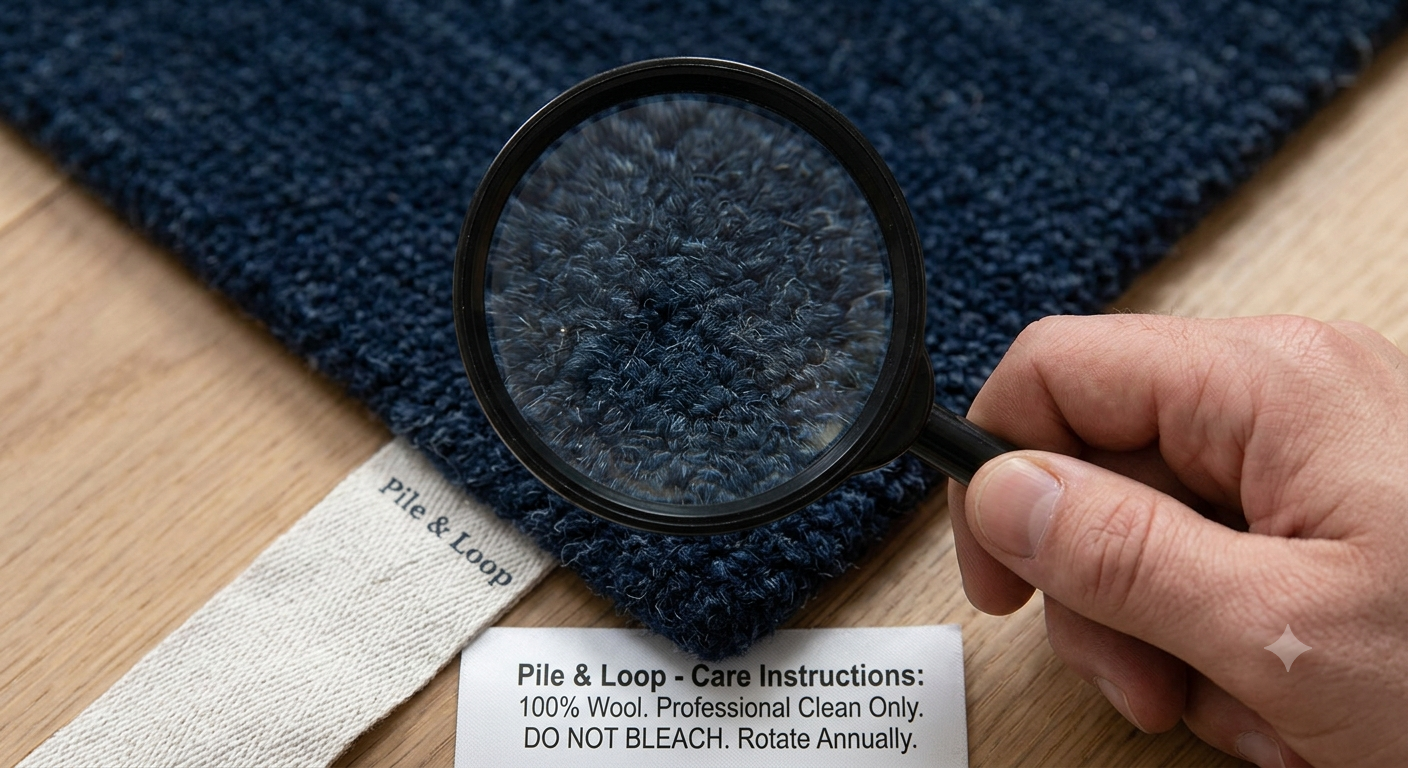
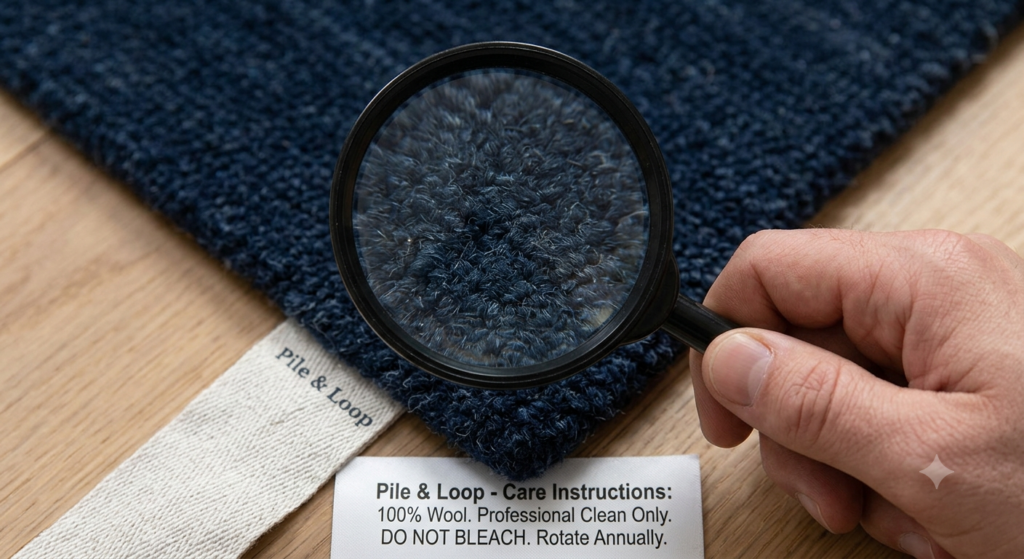
Before you clean your rug, find out what it is made of. This one thing changes almost everything about how you should care for it, what vacuum setting to use, whether you can use water, and which stain removers are safe.

Wool is common in both hand knotted and machine made rugs. It is tough, but it does not like heat, harsh chemicals, or too much water. Cotton rugs are often used in flatweaves and washable rugs. You can wash these more often, but they can shrink or fade if you are not careful. Synthetic rugs made from things like polypropylene, nylon, or polyester, usually resist stains well and hold up in busy rooms. But even these can get damaged by the wrong cleaning product. Silk is the most delicate. This includes pure silk and silk blends. It does not like sunlight, water, or rough handling. A spinning vacuum brush can ruin silk fibers for good.

Because these materials are so different, one cleaning method will not work for all of them. A steam cleaner that is fine on a synthetic rug could shrink a wool rug or make the colors run. A stain remover that works on cotton might leave a mark on silk. This is why you should always check the care instructions that came with your rug before you clean it. These instructions are written for that exact rug, so they matter more than any general tips including the ones in this guide.

Daily and Weekly Rug Care

Most rug damage does not come from one big accident. It builds up slowly from small things. That is why small daily habits matter so much. Take your shoes off before walking on the rug. Keep doormats at your doors. Clean up spills right away. All of this keeps dirt and water off your rug. Brushing your pets often also helps, since it means less fur and dander gets stuck in the rug. Once a week, give your rug a light vacuum. While you are at it, take a quick look for any spots, pet hair, or areas near windows or vents that might be fading or drying out.

Turn your rug around about every six months to a year. This spreads out the wear and sun so one part does not fade or flatten faster than the rest. This matters most for rugs in front of windows or under furniture that does not move much. A few other things to watch out for. Sunlight fades colors over time, so turning the rug or using curtains helps slow this down. Water from humidity, wet shoes, or watering plants can cause mildew or weak fibers, especially in natural materials like jute or wool. Heavy furniture left in one spot too long can flatten the rug in a way it does not bounce back from. Move your furniture now and then, or use furniture coasters, to give the fibers a chance to recover.

These tips work for most rugs. But the details change a bit by material. A jute rug must always stay dry. A synthetic rug can handle a bit more water without a problem.
Safe Vacuuming Techniques

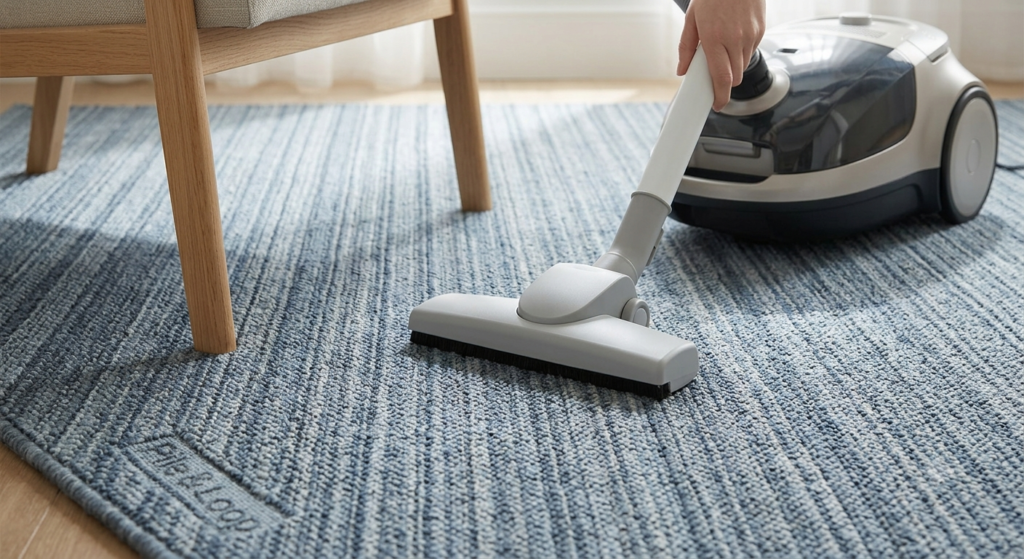
Vacuuming is the single best thing you can do for your rug. It clears out the dirt and grit that would otherwise grind into the fibers every time someone walks on it. But it is also easy to get wrong if you use the wrong settings.

How often you vacuum depends on how much people walk on the rug. Rugs in quiet rooms are usually fine once a week. Busy spots, entryways, hallways, living rooms often need it two or three times a week. Homes with pets or young kids might need it every day. Wool rugs usually do well with one or two vacuums a week. New wool rugs shed a lot in their first few months, so you may need to vacuum them more often during that time. Jute and other plant fiber rugs also need regular, gentle vacuuming, since water is not an option for cleaning them. Silk needs the lightest touch vacuum about once every one to two weeks in quiet rooms, and up to once a week in busy ones. Always vacuum in the direction the pile lies.

The vacuum setting matters just as much as how often you vacuum. A spinning beater bar is fine for low pile synthetic or machine made rugs. But turn it off for wool, silk, jute, vintage, hand knotted rugs, or any other delicate rug. Use suction only instead. A beater bar on these rugs can tear the fibers, pull at the knots, or wear down the shine, especially on silk. Also stay away from any fringe when vacuuming it can get caught in the vacuum and fray.

Here are common vacuuming mistakes to avoid: using too much suction on a delicate rug, vacuuming against the direction of the pile, running the vacuum over the fringe, and skipping the underside of the rug (it collects dust too, so give it a pass now and then).
Spot and Stain Cleaning

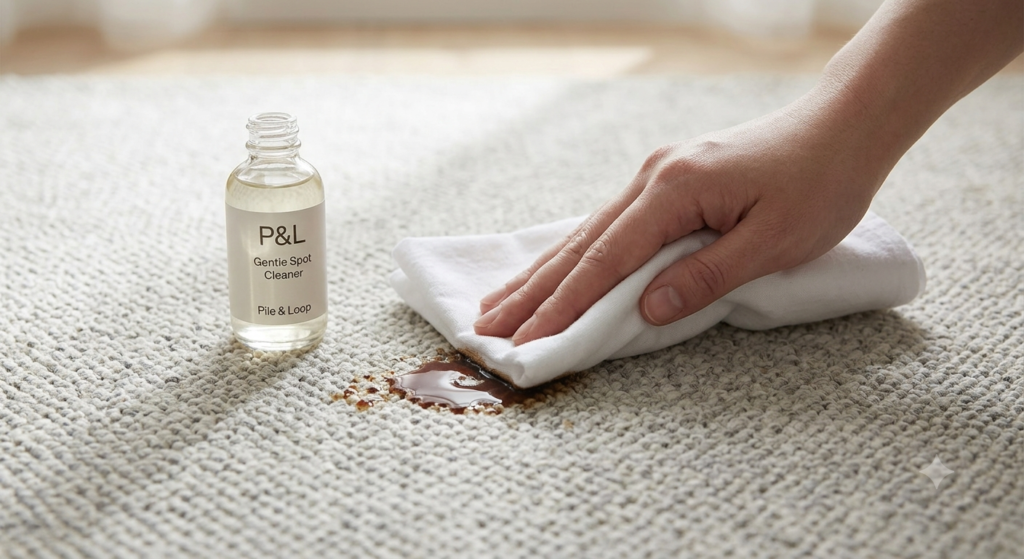
The best thing you can do right after a spill is act fast. The longer a stain sits, the more it soaks in and sets. That makes it much harder to remove later. Always blot the stain, do not scrub it. Scrubbing pushes the stain deeper into the fibers and can damage the rug’s weave. Instead, use a clean, dry cloth and press down gently to soak up the liquid. Work from the outside of the stain toward the middle. This stops the stain from spreading further.

Different stains need different treatment.  Coffee usually comes out with blotting, followed by a mild, watered down cleaning solution. Since fibers react differently to different products, it is worth looking up your specific stain and rug type instead of using one method for everything. Before you use any cleaning product on a visible part of the rug, test it first. Try it on a small hidden spot, like a corner or the underside. Wait and see how it affects the color and fibers. This one step can save you a lot of trouble, since it catches products that are too harsh before they cause real damage.

Cleaning a stain yourself is usually fine for a fresh, simple spill on a sturdy rug, especially synthetic ones. It is riskier with old stains that have already set, with delicate rugs like silk or hand knotted wool, or with big spills, since water that does not dry fully can cause mildew underneath. In these cases, it is safer to call a professional.

One more thing worth repeating: no single stain removal method works for every rug. What is safe on a synthetic rug can damage a natural fiber rug. Always think about what your rug is made of before treating a stain.
When Professional Cleaning Is Needed

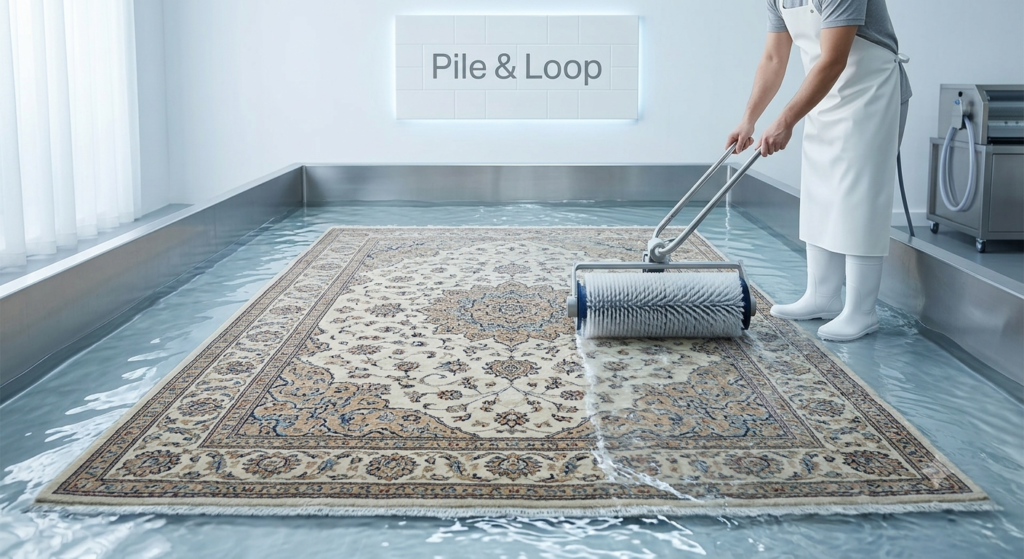
A few signs tell you it is time to call a professional instead of cleaning it yourself. If your rug still looks dull or flat even after regular vacuuming, has a smell that will not go away, has stains that will not budge, or feels like it has dirt deep down in the pile these are all good signs it’s time.

As a general rule, most rugs should get a full professional clean about every twelve to eighteen months. Rugs in busy parts of the house, or in homes with pets, kids, or allergies, may need it more often closer to every six to twelve months. Delicate rugs like hand knotted wool or silk can sometimes go longer between cleanings. But when they do need cleaning, make sure it is done by someone who knows how to handle those materials, since the wrong method can shrink the rug, make the colors bleed, or damage the base.

Professional cleaning has clear benefits over doing it yourself. It removes dirt and grit buried deep in the pile that a vacuum can not reach. It uses methods that match the rug’s exact fiber. And it can add years to your rug’s life compared to just cleaning the surface.

Common Rug Care Mistakes to Avoid

Most rug problems come down to the same few mistakes, made over and over:

Using too much water

Extra water can soak into the backing and cause mildew, smell, or a weak base especially in natural fiber rugs.

Scrubbing stains hard

This pushes the stain deeper into the fibers and can fray or flatten the pile.

Using the wrong cleaning products

A product that is fine on one fiber can discolor or weaken another.

Skipping the care instructions

These are written for that specific rug’s materials and dyes. Skipping them is one of the most common ways people damage a rug.

Waiting too long to clean up a spill

The longer it sits, the more likely it sets in for good.

Using the wrong vacuum settings

A beater bar on a delicate rug, or too much suction, can wreck the fibers and fringe.

Drying rugs the wrong way

A damp rug left on the floor especially on hardwood, or with no airflow underneath traps moisture and can cause mildew or discoloration.

Pile & Loop’s Rug Care Guidance

Rugs vary a lot depending on how they are made and what they are made of. Because of this, the best place to get care advice is straight from the maker. For a rug from Pile & Loop, that means following the official care instructions that come with your rug. Don’t rely only on general tips found online including the tips in this guide. They are a good starting point, but they are not a replacement for instructions written for your exact rug.
Conclusion

Taking good care of a rug does not take much effort. It mostly comes down to a few simple things: know what it is made of, keep up a light routine, vacuum with the right settings, and act fast and gently when something spills. Get these basics right, and your rug can stay looking good for years longer than one that is left on its own.

Always think about the material first when you are deciding how to clean or treat your rug. What works on one fiber can ruin another. And if you are ever unsure whether a cleaning method is safe, check first before trying it especially for a rug that means a lot to you or cost a good amount.

If you have a custom rug from Pile & Loop and you have a question, the safest thing to do is simple: reach out to them directly for advice made for your exact rug.

FAQs

How often should I vacuum my rug?

It depends on how much people walk on it and what it’s made of. Rugs in quiet rooms usually just need vacuuming once a week. Busy spots often need it two to three times a week. Delicate rugs like silk need a lighter touch vacuum less often, and use suction only.

Can I use the same cleaner on every rug?

No. A cleaner that is safe on synthetic fibers can discolor or damage natural fibers like wool or silk. Check what your rug is made of, and always test any product on a hidden spot first.

How do I remove stains without damaging my rug?

Blot the stain instead of rubbing or scrubbing it, and work from the outside of the stain toward the middle. Act as quickly as you can after a spill, test any cleaning product on a hidden spot first, and check your rug’s care instructions before using anything beyond gentle blotting. If the stain does not lift easily, it is best to get advice from a professional rather than experimenting with home remedies.

When should I get my rug professionally cleaned?

Most rugs do well with a professional clean every twelve to eighteen months. Homes with pets, kids, or a lot of foot traffic might need it closer to every six to twelve months. A smell that will not go away, a dull look, or stains that will not lift are all signs it is time for professional cleaning.

How can I make my rug last longer?

Vacuum regularly with the right settings, rotate the rug now and then, keep it out of constant direct sunlight and away from too much water, clean up spills right away, and get it professionally cleaned on a reasonable schedule.

Research Resources

Source Title 

How Often to Vacuum Rugs: 2026 Material Guide.

Publisher

Atlanta Designer Rugs:

https://www.atlantadesignerrugs.com/blogs/news-from-atlanta-designer-rugs/how-often-to-vacuum-rugs-material-guide-2026 

Information Used 

Vacuuming frequency and beater bar guidance by rug material (wool, silk, jute).

Source Title 

Why Do Luxury Rugs Require Professional Cleaning?

Publisher

Kevin Francis Design.

https://kevinfrancisdesign.com/blogs/design-ideas/why-luxury-rugs-require-professional-cleaning 

Information Used 

Professional cleaning interval recommendations and reasoning on deep cleaning.
Posted on Leave a comment

Loop Pile vs Cut Pile: Which Should You Choose?

Choosing new carpet or a rug for your home sounds simple enough until you run into technical terms like loop pile and cut pile. If you have ever gone shopping for a new carpet or rug, you may have wondered in the store thinking about, “which one do I actually need?”

Don’t worry, you are not alone. This is one of the most common questions people ask when picking a carpet for their home or office. The truth is, both loop pile and cut pile can work really well, but each tends to suit different rooms and different lifestyles. In this blog, we will break it all down, so by the end, you will know exactly which one is right for your space.

What Is Pile?

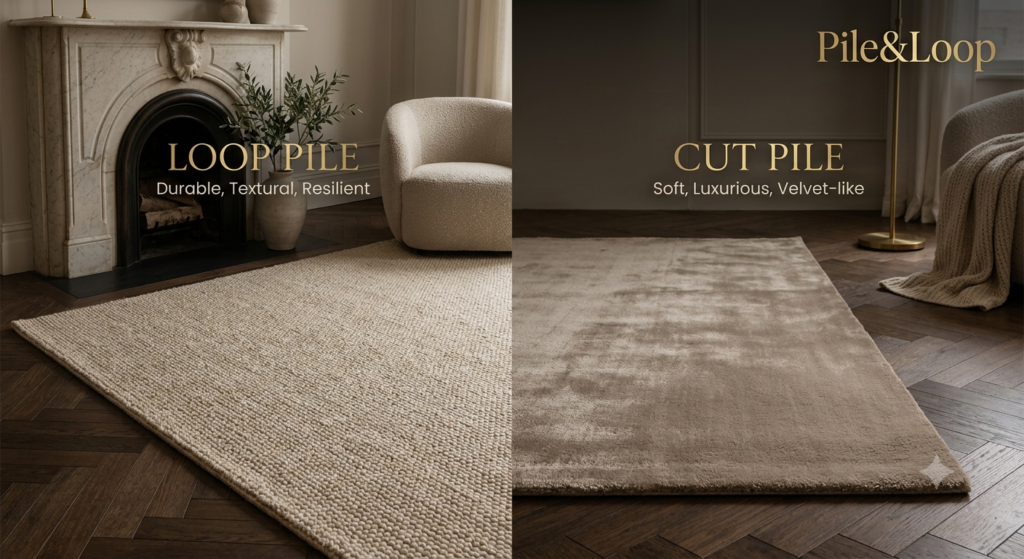
Before we compare the two, let’s quickly understand what “pile” even means. When carpet is made, yarn is pulled through a backing material to create the surface you walk on. This surface, the part you actually see and feel under your feet is called the pile. How that yarn is finished (left as a loop, or cut open) is what decides whether you end up with a loop pile carpet or a cut pile carpet.

What Is a Cut Pile Carpet?

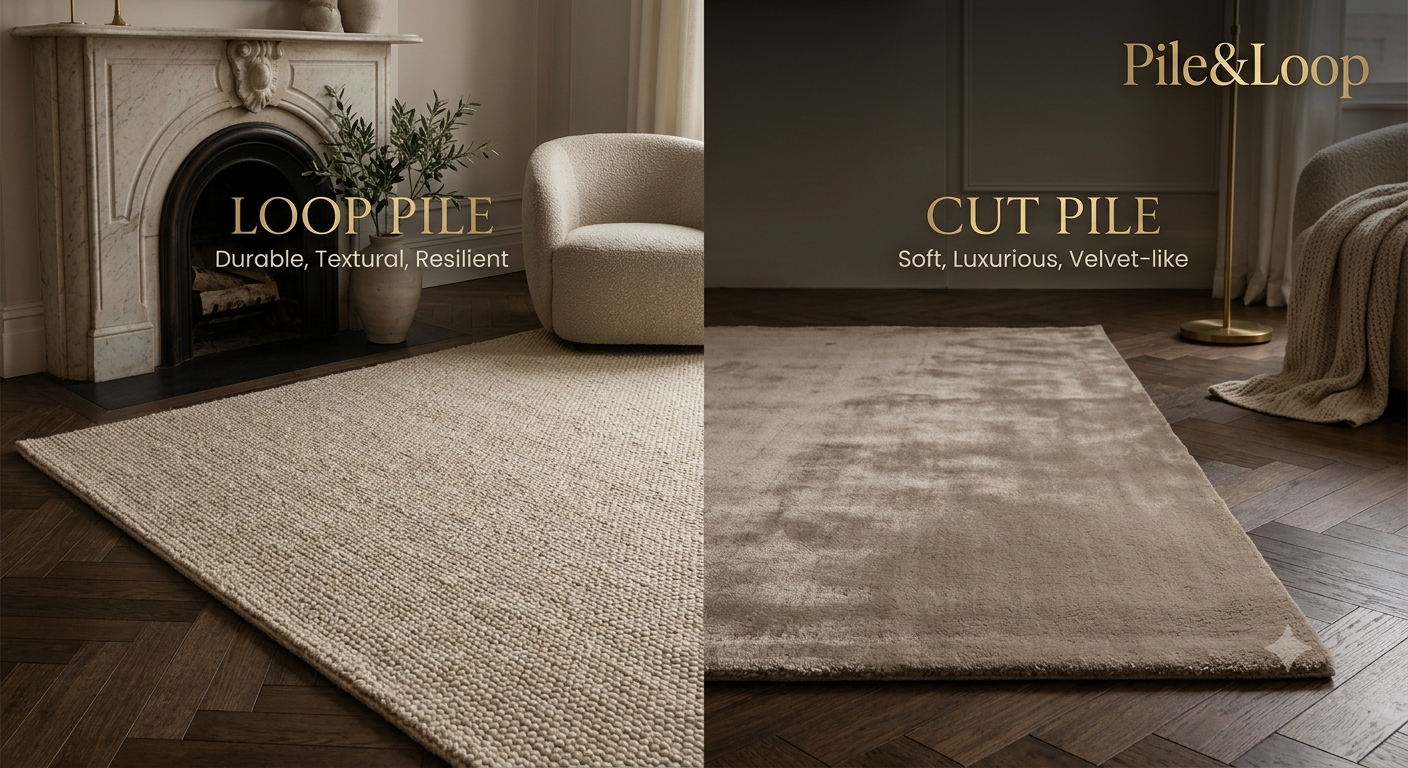
Cut pile carpet is made by cutting the tips of the yarn loops, so the fibers stand straight up instead of staying looped. This is what gives cut pile carpets that soft, plush, “sink your feet into it” kind of feel. Think of the carpet you see in a cozy bedroom or a fancy living room, it’s a cut pile.

There are actually a few types of cut pile carpets:

Plush (Velvet):

Smooth, soft, and even. Feels luxurious but shows footprints and vacuum marks easily.

Saxony:

Similar to plush but with slightly longer fibers, giving a soft, elegant look.

Frieze:

It has tightly twisted fibers, giving it a curly, casual texture. This twist generally helps it resist matting a bit better than plush or Saxony, though quality and fiber type still play a big role.

Why do people love cut pile?

• Super soft and comfortable underfoot.

• Looks elegant and cozy.

• Comes in tons of colors, styles, and textures.

• Great for bedrooms, living rooms, and other low-to-medium traffic spaces.

Where does it fall short?

• Can show footprints, vacuum lines, and furniture marks more visibly.

• May flatten or mat down faster in busier areas, especially with lower-quality fibers.

• Needs more frequent vacuuming to keep it looking fresh.

What Is a Loop Pile Rug and Should I Buy One?

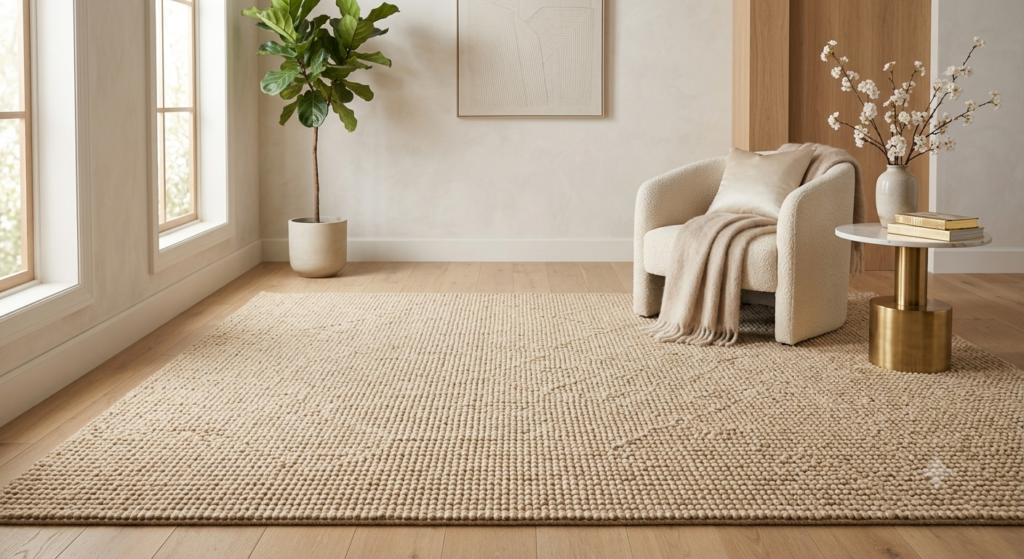
A loop pile rug is made in a completely different way. Instead of cutting the yarn, the loops are left exactly as they are uncut, from the backing all the way to the surface. This creates a firmer, more structured texture compared to the soft fluffiness of cut pile.

A very well known example of loop pile is Berber carpet, which has that classic low, nubby texture with little flecks of color mixed in. Loop pile is commonly made from fibers such as nylon, wool, or olefin (also called polypropylene) each with its own balance of durability, cost, and feel. You may also come across “sisal look” loop styles, which are usually synthetic carpets designed to mimic the appearance of natural sisal.

So, should you buy one? Here’s the honest answer: It depends on what you’re looking for. Loop pile is generally considered a durable, practical option. It tends to resist crushing and matting reasonably well, actual durability still depends on the specific fiber used, how tightly it is woven, and the overall build quality, not just the fact that it is a loop pile, after something heavy sits on it or someone walks over it repeatedly. However, if what you are really craving is that soft, sink-in feeling under your bare feet, loop pile might feel a little firmer and less cozy than you would like. Loop pile can be somewhat more prone to snagging if you have pets with sharp claws. Loop pile is the practical, hardworking choice. Cut pile is the comfort first, luxury choice. Your decision really comes down to what matters more to you and for that particular room.

Are Loop Pile Rugs Good for High Traffic Areas?

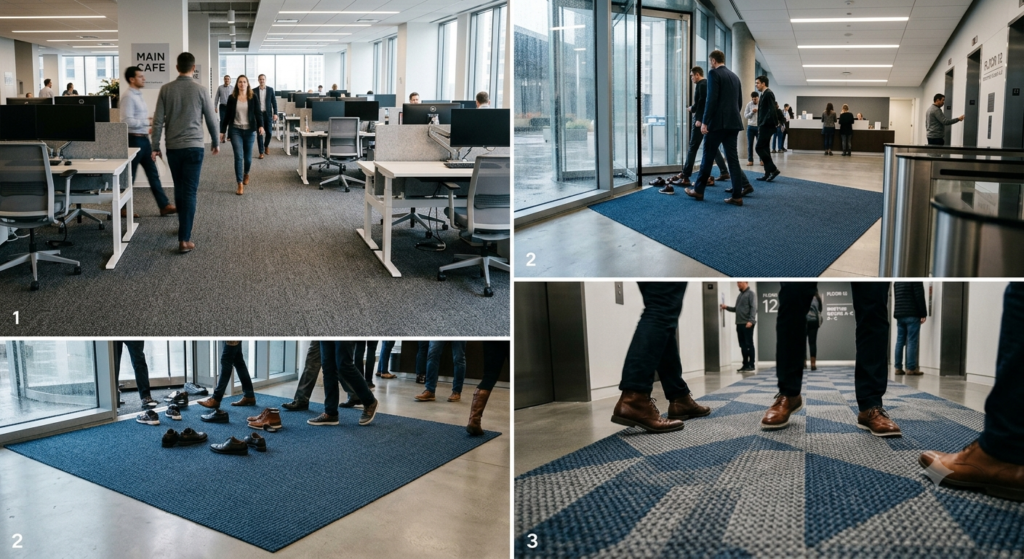
Generally, yes this is one of the areas where loop pile tends to perform well. High traffic areas like hallways, entryways, staircases, family rooms, offices, and playrooms go through a lot of wear every single day. People walking back and forth, kids running around, pets pacing,  all of this puts a lot of stress on carpet fibers. Because loop pile carpet isn’t cut, the fibers stay more tightly locked into the backing, which generally makes them more resistant to crushing, matting, and flattening compared to softer cut pile styles. Despite that, how well a specific loop pile carpet holds up will still depend on factors like the fiber type, loop density, and overall quality, a poorly made loop pile can still wear out faster than a well-made cut pile.

This is exactly why you will often see loop pile carpets in:

• Offices and commercial spaces.

• Family rooms and playrooms.

• Hallways and staircases.

• Homes with pets and kids.

Cut Pile vs Loop Pile: A Quick Difference

Feel underfoot

cut Pile: Soft, plush, cozy.

Loop Pile: Firmer, more structured.

Durability

Cut Pile: Moderate ( varies by type).

Loop Pile: Often more resistant to crushing, but still depends on fiber and build.

Best for

Cut Pile: Bedrooms, living rooms.

Loop Pile: Hallways, offices, high traffic areas.

Shows footprints/vacuum marks

Cut Pile: Yes, more visible.

Loop Pile: Tends to bounce back over time.

Pet friendly

Cut Pile: Generally fine.

Loop Pile: Often a good fit, but watch for snagging with sharp claws.

So, Which One Should You Choose?

The simplest way to decide: think about how the room is actually used:

• If it is a bedroom, a formal living room, or any space where comfort and looks matter most, and it doesn’t get a ton of daily foot traffic, cut pile is often a good fit.

• If it is a hallway, staircase, family room, home office, or any space that deals with constant footsteps, kids, or pets, loop pile is often worth considering.

And if you really cannot decide, there is actually a third option many people don’t know about: cut loop (sculpted) carpet, which blends both styles together. It uses cut fibers and looped fibers side by side to create patterns, giving you a bit of both worlds though it is usually best suited for medium or low traffic rooms, since the cut sections can wear down a bit faster than the looped ones.

Looking to see these options? At Pile&Loop, you can browse a range of rug styles and textures, and our team is happy to help you think through what might work best for your specific space and lifestyle. At the end of the day, there’s no single “best” option” only the option that is best for your space, your lifestyle, and your household.

FAQs

What is a loop pile rug and should I buy one?

A loop pile rug is made from yarn that is looped and left uncut, giving it a firmer, textured surface. It is often a good option if you want something that generally holds up well over time and does not show footprints or vacuum lines as easily. It may feel less soft than cut pile, so it comes down to whether durability or plushness matters more to you.

Are loop pile rugs good for high traffic areas?

Generally, loop pile rugs are one of the best choices for high traffic areas. Their tightly looped construction resists crushing and matting, so they continue to look good even in busy spaces like hallways, offices, and family rooms. The only thing to watch out for is pets with sharp claws, which can occasionally snag a loop.

Is cut pile carpet more expensive than loop pile?

Not necessarily. Price mostly depends on the material, brand, and overall quality rather than whether it’s cut or loop pile. That said, loop pile carpets are sometimes slightly more budget friendly on average.

Can I use loop pile carpet in a bedroom?

Yes, though many people lean toward cut pile in bedrooms for its softer feel. It really comes down to personal preference.

Research Resources

Source Title

Cut Pile Vs Loop Pile Carpet: What Are The Differences?

Publisher

https://katamats.com/product-news/cut-pile-vs-loop-pile-carpet

Information Used 

Information on cut pile’s softness and suitability for bedrooms/living rooms, and loop pile’s stain resistance due to tighter weave.

Source Title

Cut Pile Vs. Loop Pile: What’s the Difference?

Publisher

https://www.flooringamerica.com/blog/cut-pile-vs-loop-pile-carpets 

Information Used

Confirms Berber loop pile carpets are often made of wool, nylon, or olefin, tightly woven for durability.

Posted on Leave a comment

Custom Tufted Rugs in Pakistan and the US: How Pile & Loop Works

At Pile & Loop, the process begins with your idea. The design is carefully reviewed and then turned into a custom tufted rug using quality materials and skilled craftsmanship. Throughout the process, attention is given to every detail so the finished rug looks attractive, feels comfortable, and is made to last.This makes every rug unique and suitable for the place where it will be used.

Pile & Loop is a custom rug brand that creates beautiful, high-quality tufted rugs for customers in Pakistan and the United States. Every rug is made according to the customer’s choice. Whether you want a simple design, a modern pattern, a company logo, or a creative artwork.Every design must first pass a feasibility review.

In this blog, you will learn what tufting is, how tufted rugs are made, why custom rugs are becoming popular, and how Pile & Loop works from the first idea to the final delivery.

What Is Tufting?

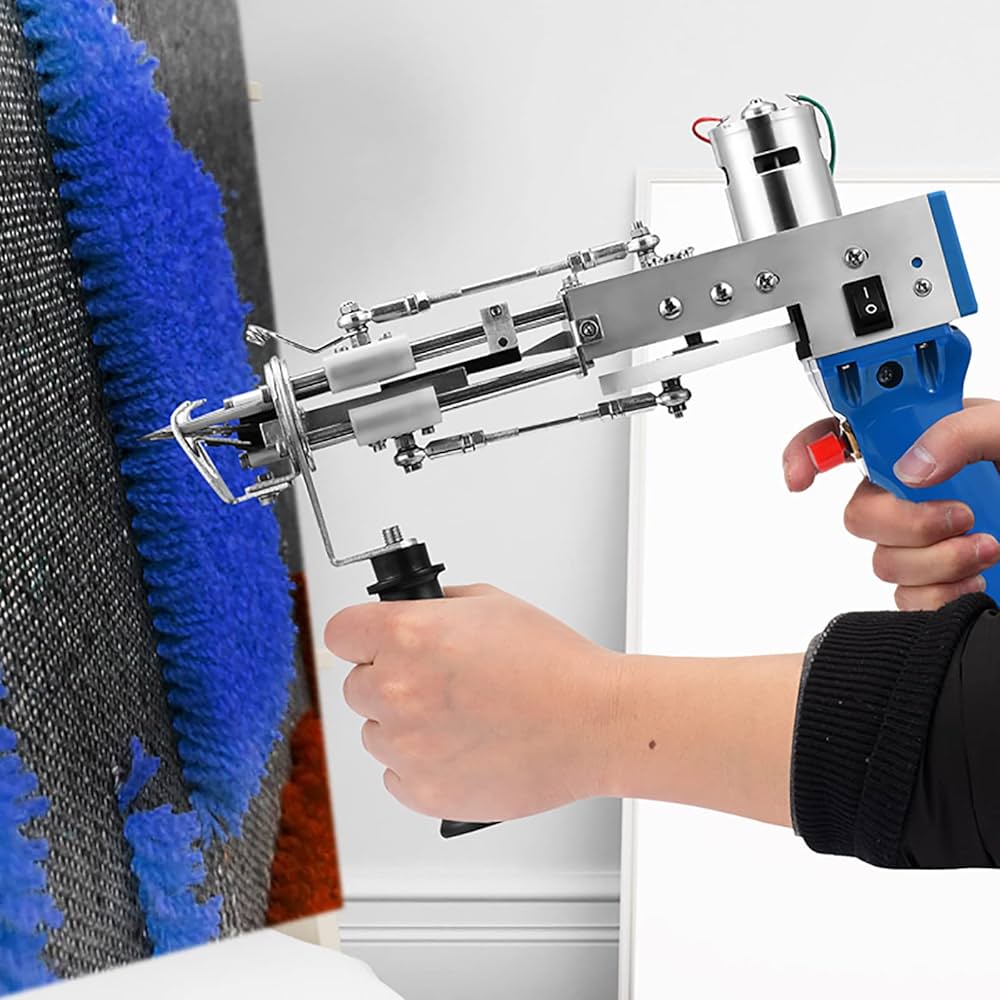
Tufting is a process used to make rugs by pushing yarn through a strong fabric called the backing. A special machine called a tufting gun is used for this work.

If you would like to understand the tufting process in more detail, read our article: https://pileandloop.com/what-is-tufting-a-complete-beginners-guide/

What Is a Custom Tufted Rug?

All requests are reviewed before approval.A custom tufted rug is a rug made especially for one customer. Instead of buying a ready-made rug from a store, you can choose the design, size, colors, shape, and style that you like.

Some people want a rug that matches the furniture in their home. Others want a rug with their company logo, customer-owned or authorised artwork, a special quote, or even their own artwork. A custom rug allows you to create something that is unique and personal.

Because every rug is made according to the customer’s ideas, no two custom rugs are exactly the same. This makes every piece special.

Why Are Custom Tufted Rugs Becoming Popular?

Every space is different, so a rug should suit the place where it will be used. A custom tufted rug allows you to create a piece that works well with your room instead of trying to make a standard rug fit your space. It can become an important part of the overall interior rather than just a floor covering.

A custom rug is also designed around the customer’s confirmed measurements. You can choose a design that matches your interior style, highlights a specific area, or creates the look you want for your home or workplace. This makes the rug feel more personal and carefully planned.

Choosing a custom tufted rug means investing in a product that is designed for your specific needs instead of settling for a standard option. It offers flexibility in design while helping you create a space that feels complete, comfortable, and visually appealing.

Pile & Loop: Creating Rugs That Match Your Style

Pile & Loop follows a step-by-step custom process instead of offering the same design to every customer. Each project begins with a discussion to understand the customer’s requirements. The team reviews the design, suggests any necessary improvements, and confirms the details before production starts. This helps avoid mistakes and ensures the final rug matches the approved design.

Custom Tufted Rugs in Pakistan

Pile & Loop creates custom tufted rugs for customers across Pakistan. Whether you are decorating a new home, renovating a room, or designing a commercial space, a custom rug allows you to choose a design that suits your needs instead of selecting a standard product.

Customers in Pakistan order custom rugs for many different spaces, including living rooms, bedrooms, drawing rooms, children’s rooms, offices, restaurants, hotels, retail stores, and reception areas. Some customers prefer simple and modern designs, while others choose traditional patterns, bold colours, or custom artwork. Businesses may also request rugs that match their interior design or brand identity.

Custom tufted rugs are becoming more popular in Pakistan because people now want personalized home decoration. Families are choosing custom rugs for living rooms, bedrooms, drawing rooms, and children’s rooms.Hotels, offices, restaurants, and businesses are also using custom rugs to improve their interiors and create a professional appearance.

The ordering process begins when the customer shares a design idea, artwork, logo, or reference image. After discussing the design and confirming the project details, the rug moves into production. Once it is completed, it is prepared for delivery within Pakistan.Because every rug is made to order, the production schedule may vary depending on the design, size, and level of detail. Customers should confirm the estimated production time, delivery schedule, available payment methods, and any other order requirements directly with Pile & Loop before placing an order.

Pile & Loop proudly serves customers across Pakistan by providing custom rugs made with quality materials, skilled craftsmanship, and careful attention to detail.

Custom Tufted Rugs in the United States

Pile & Loop also provides custom tufted rug services for customers in the United States. These services are designed for homeowners, interior designers, architects, artists, businesses, hotels, and other commercial clients who want rugs created to their own specifications.

Customers can share their design ideas digitally by sending artwork, logos, sketches, or reference images. This allows the design process to be completed through online communication before production begins. Once the design has been approved, the rug is made according to the agreed specifications and prepared for international shipping.

The demand for custom tufted rugs is also growing quickly in the United States. Homeowners, interior designers, artists, and businesses are looking for rugs that are different from mass-produced products.Many customers want modern designs, artistic patterns, company logos, or personalized gifts. Custom rugs help them decorate their spaces in a creative way.

Since orders for the United States are shipped internationally, customers should confirm the available shipping options, estimated delivery time, payment process, and any customs duties, taxes, or import requirements that may apply in their location before placing an order. These requirements can vary depending on the destination and shipping method. By communicating with customers throughout the design and production process, Pile & Loop aims to ensure that each custom rug is produced according to the approved design and reaches its destination with clear expectations about the ordering process.

Pile & Loop provides custom rug services for customers in the US by creating rugs based on each customer’s individual design and preferences.

Where Can Custom Tufted Rugs Be Used?

Custom tufted rugs can be used in almost any indoor space. They look beautiful in living rooms, bedrooms, children’s rooms, offices, hotels, restaurants, cafés, reception areas, and commercial buildings.

Many people also order custom rugs as gifts for birthdays, weddings, anniversaries, and housewarming celebrations because they are unique and memorable.

Why Choose Pile & Loop?

Pile & Loop focuses on quality, creativity, and customer satisfaction. Every rug is designed according to the customer’s needs instead of using standard designs. The team pays close attention to every detail during the design, tufting, finishing, and quality-check process. High-quality materials are used to create rugs that are soft, durable, and attractive.

Whether you live in Pakistan or the United States, Pile & Loop works to provide custom rugs that match your style and make your space more beautiful.

FAQs 

What is tufting?

Tufting is a method of making rugs by pushing yarn into a backing fabric with a tufting gun. The rug is then finished with adhesive, backing, trimming, and cleaning to create a strong and beautiful final product.

What is a custom tufted rug?

A custom tufted rug is made according to the customer’s own design, size, colors, and style instead of using a ready-made pattern.

Does Pile & Loop make custom rugs in Pakistan?

Yes. Pile & Loop creates custom tufted rugs for customers across Pakistan for homes, offices, hotels, restaurants, and commercial spaces.

Does Pile & Loop also serve customers in the United States?

Yes. Pile & Loop also provides custom rug services for customers in the United States by creating rugs based on their personal designs and requirements.

Are tufted rugs durable?

The durability of a tufted rug depends on its materials, construction, finishing and how it is used and maintained. Good quality tufted rugs made with strong materials and proper finishing are durable and suitable for everyday indoor use when they are cared for properly.

Conclusion

Choosing a custom tufted rug is a great way to create a space that reflects your style and meets your practical needs. Whether you are decorating a home, furnishing a business, or looking for a rug designed for a specific space, a custom rug gives you the flexibility to create something that suits your requirements.

If you already have a design idea or need help developing one, Pile & Loop is ready to guide you through every step of the process. Contact the team to discuss your project, share your design, and start creating a custom tufted rug that is made specifically for your space.

Visit  https://pileandloop.com/ or contact Pile & Loop on WhatsApp at +92 305 1329462 to share your design and request a quotation.

Research Resources

Source Title

Beginner’s Guide to Tufting: From Tools to Maintenance

Publisher

TuftingShop: https://tuftingshop.com/blogs/blogposts/beginner-s-guide-to-tufting-from-tools-to-maintenance 

Information Used

This guide was used to understand the basic tufting process, the tools and materials needed for tufting, and the finishing methods that help make a rug durable.

Source Title

What Is Rug Tufting?  A Complete Beginner’s Guide.

Publisher

Tuft the World: https://tufttheworld.com/blogs/getting-started-with-tufting/what-is-rug-tufting-a-complete-beginners-guide

Information Used

This guide was used to explain what rug tufting is, the difference between cut pile and loop pile, and how tufting creates custom rugs more efficiently than traditional rug-making methods.