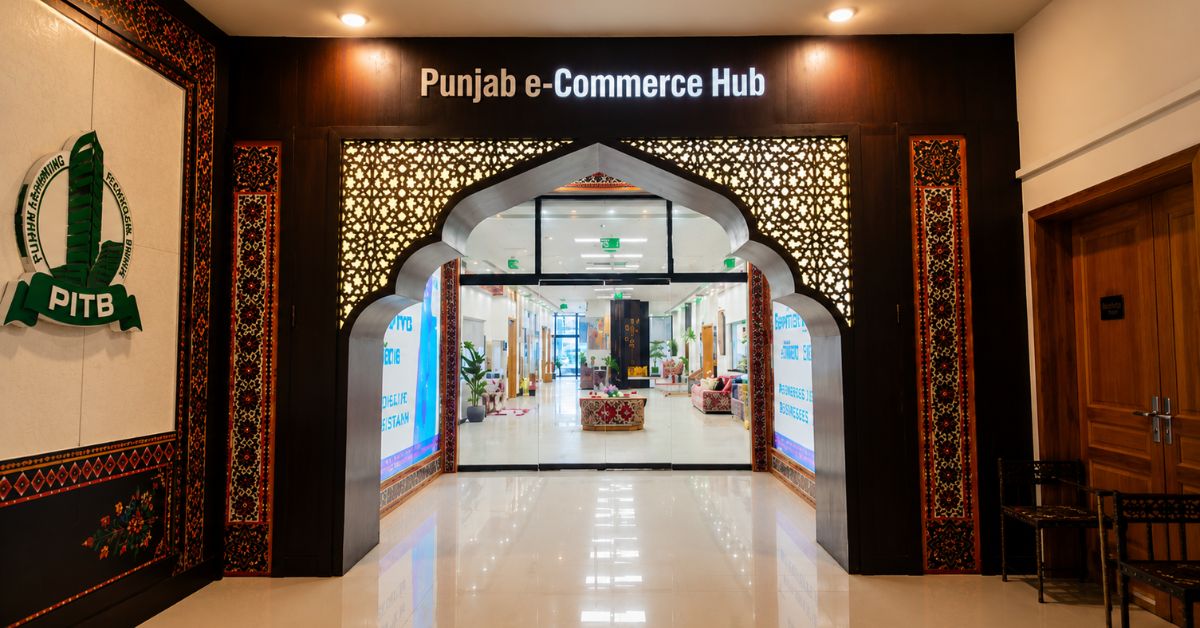
As you enter the Punjab e-Commerce Hub in Lahore through its arched gate, the first impression one gets is that of a sense of purpose. The arch itself is adorned with truck art, with red and gold decorations typical of truck art all around the arched gate. Past it, the hub opens into a bright, modern space built to showcase what Punjab’s digital economy can look like.
This is PITB’s territory. For years, the Punjab Information Technology Board has been striving to facilitate e-Governance and digital efforts in the province for many years. The e-Commerce Hub is one of the perfect examples of that effort, because the e-Commerce Hub is literally the physical embodiment of the “Made in Punjab” project, which means that it’s a place where branding comes naturally.
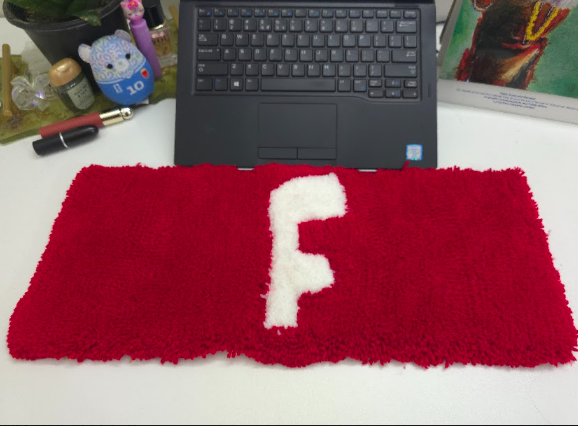
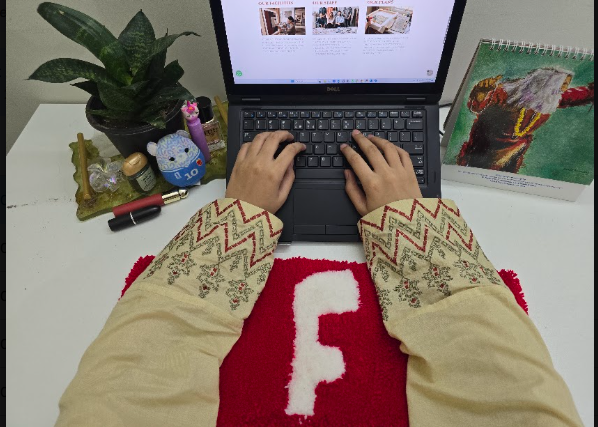
So when Pile & Loop worked with PITB on a custom keyboard rug, the brief wasn’t to design something loud. It was to design something that belonged on a desk inside that building.
PITB’s Identity and the Idea Behind the Custom Keyboard Rug
PITB’s logo is instantly recognizable within Punjab’s public sector: a circular seal with a green line-art building at its centre, ringed by the words ‘Punjab Information Technology Board,’ and anchored by a green ribbon banner spelling out PITB in bold white letters
However, a keyboard rug asks a different question: what does that identity look like at the scale of a desk, sitting under someone’s hands every day?
For PITB, the answer turned out to be simple. Strip the mark down to its core the initials, the green, the white and let it do its job in a smaller, more tactile format.
The result is a rug that reads clearly from across a room but still feels like it belongs next to a keyboard and mouse, not a flagpole.
Logo, Colour, and Workspace Branding
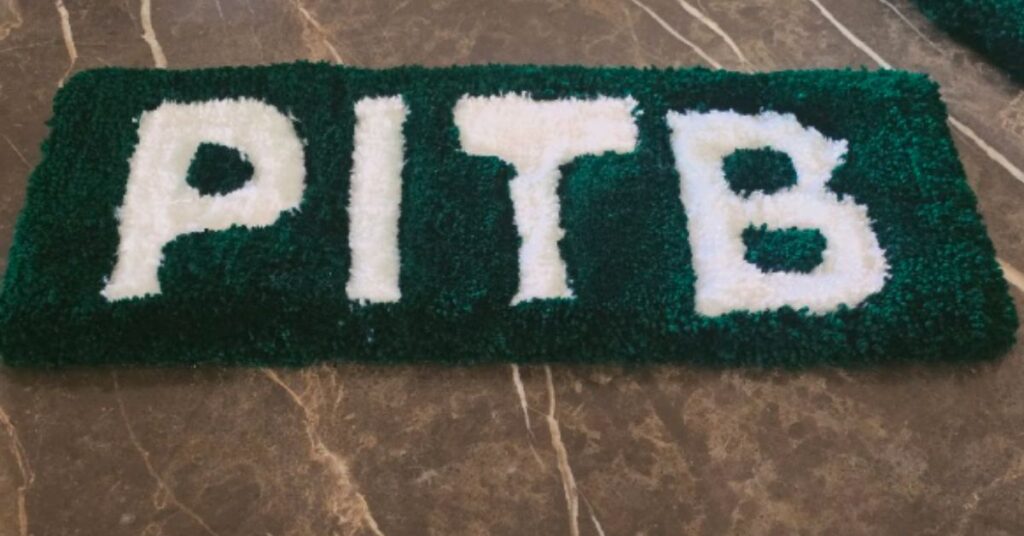
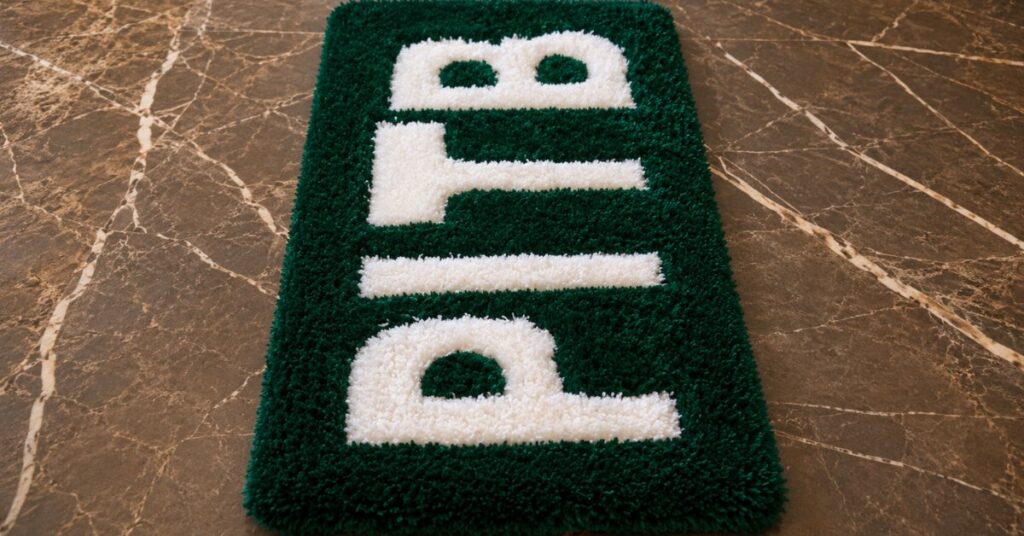
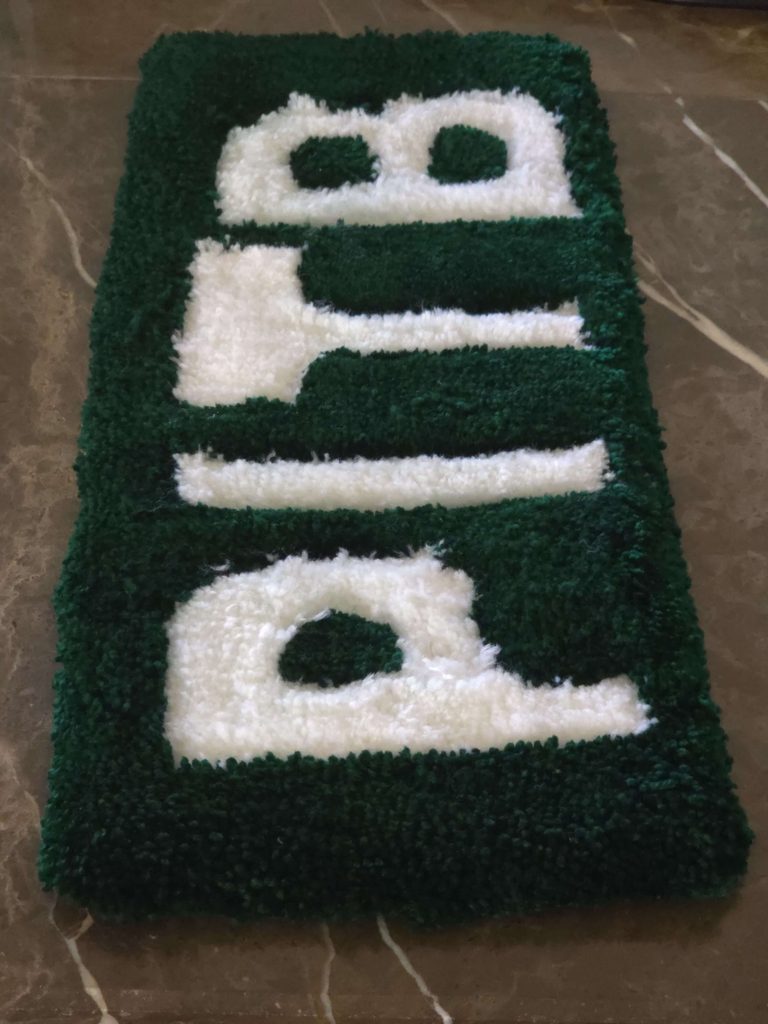
The finished rug keeps things direct: bold white letters spelling PITB, set against a deep green field, tufted with a clean, blocky edge that holds up even at a glance. Instead, there’s no attempt to cram the full seal or tagline onto it, just the initials and the two colors that anyone at PITB would recognize instantly.
It is the restraint in the design which allows it to be seen as workspace branding and not just another logo mat. The color fits the institutional image well enough to make it seem official, while the size and texture of the design make it an object and not just signage. Located within the E-commerce Hub itself, which is a combination of modern interiors along with traditional Punjabi designs, the rug is in line with the very same instinct – modern design, distinctly local and distinctly PITB.
Why Custom Keyboard Rugs Fit Institutional and Corporate Workspaces
Government offices and corporate headquarters don’t usually think about branding at desk level. Walls, signage, and stationery get the attention; the actual workstation is treated as neutral ground.
However, a custom keyboard rug changes that math. Positioned against the keyboard and mouse, it sits inside the one part of the workspace an employee or visitor interacts with constantly, without turning the desk into a billboard. For an institution like PITB where the surrounding environment already uses colour and pattern to say something about the organization a keyboard rug is simply the next logical surface.
It also travels well across different kinds of workspaces. A visitor desk that’s shared at a hub, director’s office, and workstation for the training room all can accommodate this object within their spaces in exactly the same manner.
Small Branded Details, Bigger Institutional Identity
No single object builds an institution’s presence on its own. It’s built from the colours on the wall, the pattern at the entrance, the materials in the lobby, and yes, the small details on a desk that most visitors never consciously register but still absorb.
A keyboard rug is one of the smallest of those details, but it’s also one of the most personal it sits exactly where someone’s hands rest for hours at a time. For PITB, adding it to the e-Commerce Hub extends the same visual thinking that shaped the building’s entrance and interiors down to individual workstations, rather than stopping at the walls.
What This Means for Corporate and Institutional Clients
PITB’s rug is a useful example of what a custom keyboard rug can do outside of a typical corporate office: reinforce an institutional identity at the one scale most branding never reaches.
Custom keyboard rugs can help organizations:
Bring official colours and identity elements into everyday workstations
Extend a building’s visual language down to individual desks
Create consistency across shared spaces like hubs, lobbies, and training rooms
Offer a distinctive, low-cost way to reinforce brand presence without adding signage
At Pile & Loop, we think about brand identity the same way PITB approached this project as something that should show up in the details people actually interact with, not just the ones they walk past.
Have an institution, brand, or workspace in mind for a custom keyboard rug? Get in touch with Pile & Loop to bring your identity onto the desk.
Custom keyboard rugs offer a direct, practical way to connect company branding with an employee’s daily environment. For software developers, creative design teams, corporate professionals, and remote staff who spend most of their working hours at a computer, a custom keyboard rug serves as a functional desk accessory that elevates the entire workstation.
Unlike items that sit out of sight, a keyboard rug sits right at the center of an employee’s daily workflow. It adds physical comfort under the hands, cushions mechanical keyboards, absorbs typing sound, and protects desk surfaces from scratches and scuffs. At the same time, it brings vibrant colors, textures, and company identity straight into the workspace in a balanced, thoughtful way. By focusing specifically on an accessory designed for daily desk use, businesses can offer a unique gift that feels relevant to computer based teams while keeping brand culture present every single day.
Why Custom Keyboard Rugs Can Be a Good Fit for Corporate Gifting
Desk accessories stay in full view throughout every single working hour. A custom keyboard rug serves a clear, practical purpose by sitting directly under an employee’s mechanical keyboard, wrist rest, or mouse. Rather than taking up extra room it improves the comfort of a standard desk setup by cushioning the wrists during long typing sessions and preventing laptop bases or heavy devices from scratching expensive wood or laminate surfaces.
Daily Practical Use: Because the rug rests right under an employee’s hands, it gets used continuously every single day rather than sitting on a shelf gathering dust.
Simple Brand Connection: Placing a clean company logo, brand color scheme, or team icon on a desk rug keeps your organization’s identity visible in a natural, pleasant way.
Brighter Workspace: A soft, colorful rug immediately breaks up the cold, clinical feel of standard office furniture, helping employees design a warmer, more welcoming desk space where they actually enjoy spending time.
Using Custom Keyboard Rugs for Employee Onboarding
First impressions play a major role in how new hires connect with their company culture. When HR and People Operations teams build welcome kits, adding a custom keyboard rug sets a thoughtful, professional, and caring tone right from day one. It sends a clear message that the company values the employee’s comfort and daily work experience.
Remote & Hybrid Work: Sending a physical welcome box containing a custom keyboard rug directly to a remote hire’s house brings a beautiful piece of the company’s office culture straight into their home environment, helping them feel included from miles away.
Office Workstations: Placing a custom keyboard rug on a new hire’s desk before they walk in on their first morning ensures their space feels fully prepared, clean, and customized just for them.
Matching Gear Sets: HR teams can align the colours and patterns of the keyboard rug with other onboarding items such as custom laptop sleeves, notebook covers, or water bottles to create a fine design.
Custom Keyboard Rugs for Employee Recognition and Team Gifting
Beyond welcoming new staff, custom keyboard rugs serve as great rewards for employee appreciation initiatives, work milestone celebrations, completed team projects, or end of year holiday gifts.
Department Specific Designs: Companies can tailor artwork variations for specific departments such as code-inspired pixel art for software engineering teams, bright creative patterns for marketing departments, or sleek minimalist borders for executive teams.
Work Milestones: Gifting a specialized desk rug for a 1-year work anniversary or a major project completion gives employees a lasting, practical token of appreciation that honors their hard work every time they sit down to type.
Team Spirit & Unity: Distributing matching custom desk rugs across a whole project team builds a strong sense of shared identity and camaraderie, helping remote workers and in office staff feel equally connected to the same shared goal.
Branding and Personalization: What Can Companies Add?
Customization allows businesses to adapt desk accessories so they fit their official visual guidelines without sacrificing style or comfort.
Core Brand Details: Include official company logos, secondary brand marks, or minimalist icons centered or tucked neatly into a corner of the rug.
Exact Brand Colors: Match your company’s primary and secondary color palettes so the desk accessories fit seamlessly with all other corporate merchandise and digital branding.
Custom Visuals & Art: Feature internal team slogans, project code names, retro pixel art, or geometric patterns that represent your unique corporate culture and humor.
What HR and Corporate Teams Should Consider Before Ordering
Taking time to review key operational details before placing a corporate order ensures a smooth purchasing experience and guarantees that the final products fit your team’s needs.
Quantity & Budget
Calculate how many employees will receive the gifts whether for an immediate onboarding batch, a department milestone, or an annual company wide distribution to take advantage of bulk order pricing.
Design & Branding
Prepare high resolution vector artwork files. Decide early on whether all teams will receive the same universal design or if different departments will get custom variations.
Size & Space
Measure typical desk dimensions across your office or remote setups to ensure the chosen rug size fits comfortably alongside laptops, external monitors, mice, and desk lamps.
Care & Maintenance
Choose stain-resistant fiber options that stand up well to daily mouse movement, keyboard weight, ambient dust, and coffee cup rings without requiring complex cleaning procedures.
Order Timelines
Verify production lead times and delivery schedules with the supplier so that onboarding kits arrive well ahead of new hire start dates or scheduled company events.
Design Consultation Support
When corporate teams partner with Pile & Loop, they simply share their initial logo files or design ideas. Our team reviews the artwork and provides clear design recommendations to ensure that fine lines, text, and colors translate clearly and sharply onto a woven rug surface.
How Pile & Loop Can Fit Into a Corporate Gifting Plan
Every request is reviewed before the production. If your company wants to upgrade its employee recognition programs, Pile & Loop provides flexible, high quality customization options for branded keyboard rugs.
Tailored Design Guidance: We review your vector artwork and adjust visual layouts so your company logo and graphics come out clean, crisp, and vibrant on the finished rug.
Flexible Order Quantities: Whether you need a small, specialized run for a specific project team or a large order for company wide distribution, we offer options scaled to fit your project scope.
Desk Focused Utility: Our custom rugs combine high end workplace practicality with clean, stylish visual branding that employees actually enjoy having on their desks.
Reach out to Pile & Loop to share your initial design concepts, estimated unit quantities, preferred rug dimensions, and delivery timeline requirements.
Conclusion
A custom keyboard rug provides companies with a practical, visually engaging alternative to traditional corporate gifts. By choosing an accessory that employees interact with every single hour of their workday, HR and People Operations teams offer while quietly reinforcing company culture. Reviewing your design choices, quantity needs, material care, and shipping timelines in advance guarantees a smooth ordering process and a gift that staff members will like.
FAQs
Are custom keyboard rugs suitable as employee onboarding gifts?
Yes. Custom keyboard rugs fit naturally into onboarding packages for computer based roles, giving new hires an immediate way to personalize their workspace whether they are working in the office or from home.
Can companies use custom keyboard rugs for employee recognition?
Custom keyboard rugs work exceptionally well for work anniversaries, completed team milestones, quarterly performance awards, and endnof year holiday gifting programs.
What should HR teams check before ordering custom keyboard rugs?
HR teams should confirm total order quantities, budget limits, high-resolution artwork files, desk dimensions, production turnaround times, and shipping schedules before finalizing their order.
How can companies choose the right custom rug design?
Choose a design that aligns with your visual brand identity such as your corporate logo, core color palette, or a subtle pattern while ensuring the layout remains clean and uncluttered for daily work use.
Industry research and guidelines regarding structured employee onboarding, work-anniversary recognition, and overall retention practices in corporate environments.
Source title
Forbes & Forbes Advisor
Publisher
https://www.forbes.com](https://www.forbes.com
Information used
Analysis of B2B corporate gifting trends, practical employee appreciation strategies, and tech/desk accessory utility in modern
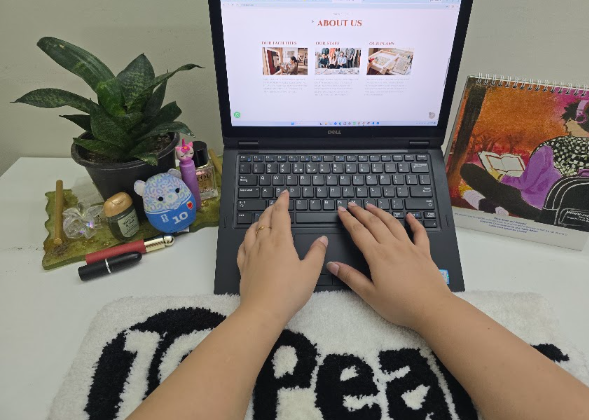
One of the newest additions to this trend is the office logo keyboard rug, a small custom rug that sits right under your keyboard and quietly does double duty, comfort and branding, all in one spot.
If you have never heard of one before, don’t worry, it is a simple idea. A keyboard rug is a small, soft mat that goes under your keyboard on your desk. An office logo keyboard rug takes that same idea and adds a twist. It is customized with a company logo, brand colors, text, or even original artwork. Instead of a plain black mat, you get a small piece of your brand sitting on every desk in the office.
Pile & Loop offer handmade custom keyboard rugs built exactly for this purpose, designed around a company’s logo and colors rather than sold as one generic product for everyone. In this article, we will talk about what these rugs actually are, why companies are adding them to desks, what you can customize, how to pick the right size, and what to think about before you place an order.
What Is an Office Logo Keyboard Rug?
A regular keyboard rug is just a soft mat you place under your keyboard, usually plain, usually one color, mostly there for comfort and to protect your desk surface. An office logo keyboard rug is the same basic product, but personalized. Depending on the size you choose, it can sit tight under just the keyboard, or stretch out to cover extra space around it, giving your whole typing area a cleaner, more finished look.
The real difference is in the design. Instead of a generic pattern, the rug can include a company logo, business name, initials, a short phrase, or custom artwork that has been approved for the design. It turns a purely functional desk item into something that also says who you are or who you work for.
Why Add a Logo to a Keyboard Rug?
A Small Branding Detail for the Desk
Company branding usually shows up in the big, obvious places, the website and the email signature. A logo keyboard rug is different. It is a small, personal touch that sits right where someone works every single day. When several desks in an office use the same logo and color scheme on their rugs, it quietly creates a more consistent, put-together look across the whole space.
Personalizing Employee or Team Workspaces
These rugs are not limited to one type of setup. They can work on individual employee desks, shared team areas, home office setups for remote staff, or general company workspaces. Some teams like giving every desk the same design for consistency; others let each person choose their own colors or add their name, so it still feels personal even with the company logo included.
A Branded Gift or Office Merchandise Option
A custom keyboard rug can also work as a gift for employees, for clients, or as a giveaway at a company event. Whether it makes sense for your business really comes down to your goals and your budget; it is a more unusual pick than a mug or a t-shirt, which can actually work in its favor if you want something people will notice and actually use daily.
What Can You Customize on an Office Keyboard Rug?
Company Logo: You provide the logo, and it gets worked into the rug’s design.
Brand Colors: You can request colours that match your company’s visual identity. It brings uniqueness to your work space.
Company Name, Initials, or Text: You can add a business name, an employee’s name, initials, or a short line of text. Just make sure to write out exactly what you want on the rug, spelled correctly, before you place the order.
Custom Artwork or Design: If a plain logo is not quite what you are after, you can also use artwork or another approved graphic as the main design instead.
Choosing the Right Size for an Office Logo Keyboard Rug
Size matters more than people expect here. A rug that is too small will not give your keyboard proper coverage, one that is too big might crowd your mouse, monitor stand, or other desk items.
If you mainly want something that sits right under the keyboard itself, a smaller size usually does the job. If you have the rug to cover more of your desk, enough space for your mouse too, or just a bigger visual footprint, a medium or large option makes more sense.
Pile & Loop offers Small, Medium, and Large sizes, along with custom sizing for desks or setups that don’t fit the standard options. Before ordering, it helps to actually measure your desk and think through what else sits nearby, your keyboard, mouse, monitor stand, and anything else in that zone, so the size you pick fits comfortably rather than fighting for space. There is no single size that works for every desk, so it is worth the two minutes it takes to check.
Where Can Office Logo Keyboard Rugs Be Used?
Corporate Office Desks: The most straightforward use, a personal branded touch at each individual workstation.
Reception or Shared Workspaces: In certain shared or customer facing areas, a branded desk accessory can quietly reinforce the company’s look for anyone who walks by.
Home Offices: With more people working remotely, a custom rug lets employees or business owners bring a bit of company identity into a home setup.
Creative Studios and Work Desks: In workspaces where a personalized desk is already part of the culture, a logo rug fits right in alongside everything else.
Employee and Client Gifting: As mentioned earlier, these rugs can double as one option among several for branded merchandise or gifting.
Office Logo Keyboard Rugs and Modern Workspace Design
Keyboard rugs are one of the few desk items that sit directly in a person’s line of sight while they work, which is exactly why brands see them as a useful spot for a logo. It is not just decoration, it is a design element that actually gets noticed during the workday. A logo on a keyboard rug stays in view every time someone sits down to type, making it a more direct way to keep a brand visible without being loud about it.
How to Prepare Your Logo Before Ordering
Use a Clear, High Quality File
A clean, high quality version of your logo will always translate better into a rug design than a low quality one. Blurry or pixelated files make it harder to get sharp, accurate details in the final product, so it is worth taking a minute to send the best file you have.
Keep Important Details Easy to See
Very highly detailed logos may need some extra thought when adapting them into a tufted rug design, since fine detail does not always translate perfectly onto fabric. Where possible, send the original logo or artwork file rather than a screenshot, screenshots tend to lose quality and make accurate reproduction harder.
Decide on Colors and Text in Advance
Before you place your order, have your preferred colours and any exact text sorted out. It saves back and forth later and helps avoid mistakes in the final piece.
How Pile & Loop Creates Custom Office Keyboard Rugs
Pile & Loop makes keyboard rugs, and each one is made only after an order is confirmed. Because of that, production time can vary depending on the size of the rug, how complex the design is, how many colors are involved, and how many other orders are in the queue at the time.
Pile & Loop also works with custom designs, so you are not limited to picking from a small set of pre-made templates. And every request is reviewed before the production according to the design, size and colour.
Things to Consider Before Ordering a Custom Office Logo Keyboard Rug
Measure the available desk area first.
Decide if the rug should sit only under the keyboard or cover more of the desk.
Prepare a high quality logo or artwork file.
Confirm your preferred colours ahead of time.
Double check the exact spelling of any names or text.
Think about whether the design should match your existing office branding.
Ask about custom sizing if the standard options don’t fit your setup.
Conclusion
There is no single “right” keyboard rug for every desk, size, pile, material, shape, logo placement, and overall design all play a part in getting it right for your specific space. What matters most is choosing a design that actually fits both your workspace and your brand identity, rather than just picking whatever’s first in a catalog.
If you are thinking about adding a small branded touch to your office desks, a custom logo keyboard rug from Pile & Loop is worth a look, it is a small detail, but it is one people notice every day they sit down to work.
FAQs
Can I put my company logo on a keyboard rug?
Yes. Custom keyboard rugs can be designed to include a company logo as the main design element.
What size rug is best for a computer table?
It depends on your setup. A smaller size works well if you just want coverage under the keyboard, while a medium or large size makes sense if you want the rug to cover more of the desk, including space near your mouse or monitor stand. Measuring your desk first is the best way to decide.
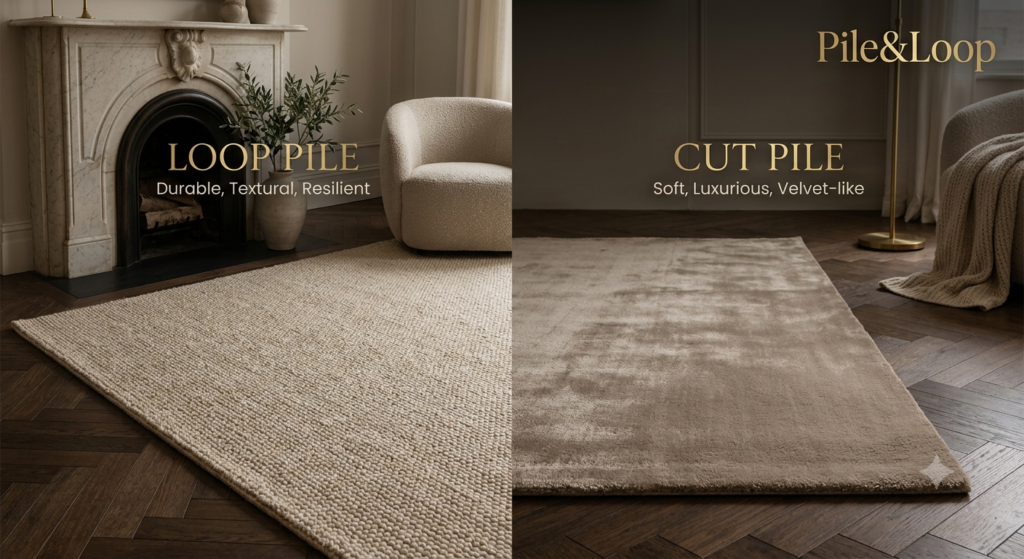
Is a cut pile or loop pile better for an office rug?
Cut pile tends to have a softer, plusher feel, while loop pile has a more textured, structured surface that can hold up well with regular use. The better choice usually comes down to personal preference and how the rug will be used day to day.
Can Pile & Loop make a keyboard rug in my company’s colors?
Pile & Loop makes an effort to match the colours and design you request. The requests are reviewed before the production and each rugs is made with care and authenticity.
Research Resources
Source title
Corporate Logo Mats Brand Identity with Every Step
Background on how branded logo mats support brand recall in offices, and why accurate logo/color reproduction matters for a branding product to work as intended
Source title
Custom Logo Mats and Area Rugs for Business
Publisher
Logo Mat Central
https://logomatcentral.com/
Information used
Reference on how custom logo rug/mat orders are typically processed, design submission, digital proof and approval, then production, used to frame the “how to prepare your logo before ordering”.
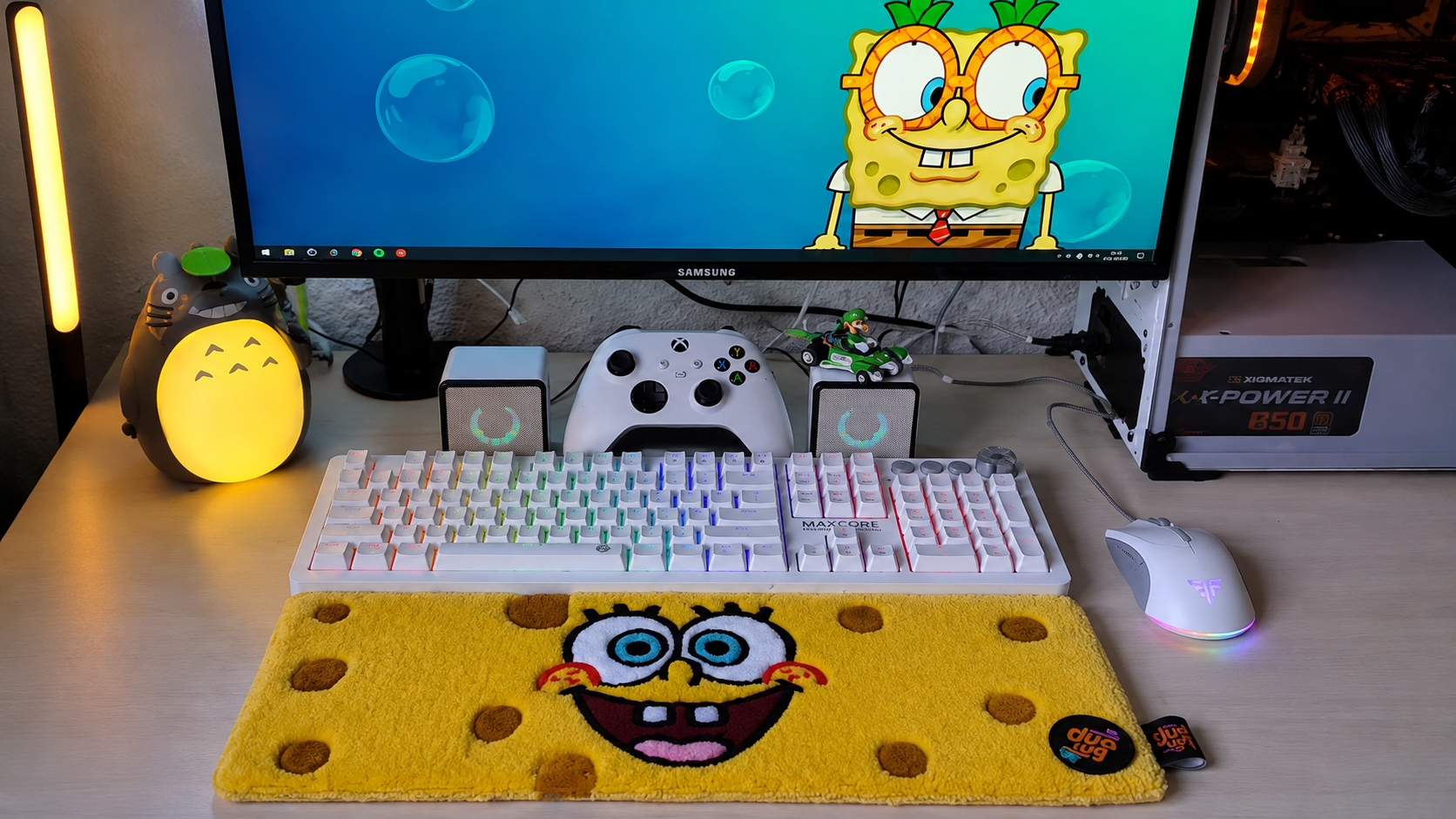
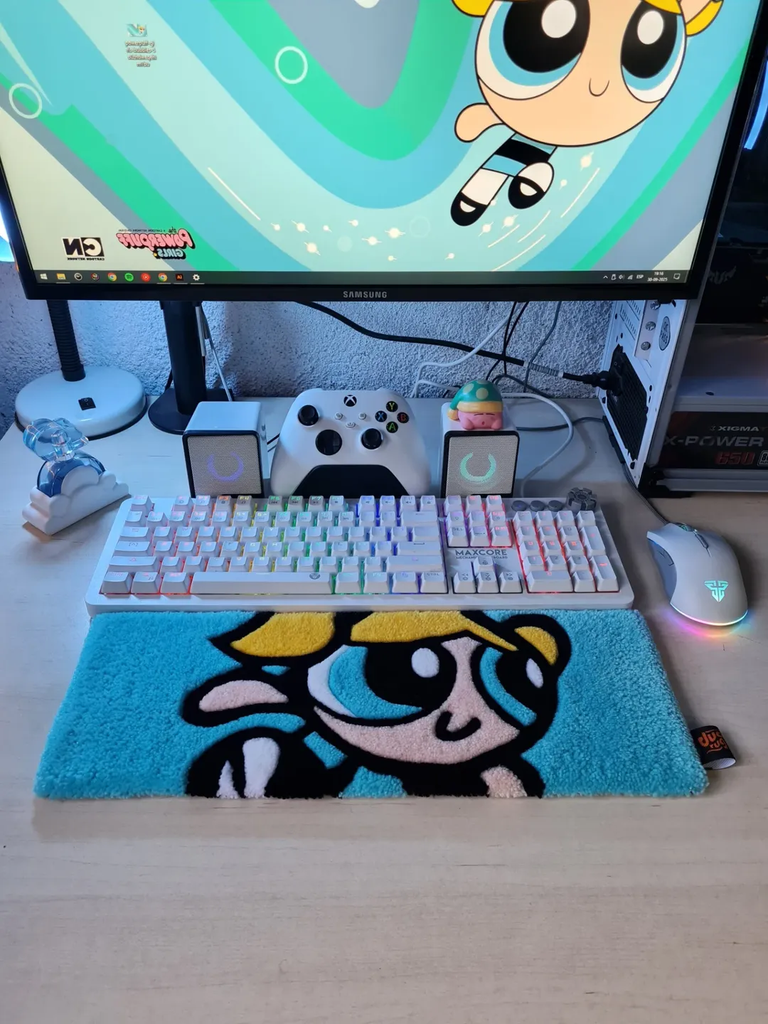
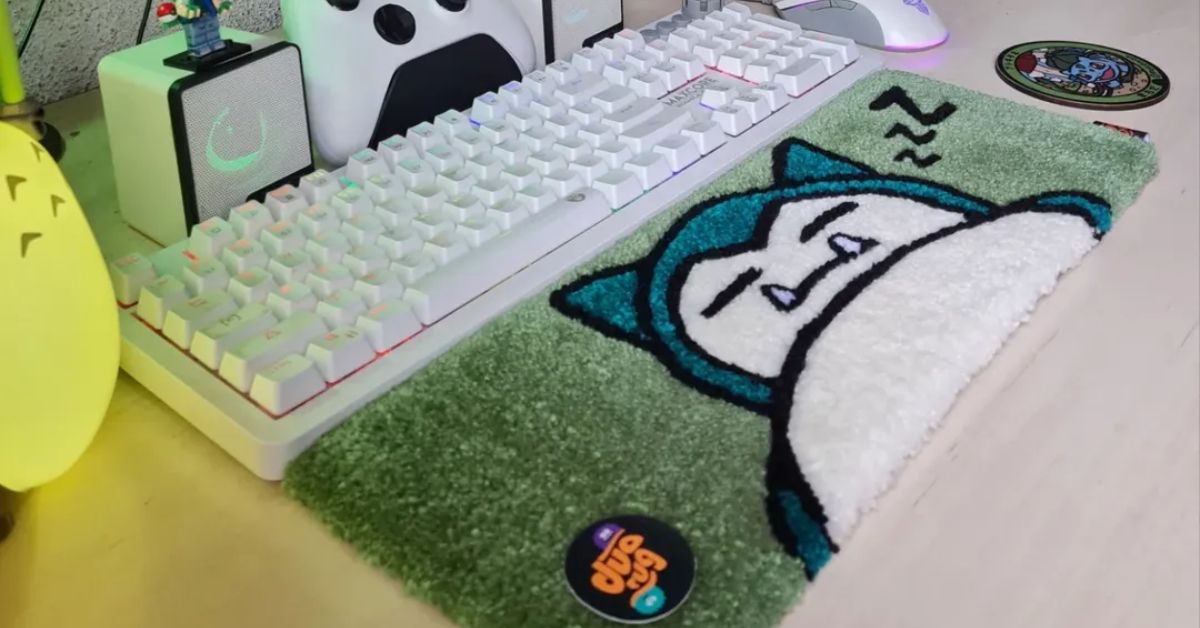
A Gaming Keyboard Rug sits on your desk, under your keyboard and mouse — it’s a different product from a floor rug
Size according to your desk space requirement whether you need keyboard-sized, full-size or L-shaped desk coverage.
The surface texture influences your wrist comfort and mouse glide ability.
Personalization is the primary factor that makes players prefer the keyboard rug rather than the standard desk mat because the player can add their design, tag, and RGB compatible colors to it.
For streamers, a keyboard rug is something that is going to be seen on camera, so you should consider this an aesthetic choice, too.
Most gaming desk guides talk about the floor. However, the one part of the surface that receives the least attention is right below your hands, where your wrists lay resting for hours at end.
This is where a keyboard rug will help, which is nothing but a soft rug laid on your desk surface below your keyboard and mouse.
That is how you should consider things like size, comfort, personalization options, and streaming when choosing one for yourself.
What Is a Best Keyboard Rug?
A keyboard rug is an accessory for the desk and not a floor rug. The keyboard rug lays flat on the surface of your desk and lies below the keyboard and mouse. While a floor rug must be designed to withstand the effects of footsteps and the movements of your chair, a keyboard rug need only be able to withstand activities that take place on your desk, such as typing and use of the mouse.
Desk Accessory, Not a Floor Rug
Because a keyboard rug lives on the desk, it’s sized and chosen differently than anything meant for the floor. Pile height, backing, and surface texture all matter here, but for different reasons — comfort under your wrists and consistent mouse tracking, rather than durability against rolling chair wheels.
Sizing a Keyboard Rug to Your Desk
Size is determined by the amount of coverage you need on your desk surface.
Keyboard-Only vs Full-Desk Coverage
Some people want a rug that covers just the keyboard and mouse footprint — enough room to type and move the mouse comfortably. Others prefer a full-desk rug that extends across the entire surface, giving a more unified look and covering monitor stands, speakers, and accessories too. Neither is more “correct” — it comes down to how much of your desk surface you want to visually and physically change.
Fitting Around Monitor Arms, Speakers & Cable Channels
If your desk has a monitor arm clamp, a speaker stand, or a built-in cable channel, measure around those before choosing a size. A rug that runs right up to a clamp base can bunch or lift unevenly, and a rug that covers a cable channel can make routing and re-routing cables more of a hassle than it needs to be. Measuring your actual desk layout — not just the desk’s overall dimensions — will save you a return.
Single Desk vs L-Shaped Desk Sizing
An L-Shaped desk is a little more difficult to measure since you will be trying to determine whether to get a rug that fits just the keyboard end of the desk or whether to get one that can stretch to fit both ends, with the keyboard being one of them. When using the second part of an L-Shaped desk for a controller, tablet, or monitor, take it into consideration.
Desk Comfort: What You Feel Under Your Wrists
This is the part a floor rug can’t help with — how the surface feels during a long typing or gaming session.
Thickness and Wrist Support During Long Sessions
A thin, flat weave will feel closer to a standard desk mat, while a slightly thicker rug adds more cushioning under the wrists. Thicker isn’t automatically better, though — a rug that’s too plush can shift under your hands while typing, which some people find distracting during fast-paced gameplay. If you type or game for hours at a stretch, testing a mid-range thickness first is a reasonable starting point before going thicker or thinner.
Surface Texture and Mouse Tracking
Mouse tracking is sensitive to surface texture. A tighter weave results in more reliable tracking compared to loose and high-pile weave which can affect the capability of the optical or laser sensors from detecting the motion. In case accurate control of your mouse is important in your gaming style. Choose a surface that is flat and has tighter weave for the mouse area even though the entire rug may have a different texture.
Customization: Making the Desk Match Your Setup
For a lot of people, this is the real draw of a keyboard rug over a generic desk mat — it’s a way to bring your own design directly onto your desk.
Using Your Own or Licensed Artwork
If you have artwork you own the rights to — original art, a design you’ve licensed, or something a designer made for you. A custom keyboard rug is a way to put it somewhere you’ll see it every session. Pile & Loop’s keyboard rugs collection, which the brand also lists under gaming desk rugs and gaming setup rugs, supports designs made from customer-owned or authorized artwork.
Gamer Tags, Logos & Team Branding
A keyboard rug is also a straightforward way to add a gamer tag, personal logo, or team emblem to your desk without covering a wall or shelf. For competitive teams or small studios, this can extend to matching rugs across multiple desks — a shared visual identity that’s more subtle than branded wall decor.
Coordinating Colors with RGB Lighting
If your setup is built around RGB lighting, color coordination is worth thinking through before ordering. A dark, neutral base (charcoal, black, deep blue) tends to let LED lighting stand out more than a busy or light-colored rug would. Keep in mind that a digital color preview and a dyed or printed physical product won’t always match exactly — it’s worth asking the seller what to expect before finalizing a custom color.
Built for Gaming & Streaming Desks
If your desk setup is ever on camera, the keyboard rug isn’t just something you feel — it’s something your audience sees too.
On-Camera Desk Appearance for Streamers
Streamers will find that the desk surface is featured in their webcam shots and overheads more than the floor surface. Using a keyboard rug that matches the branding of your stream will be an easy and convenient way to create a constant visual effect without having to make a full change to your desk.
Matching Rugs for Team or Studio Setups
For teams or studios running multiple desks, ordering matching or coordinated keyboard rugs is a simple way to create a consistent look across every station — useful for group streams, tournament setups, or shared studio spaces where visual consistency matters.
FAQs
What size keyboard rug do I need for my desk?
Measure the area occupied by your keyboard and mouse including some inches of margin, or measure your entire desk if you want complete coverage.
Does a keyboard rug affect mouse sensor accuracy?
Yes, if the surface is loose or high-pile. A tighter, flatter weave tracks more consistently.
Can I get a custom keyboard rug with my own design?
Yes. Pile & Loop offers custom keyboard rugs using customer-owned or authorized artwork, gamer tags, logos, or color matching. Ask through their contact page.
Is a keyboard rug the same as a desk mat?
No. A desk mat is thin and built mainly for mouse tracking. A keyboard rug is softer and more customizable.
How do I size a keyboard rug for an L-shaped desk?
Determine whether you only require the keyboard area or the whole L-shaped section. The second surface is required in case you use it for a monitor or any other equipment.
Bottom Line — Shop Pile & Loop’s Keyboard Rugs
The right keyboard rug comes down to matching size to your desk layout, choosing a texture that supports both comfort and accurate mouse tracking, and — if it matters to you — personalizing it to fit your setup or your stream. Ready to find the right one for your desk? Browse Pile & Loop’s keyboard rugs, or get in touch to ask about custom options.
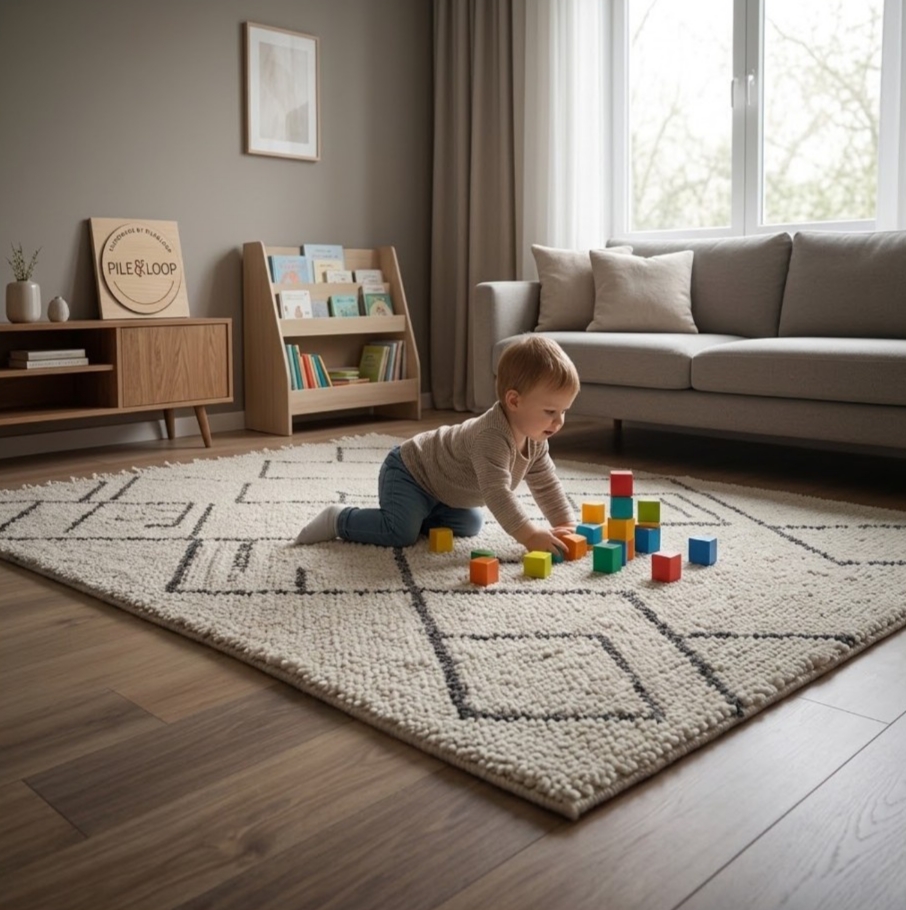
Kids spend a huge amount of their day down on the floor. Whether they are crawling as toddlers, building tall block towers, spreading out art supplies, or sitting down to read, the floor is usually center stage. Hardwood or tile floors can feel cold and uncomfortable after a while, which is why a good rug makes such a big difference.
A well chosen rug turns a hard surface into a cozy, welcoming spot to play. It also adds a splash of color and brings out your child’s personality in the room. But with so many choices out there, picking one that can handle spills, heavy foot traffic, and endless playtime can feel overwhelming. This guide breaks down everything you need to know to pick a rug that is both practical for you and fun for your child.
What Should Parents Look for in a Rug for a Kids’ Play Area?
Before buying the first pretty rug you see online, it helps to pause and think about how the room actually gets used day-to-day. A play area rug needs to do a lot more work than a standard living room rug. Here are the main things to keep in mind:
The size of the play area: A rug that is too small looks lost, while one that is too large can make a room feel crowded or get tucked awkwardly under furniture.
The rug’s material and construction: Children have sensitive skin, and they drop things constantly. You need a material that feels soft but can take a beating.
How the rug handles everyday use: Play spaces see heavy action. Look for materials that do not shed heavily or wear out quickly under sliding toys and busy feet.
Your child’s age and activities: A toddler needs a soft, cushioned surface for learning to walk and tumble. An older child might need a flatter surface so their toy cars and building blocks stay upright.
Overall room style: The rug should fit with the rest of your decor, whether you prefer bright, energetic colors or a quiet, neutral look.
Choosing the Right Rug Material for a Child’s Play Space
Different materials behave very differently when it comes to durability, softness, and cleaning. Checking the specific fiber before buying helps set realistic expectations for care.
Wool
What to expect: Natural, soft, durable, and naturally stain resistant.
Best for: Long term use, cozy spaces, natural fiber preference
Cotton
What to expect: Lightweight, soft, and comfortable. Often washable, though smaller ones may slide without a grip pad.
Best for: Casual play areas, budget friendly setups, quick cleaning.
Synthetic (Polyester, Nylon, Polypropylene)
What to expect: stain resistant, and easy to wipe down. Can feel less soft over time depending on quality.
Best for: High traffic zones, art and craft spaces, heavy spill risk
Why Does Material Matter?
The right material dictates how much time you will spend cleaning and how long the rug will last. Kids spill drinks, drop snacks, and track dirt around. Choosing a material that matches your home routine saves you a lot of stress down the road.
Pile Height and Texture: What Works Well for Play Areas?
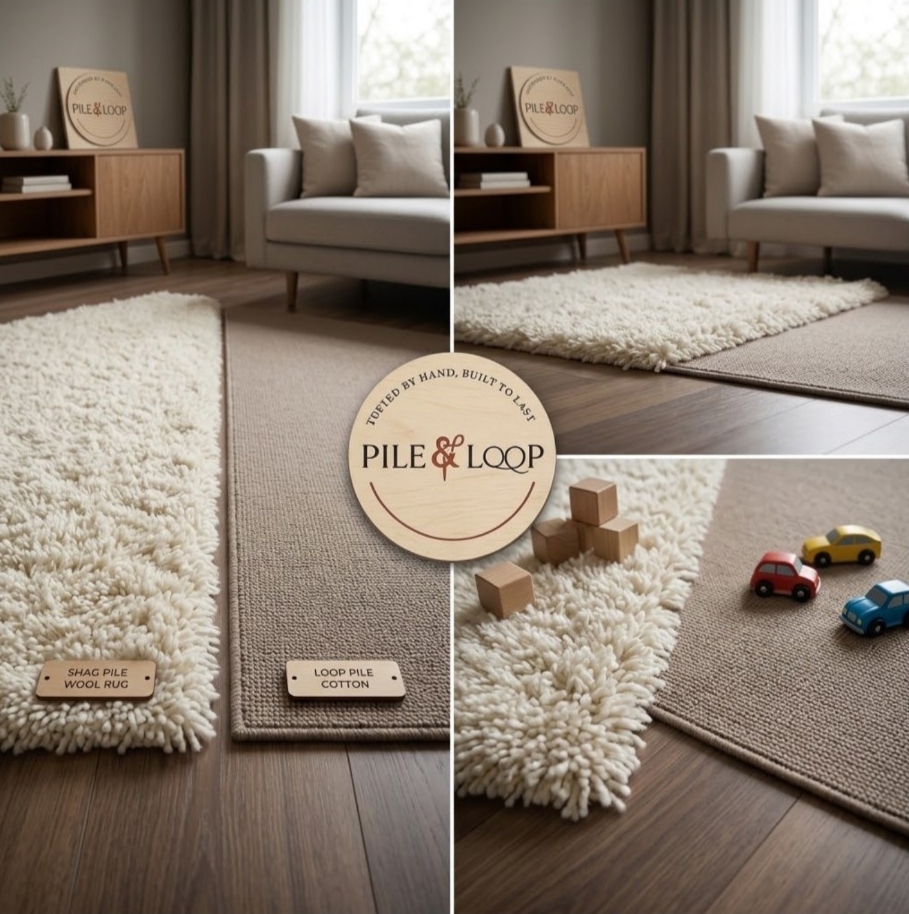
Low Pile Rugs: These have short fibers and a flatter surface. They are generally the most practical choice for active play spaces. Toy cars roll smoothly over them, block towers do not tip as easily, and crumbs sit on top rather than sinking deep into the threads, making vacuuming quick and easy.
High Pile or Plush Rugs: These are extra soft and cozy underfoot, making them wonderful for reading nooks or younger babies who spend a lot of time lying down. However, tiny toy pieces can get lost in thick pile fibers, and deep cleaning takes more effort.
Loop vs. Cut Pile: Loop rugs (like Berber) are durable, but claws from pets or sharp toy edges can pull the loops. Cut pile rugs have open fiber ends, which generally offer a softer feel and avoid snagging.
Choosing the Right Rug Size for Your Child’s Play Area
Getting the dimensions right helps define the play space and keeps the room balanced.
Measure the floor space: Use a tape measure to mark out the open floor space where your child actually plays. You can use painter’s tape on the floor to visualize different sizes.
Leave a border: Try to leave bare floor between the edges of the rug and the walls. This keeps the room from looking cramped.
Define the zone: If the play area is part of a larger bedroom or family room, a dedicated rug acts as a visual boundary that says, “This is where the toys live.”
Work with furniture: Decide whether furniture legs will sit on or off the rug. Placing the front legs of a storage bin or child’s table on the rug helps hold it securely in place.
Think about movement: Make sure the rug size gives your child enough room to roll around or build without constantly running off the edge onto cold flooring.
Colors and Designs That Make Play Areas More Fun
The pattern and color you choose can completely transform the mood of the room.
Bright Colors: Vibrant yellows, blues, and reds bring energy to a room and are great at disguising minor wear and everyday spots.
Soft and Neutral Colors: Muted tones like sage, soft gray, or cream create a calming, peaceful environment that blends smoothly with modern home styles.
Animal Designs: Friendly animal motifs spark imagination and give the room a playful, charming touch.
Educational Themes: Rugs featuring maps, alphabets, or numbers combine playtime with subtle learning opportunities.
Shapes and Patterns: Geometric patterns, stripes, or polka dots add modern style without feeling overly juvenile as your child grows.
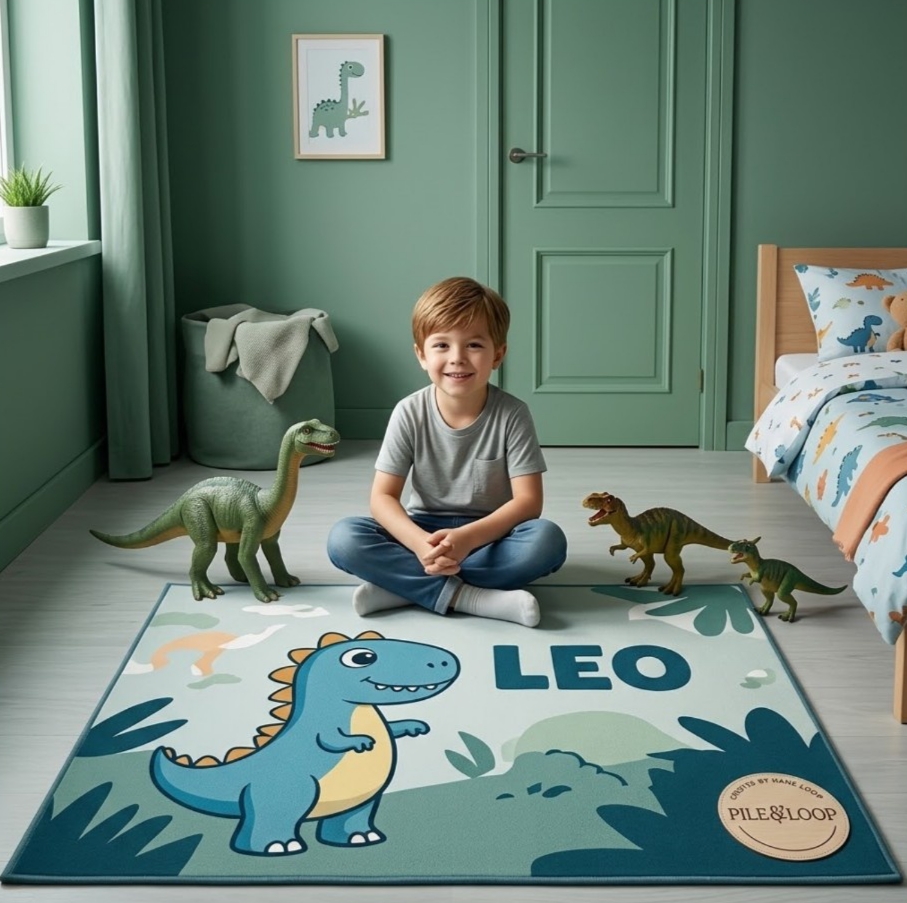
Personalized Designs: Custom options let you tailor the colors and style to match your child’s exact interests or room layout.
Custom Character Rugs: Turn Your Child’s Favorite into a Play Space
A custom rug lets you build a space that feels deeply personal to your child’s passions. Rather than settling for off-the-shelf options, customized themes let their imagination run wild.
Favorite Animals: From woodland creatures to sea life.
Cartoon Inspired Themes: Bringing beloved story styles or playful motifs to life.
Favorite Colors: Mixing preferred shades to match bedroom walls or curtains.
Fantasy Themes: Castles, stars, space adventures, or magical forests.
Cars and Vehicles: Play mats featuring roads, tracks, or transport designs.
Sports Themes: Incorporating court lines, field patterns, or team-inspired colors.
Easy Care Habits for Rugs in Children’s Play Areas
Keeping a play rug clean does not have to be a full-time job. A few simple routines help maintain it:
Shake and Remove Loose Dirt: Give smaller rugs a quick shake outside once a week to knock out trapped crumbs and dust.
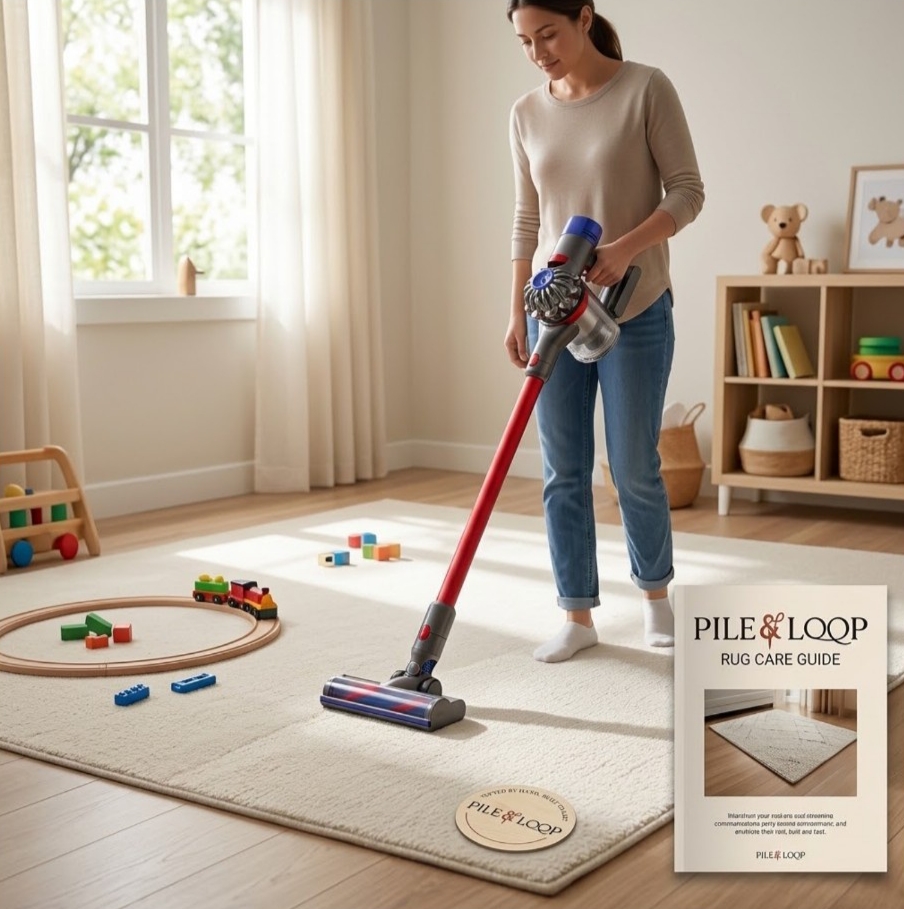
Vacuum Regularly: Vacuum once or twice a week depending on use. Turn off the beater bar on delicate wool or long-pile rugs to protect the fibers.
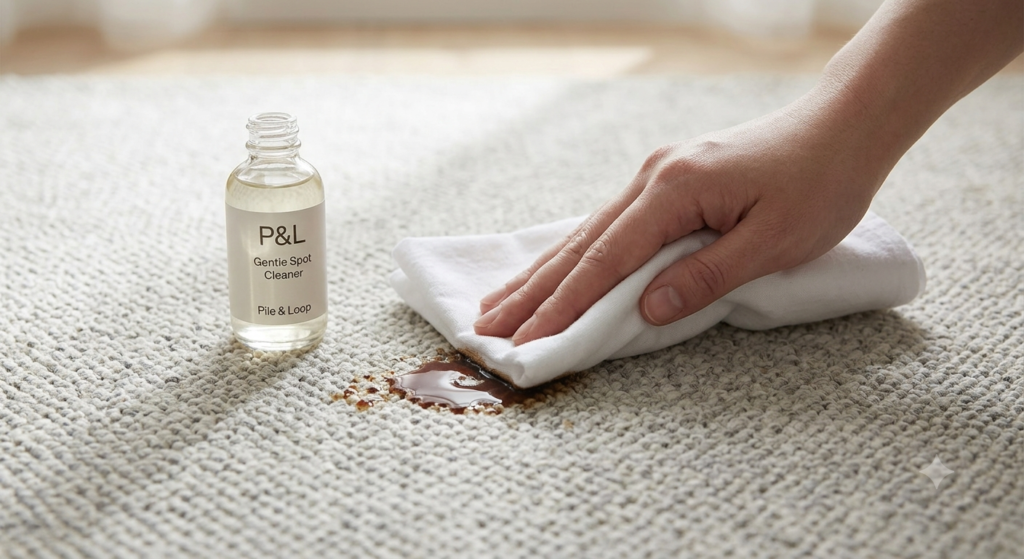
Clean Spills Promptly: Blot (don’t rub) liquid spills right away with a clean cloth to stop stains from setting deep into the backing.
Check Care Labels: Always read the manufacturer’s care tag before using spot cleaners, as harsh chemicals can strip colors or break down fibers.
Use Professional Cleaning when Needed: For stubborn stains or deep annual freshening, consider professional cleaning services suited to your rug’s specific material.
How Pile & Loop Can Help You Create a Personalized Rug
When off-the-shelf rugs do not fit your specific vision or room dimensions, custom options offer a practical alternative. Pile & Loop focuses on helping you create customized pieces tailored for your personal spaces.Depending on your preference, Pile & Loop provides options to convert specific visual ideas or themes into a physical rug for your home. We focus on personalised details and give options to adapt colors, shapes, and patterns so the rug fits seamlessly into a child’s room.
Conclusion
Choosing a rug for a child’s play area is about finding a balance between comfort, practicality, size, maintenance, and design.Start by thinking about how your child uses the floor. Then consider the material, pile height, available space, and how much routine care you are comfortable doing. A rug that fits the child’s activities and the room may be easier to enjoy every day.
For parents who want something more personal, a custom rug can bring a child’s favorite interests into the room while allowing the design to be planned around the available space. With Pile & Loop custom rug services, parents can discuss their ideas and explore what may be suitable for their particular space and requirements.
FAQs
What type of rug is suitable for a children’s play area?
Low-pile synthetic or cotton rugs are often suitable choices for play spaces. They offer a smooth surface for rolling toys, are generally easy to clean, and handle everyday foot traffic well.
Are custom rugs a good option for children’s rooms?
Yes, custom rugs can be a practical option if you have an unusually shaped room, a specific color scheme to match, or if you want to feature a personalized theme that your child loves.
How often should I clean a rug in a children’s play area?
Vacuuming once or twice a week is usually enough for general maintenance. Spills should be blotted immediately, and a deeper clean can be done every 6 to 12 months as needed.
Can Pile & Loop make a personalized rug for a child’s play area?
Pile & Loop offers custom rug options where you can choose personalized designs, custom colors, and sizes suitable for children’s spaces and family homes.
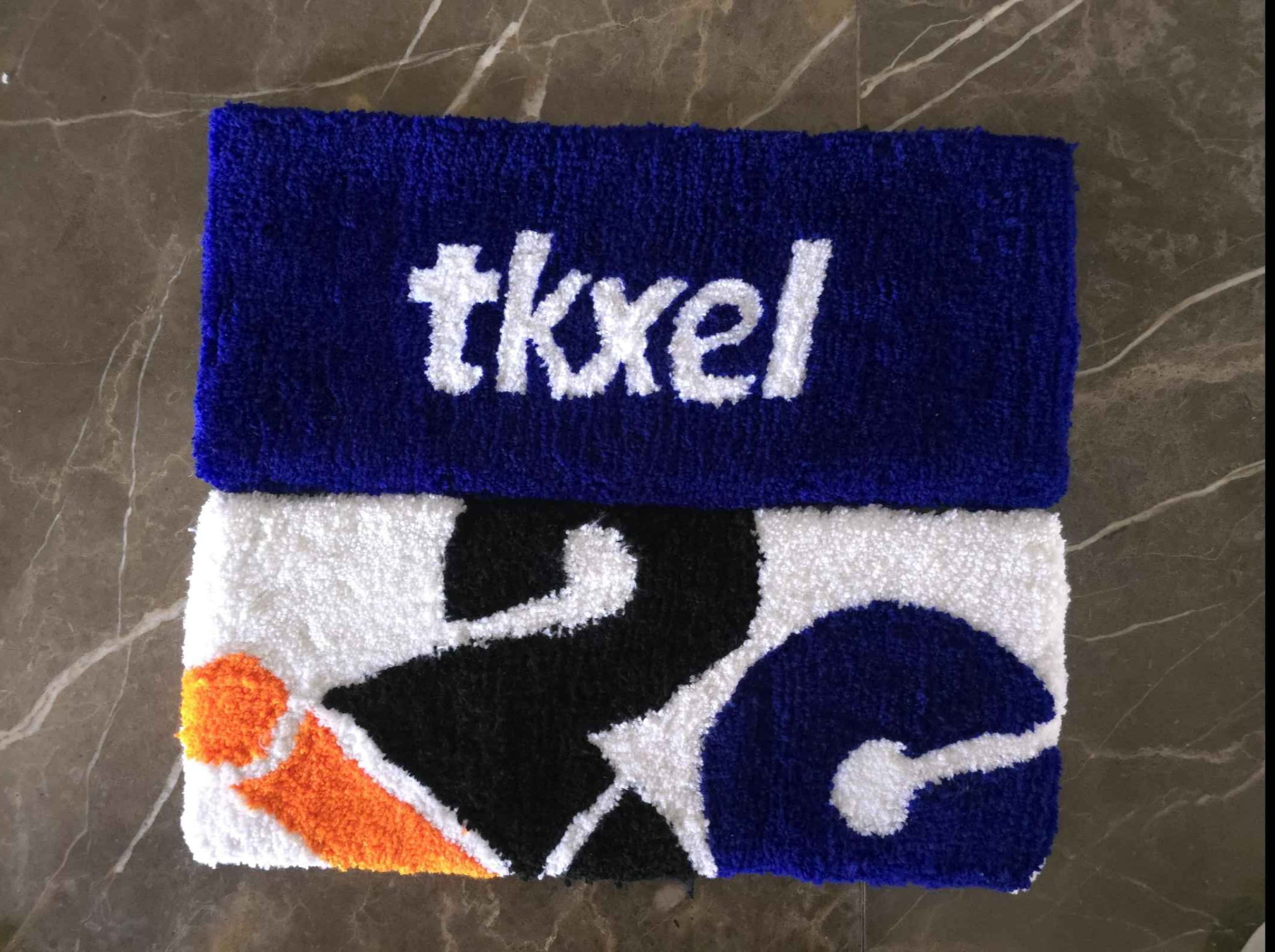
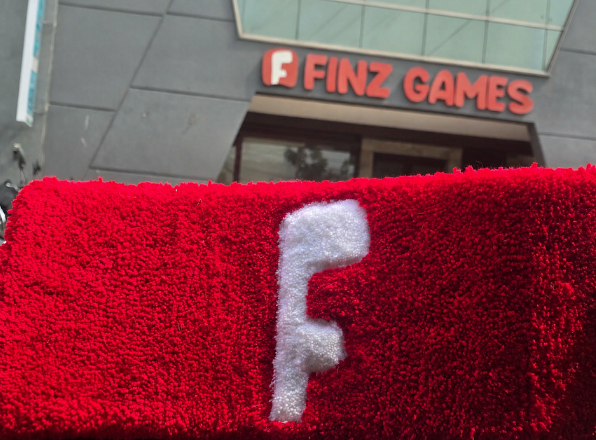
We recently visited Finz Games for a business discussion and introduced the team to Pile & Loop’s Custom Keyboard RugS concept.
The visit gave us a closer look at how modern workspaces are becoming more personal and visually intentional. While businesses often think about branding through walls, signage, screens, and stationery, there are smaller details within a workstation that can contribute to the same identity.
One of them is the keyboard rug.
Their Workspace & Use Case
A workstation is not only a space to sit and work from. It is a combination of various accessories, including the keyboard, mouse, monitor, and others, which create a workspace tailored to the people’s style of working and even their personality.
For creative and tech-oriented employees, the workstations themselves might also contribute to the personality of the office environment.
A custom keyboard rug fits naturally into this environment. Positioned against the keyboard and mouse, it adds a defined visual element to the setup while creating an opportunity to bring brand identity directly into the workspace.
For Finz Games, our conversation around custom keyboard rugs opened up that possibility: taking an everyday part of a workstation and giving it a more distinctive, brand-led character.
Why Custom Keyboard Rugs Fit Modern Workspaces
Modern branding is not always about making a statement as loudly as possible.
Sometimes, it is more about maintaining consistency in small details.
A keyboard rug can incorporate brand colors, logos, patterns, illustrations, or other visual elements that connect the workstation to the wider brand identity. Because it sits naturally within the setup, the branding can feel integrated rather than added on.
For teams, this can also create a visual connection between individual workstations. Keyboard rugs can follow a shared design language while still allowing room for different layouts, patterns, or creative treatments.
The result is a workspace that feels considered without looking overly branded.
Customization Meets Workspace Aesthetics
One of the biggest advantages of a custom keyboard rug is the freedom to create something around the brand rather than choosing a standard design.
A company can keep things minimal with its signature colors and logo, or explore a more expressive direction through patterns, artwork, typography, or illustrations.
The design can also complement the existing aesthetic of the workspace.
A clean, minimal office may call for a simple and understated design. A creative studio or gaming-focused environment may have more room for bold graphics and distinctive visual elements.
The point is not simply to put a logo on a keyboard rug. It is to create a piece that feels like it belongs on that desk.
Why Small Branded Details Matter
A strong workspace identity is rarely created by one large element.
It comes together through multiple details—the colors, objects, layouts, and visual choices that people encounter throughout their day.
A customized keyboard rug is a small part of that bigger picture, but it gives businesses another way to bring their identity into an everyday workspace.
For employees, it can add personality to an individual setup. For teams, coordinated designs can create a sense of visual connection, and for businesses, it can extend brand thinking into spaces where work actually happens.
A Creative Option for Corporate Gifting
The same customization makes keyboard rugs an interesting option for business gifting.
Instead of choosing a generic branded item, companies can create a keyboard rug around a specific brand, campaign, team, event, or individual.
It can be designed to feel personal while still carrying a connection to the business behind it.
A custom keyboard rug can be a practical gift for employees, team members, or clients while still keeping your brand visible.
What Businesses Can Learn
The details within a workspace can influence how connected it feels to a brand.
Custom keyboard rugs can help businesses:
Bring brand colors and visual identity into individual workstations
Add personality and character to modern desk setups
Create visual consistency across team workspaces
Explore more creative forms of branded merchandise
Offer a distinctive and customizable corporate gifting option
At Pile & Loop, we believe brand identity can live in the details people interact with every day.
Whether you’re looking to create custom keyboard rugs for your team, add a more personalized touch to your workspace, or develop a distinctive corporate gifting idea, we can help turn your brand into a design that belongs on the desk.
Have a brand, concept, or design in mind? Get in touch with Pile & Loop to create custom keyboard rugs for your business.
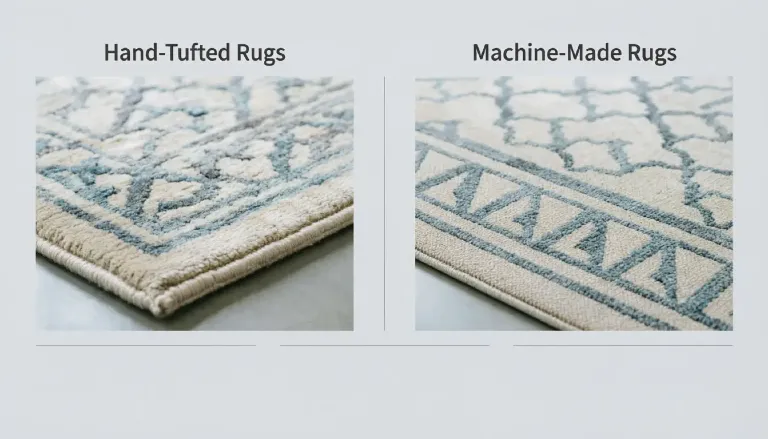
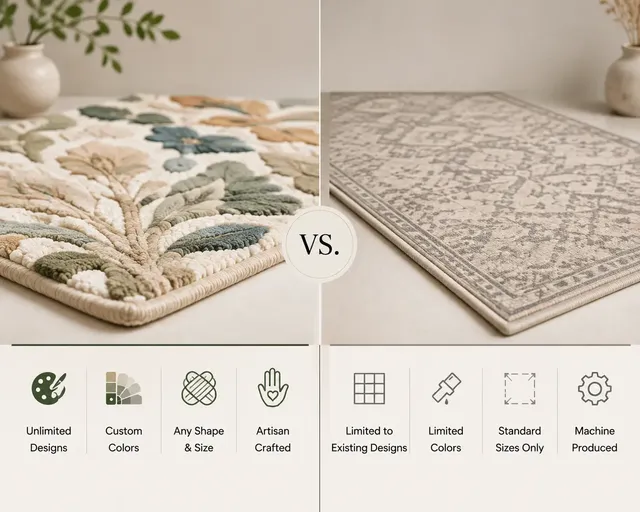
Hand-Tufted vs. Machine-Made Rugs is an important comparison when choosing the right rug for your home. While both options may look similar, their construction methods, lifespan, customization, and pricing can differ significantly.
Quick Takeaways
Hand-tufted rugs are created by hand with the use of a tufting gun and canvas; machine-tufted rugs are made by computerized machines that control the power loom.
Feel and density vary by yarn, pile height, and construction quality in both types — neither is automatically plusher.
Machine-made rugs are generally the more budget-accessible option; lifespan for either type depends heavily on material and construction quality.
Hand-tufted rugs stand out for customization because makers can create different sizes, colors, and patterns based on customer needs.
How Hand-Tufted Rugs Are Made
To make a hand-tufted rug, an artisan first stencils the design onto a canvas. The artisan then uses a handheld tufting gun to punch loops of yarn through the fabric. To punch loops of yarn through the fabric — a process Fine Rug Collection’s construction guide compares to filling in a stenciled outline by hand. After tufting, the rug needs a stable backing. The maker applies a layer of latex adhesive to the back. They then add another backing fabric, usually made of cotton or canvas.
This technique falls somewhere in between hand-knotted and machine-made techniques. While being more time-efficient and less costly than the hand-knotting method, it still includes a manual process of the rug by the individual.
Materials vary by maker — wool, cotton, and synthetic blends are all used in hand-tufted construction, and the specific fiber has more to do with feel and durability than the tufting process itself.
How Machine-Made Rugs Are Made
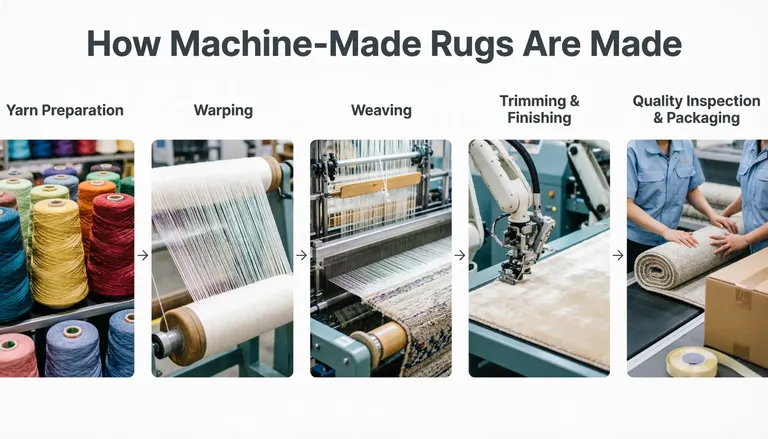
The machine-made carpet is made on an automatic loom operated by a computer program that dictates the design from a pattern file through colors and positions very quickly.
This automated process is what makes machine-made rugs fast to produce and widely available in consistent sizes and colorways.
The material used may vary from one manufacturer to another, and it may be either artificial material such as polypropylene, nylon, or polyester, or natural materials such as wool and blends of wool. In this case, the material type is more critical than the loom.
Hand-Tufted vs. Machine-Made rugs: Side-by-Side Comparison
Factor
Hand-Tufted
Machine-Made
Construction
Hand-guided tufting gun through a stenciled canvas, glued backing
Computer-controlled power loom, programmed pattern
Common materials
Varies by maker — wool, cotton, and synthetic blends are all used
Varies by manufacturer — synthetic fibers and wool/wool-blend options both exist
Texture & feel
Varies by yarn, pile height, and density — can range from tight to plush
Varies by yarn, pile height, and density — can range from tight to plush
Customization
Sizes, colors, and patterns can typically be made to order
Some brands offer limited size/color options, but flexibility is generally narrower
Durability factors
Backing adhesive is a known long-term wear point; overall lifespan depends on fiber and construction quality
Depends heavily on fiber quality and construction density
Price
Generally a higher investment, reflecting labor and materials
Generally more accessible, especially at larger sizes
Often considered for
Design-forward spaces, made-to-order needs
Budget-conscious or frequently-changed spaces
Look and Feel: What You’ll Notice Underfoot
The quality of the underfoot of a rug is determined not by how it is manufactured but by the type of yarn used. The height of pile, and the density of tufting/weaving. Some handmade rugs are manufactured using a thick and plush pile, but some handmade rugs are thinner and flatter. So do machine-made rugs.
Cheap machine-made rugs have thin and flat piles due to cost savings, while expensive machine-made rugs will be as plush as hand-tufted rugs.
For the purpose of comparing the characteristics under the foot for two specific rugs, it is better to measure their pile thickness and density.
Customization: Where Hand-Tufted Pulls Ahead
Hand-tufting starts with the hand-stencil base, hence making it very easy for you to have your own customized sizes, colors, or designs.
In case your room is oddly shaped or has certain color schemes or designs which you cannot find in any factory-made carpets, this is the right way for you.
Machine-made rugs aren’t necessarily locked to a fixed catalog — some manufacturers do offer size or colorway variations within a given design. However, since the production process of a loom is designed for high-speed manufacturing, the level of customization is limited compared to the hand-tufted process.
Can you get a machine-made rug in a custom size or color?
Sometimes, yes — a handful of machine-made rug lines offer select size or color variants. It’s just not as common or as adaptable as the customization process used in most hand-tufted carpets, where the design is designed based on your specifications and not based on an existing production line.
Durability and Lifespan
However, both of these carpets can be durable if cared for properly. Both of them wear differently, depending on use. The durability of a hand-tufted rug depends largely on the quality of the latex backing and the fiber used —regular rug care like vacuuming and rotation makes a real difference either way.
The amount of shedding that occurs in any particular rug, as well as how long it goes on, is based on the yarn quality, density of tufts, and quality of finishing of the backing. This is why shedding varies significantly from one handmade tufted rug to another.
Do hand-tufted rugs shed more than machine-made rugs?
Some new rugs may shed loose fibers during initial use, depending on factors such as yarn quality, pile density, and finishing.
This isn’t universal or automatic just because the construction uses an adhesive backing — yarn quality, tuft density, and finishing all affect how much a specific rug sheds.
Machine-made rugs shed too, particularly those that are of lower density or lower quality, and it is advisable to read the specific information about any particular rug you are purchasing.
Which type holds up better in high-traffic areas?
Neither type is automatically better for high-traffic areas — it depends more on the specific rug’s material and construction quality than on whether it’s hand-tufted or machine-made.
A durable, densely constructed rug in either category can hold up to regular foot traffic, while a lower-quality rug in either category will wear faster. USTIDE’s comparison guide offers one perspective, positioning hand-tufted rugs as a good fit for moderate-use spaces like bedrooms and home offices, and machine-made rugs as a common choice for high-traffic spots like hallways and entryways, partly because they tend to be lower-cost to replace.
That’s one retailer’s general guidance rather than a fixed rule — if heavy daily traffic is a top concern, it’s worth checking the specific rug’s fiber and density rather than relying on construction type alone.
Price and Long-Term Value
The cost of both will depend on size, materials, and brand. However, based on the price comparison among various rug vendors, it seems that hand-tufted rugs will cost slightly more than machine-made rugs.
Machine-made rugs are more easily accessible. This is one of the reasons why they are favored by renters and people who like to change the appearance of their rooms frequently. There is no “better value,” and this will depend on your expectations of the lifespan of the rug, its frequency of use, and preference between custom and inexpensive rugs.
Hand-Tufted vs. Machine-Made Rugs: Which One Suits You?
On a budget or renting a place: Machine-made rugs will be a better choice.
Living room with high traffic or living room with pets and kids: For these cases, consider the rug’s material, construction quality, and maintenance needs rather than choosing based only on whether it is machine-made or hand-tufted. However, a carpet, either machine-made or handmade, from thick material would surely be noticed.
Design-forward room where texture and craftsmanship matter: A hand-tufted rug’s hand-finished character and made-to-order flexibility tend to stand out here.
A room with an unusual size or a very specific color scheme: Hand-tufted’s made-to-order flexibility is the better fit — check our rug size guide if you’re not sure what dimensions to look for.
A rug pad can help improve grip and add cushioning underfoot, depending on the rug and flooring type for both floor types, for added comfort and grip underfoot.
Frequently Asked Questions
Is a hand-tufted rug worth the extra cost?
It depends on priorities — the cost generally reflects made-to-order flexibility and craftsmanship. For larger or frequently used rooms, it may be more appropriate to use a fine machine-made rug.
What is the average lifespan of machine-made rugs?
The lifespan of a machine-made rug varies depending on fiber type, construction quality, maintenance, and level of use.
Are hand-tufted rugs and hand-knotted rugs the same thing?
Hand-knotted rugs are created by knotting one after another without the use of any glue, while hand-tufted rugs are created by the use of punching needles in a tufting machine and then sealed by latex glue from the back side.
How do you clean a hand-tufted rug?
Vacuuming is very important; however, ensure that you do it at a low level. Lastly, it is important to clean any spills as soon as they happen.
Can hand-tufted rugs be used outdoors or in damp spaces like bathrooms?
No, Hand-tufted rugs are generally intended for indoor use, as long-term moisture may affect the latex backing over time.
The Bottom Line
There’s no universal “better” rug between hand-tufted and machine-made — it comes down to how the room is used, and what matters most to you: feel, customization, durability, or price.
If a custom size, color, artwork, or design is part of what you’re after, hand-tufted construction can offer more flexibility for made-to-order designs. Pile & Loop offers custom hand-tufted rugs built around exactly those options, if you’d like a rug shaped around your room rather than the other way around.
Your rug goes through a lot. People walk on it every day. Furniture sits on it. Sunlight hits it. Things get spilled on it. With all that, it still needs to look good. That’s why taking care of it matters. If you look after it well, it can look best for years. If you do not, it can start looking worn out and tired much sooner than it should. Good rug care does two things. First, it keeps the rug looking clean. Second, it protects the rug from the inside out, the fibers, the backing, the colors. A lot of this damage happens slowly, so you do not notice it right away.
Here is something important to know first: there is no single way to clean every rug. It depends on what the rug is made of, how it’s built, and what the maker says to do. A cleaning method that is safe for one rug can ruin another. In this guide, we’ll cover how to figure out what your rug is made of, simple habits you can build into your week, how to vacuum safely, what to do about spills and stains, when to call a professional, and the common mistakes that cause most of the damage rugs get at home.
Know Your Rug Before Cleaning
Before you clean your rug, find out what it is made of. This one thing changes almost everything about how you should care for it, what vacuum setting to use, whether you can use water, and which stain removers are safe.
Wool is common in both hand knotted and machine made rugs. It is tough, but it does not like heat, harsh chemicals, or too much water. Cotton rugs are often used in flatweaves and washable rugs. You can wash these more often, but they can shrink or fade if you are not careful. Synthetic rugs made from things like polypropylene, nylon, or polyester, usually resist stains well and hold up in busy rooms. But even these can get damaged by the wrong cleaning product. Silk is the most delicate. This includes pure silk and silk blends. It does not like sunlight, water, or rough handling. A spinning vacuum brush can ruin silk fibers for good.
Because these materials are so different, one cleaning method will not work for all of them. A steam cleaner that is fine on a synthetic rug could shrink a wool rug or make the colors run. A stain remover that works on cotton might leave a mark on silk. This is why you should always check the care instructions that came with your rug before you clean it. These instructions are written for that exact rug, so they matter more than any general tips including the ones in this guide.
Daily and Weekly Rug Care
Most rug damage does not come from one big accident. It builds up slowly from small things. That is why small daily habits matter so much. Take your shoes off before walking on the rug. Keep doormats at your doors. Clean up spills right away. All of this keeps dirt and water off your rug. Brushing your pets often also helps, since it means less fur and dander gets stuck in the rug. Once a week, give your rug a light vacuum. While you are at it, take a quick look for any spots, pet hair, or areas near windows or vents that might be fading or drying out.
Turn your rug around about every six months to a year. This spreads out the wear and sun so one part does not fade or flatten faster than the rest. This matters most for rugs in front of windows or under furniture that does not move much. A few other things to watch out for. Sunlight fades colors over time, so turning the rug or using curtains helps slow this down. Water from humidity, wet shoes, or watering plants can cause mildew or weak fibers, especially in natural materials like jute or wool. Heavy furniture left in one spot too long can flatten the rug in a way it does not bounce back from. Move your furniture now and then, or use furniture coasters, to give the fibers a chance to recover.
These tips work for most rugs. But the details change a bit by material. A jute rug must always stay dry. A synthetic rug can handle a bit more water without a problem.
Safe Vacuuming Techniques
Vacuuming is the single best thing you can do for your rug. It clears out the dirt and grit that would otherwise grind into the fibers every time someone walks on it. But it is also easy to get wrong if you use the wrong settings.
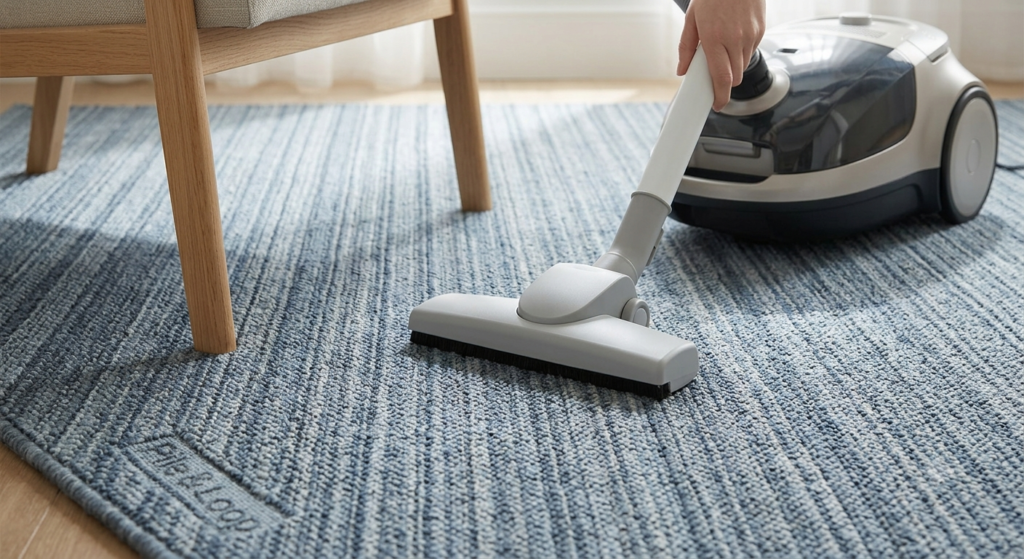
How often you vacuum depends on how much people walk on the rug. Rugs in quiet rooms are usually fine once a week. Busy spots, entryways, hallways, living rooms often need it two or three times a week. Homes with pets or young kids might need it every day. Wool rugs usually do well with one or two vacuums a week. New wool rugs shed a lot in their first few months, so you may need to vacuum them more often during that time. Jute and other plant fiber rugs also need regular, gentle vacuuming, since water is not an option for cleaning them. Silk needs the lightest touch vacuum about once every one to two weeks in quiet rooms, and up to once a week in busy ones. Always vacuum in the direction the pile lies.
The vacuum setting matters just as much as how often you vacuum. A spinning beater bar is fine for low pile synthetic or machine made rugs. But turn it off for wool, silk, jute, vintage, hand knotted rugs, or any other delicate rug. Use suction only instead. A beater bar on these rugs can tear the fibers, pull at the knots, or wear down the shine, especially on silk. Also stay away from any fringe when vacuuming it can get caught in the vacuum and fray.
Here are common vacuuming mistakes to avoid: using too much suction on a delicate rug, vacuuming against the direction of the pile, running the vacuum over the fringe, and skipping the underside of the rug (it collects dust too, so give it a pass now and then).
Spot and Stain Cleaning
The best thing you can do right after a spill is act fast. The longer a stain sits, the more it soaks in and sets. That makes it much harder to remove later. Always blot the stain, do not scrub it. Scrubbing pushes the stain deeper into the fibers and can damage the rug’s weave. Instead, use a clean, dry cloth and press down gently to soak up the liquid. Work from the outside of the stain toward the middle. This stops the stain from spreading further.
Different stains need different treatment. Coffee usually comes out with blotting, followed by a mild, watered down cleaning solution. Since fibers react differently to different products, it is worth looking up your specific stain and rug type instead of using one method for everything. Before you use any cleaning product on a visible part of the rug, test it first. Try it on a small hidden spot, like a corner or the underside. Wait and see how it affects the color and fibers. This one step can save you a lot of trouble, since it catches products that are too harsh before they cause real damage.
Cleaning a stain yourself is usually fine for a fresh, simple spill on a sturdy rug, especially synthetic ones. It is riskier with old stains that have already set, with delicate rugs like silk or hand knotted wool, or with big spills, since water that does not dry fully can cause mildew underneath. In these cases, it is safer to call a professional.
One more thing worth repeating: no single stain removal method works for every rug. What is safe on a synthetic rug can damage a natural fiber rug. Always think about what your rug is made of before treating a stain.
When Professional Cleaning Is Needed
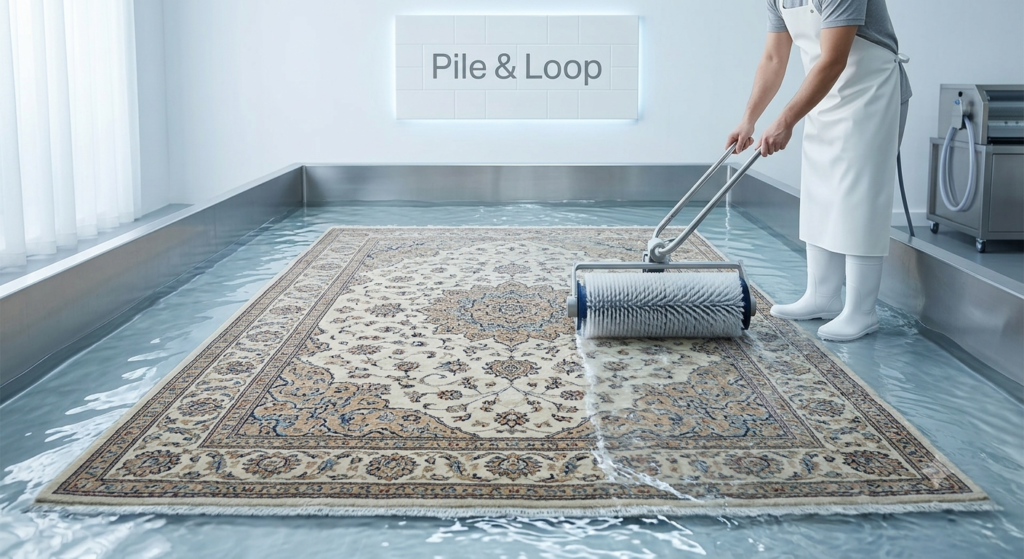
A few signs tell you it is time to call a professional instead of cleaning it yourself. If your rug still looks dull or flat even after regular vacuuming, has a smell that will not go away, has stains that will not budge, or feels like it has dirt deep down in the pile these are all good signs it’s time.
As a general rule, most rugs should get a full professional clean about every twelve to eighteen months. Rugs in busy parts of the house, or in homes with pets, kids, or allergies, may need it more often closer to every six to twelve months. Delicate rugs like hand knotted wool or silk can sometimes go longer between cleanings. But when they do need cleaning, make sure it is done by someone who knows how to handle those materials, since the wrong method can shrink the rug, make the colors bleed, or damage the base.
Professional cleaning has clear benefits over doing it yourself. It removes dirt and grit buried deep in the pile that a vacuum can not reach. It uses methods that match the rug’s exact fiber. And it can add years to your rug’s life compared to just cleaning the surface.
Common Rug Care Mistakes to Avoid
Most rug problems come down to the same few mistakes, made over and over:
Using too much water
Extra water can soak into the backing and cause mildew, smell, or a weak base especially in natural fiber rugs.
Scrubbing stains hard
This pushes the stain deeper into the fibers and can fray or flatten the pile.
Using the wrong cleaning products
A product that is fine on one fiber can discolor or weaken another.
Skipping the care instructions
These are written for that specific rug’s materials and dyes. Skipping them is one of the most common ways people damage a rug.
Waiting too long to clean up a spill
The longer it sits, the more likely it sets in for good.
Using the wrong vacuum settings
A beater bar on a delicate rug, or too much suction, can wreck the fibers and fringe.
Drying rugs the wrong way
A damp rug left on the floor especially on hardwood, or with no airflow underneath traps moisture and can cause mildew or discoloration.
Pile & Loop’s Rug Care Guidance
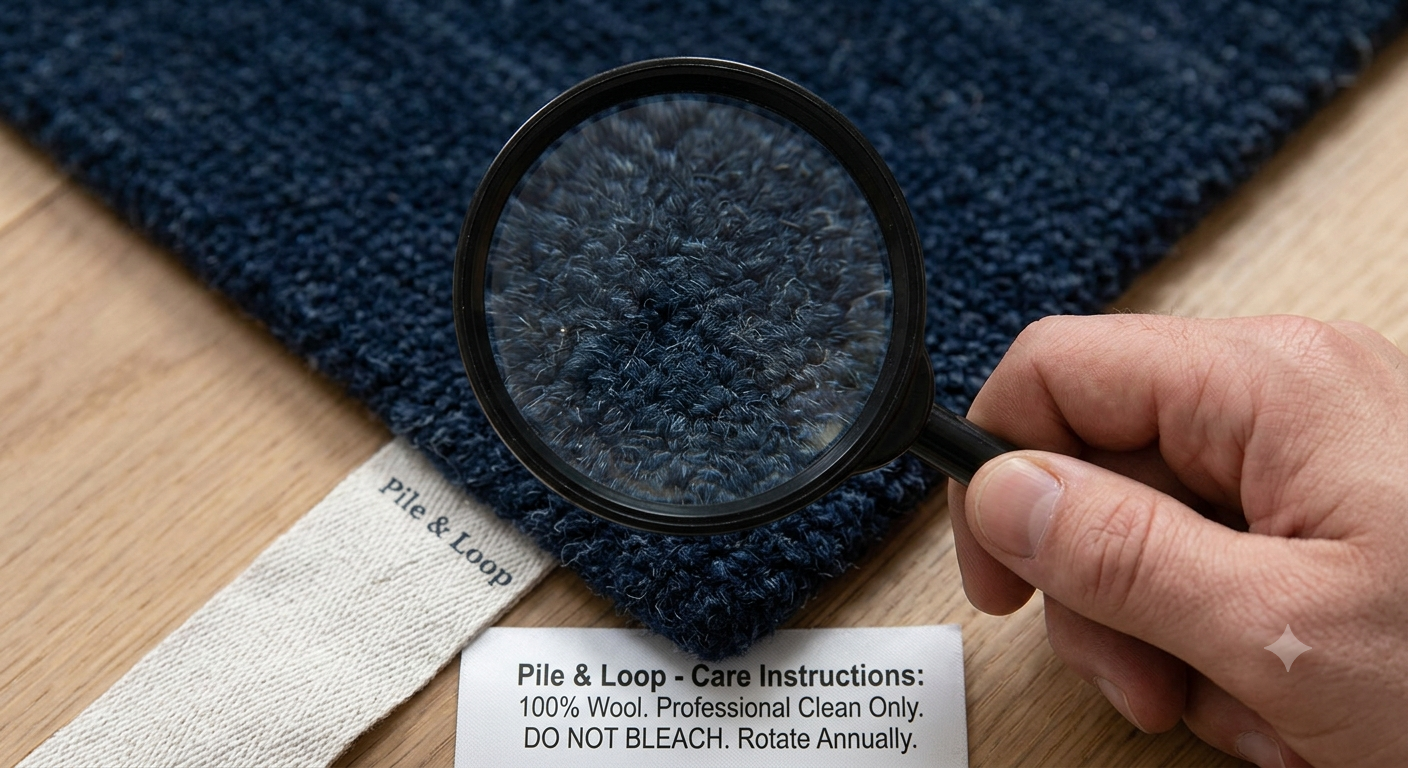
Rugs vary a lot depending on how they are made and what they are made of. Because of this, the best place to get care advice is straight from the maker. For a rug from Pile & Loop, that means following the official care instructions that come with your rug. Don’t rely only on general tips found online including the tips in this guide. They are a good starting point, but they are not a replacement for instructions written for your exact rug.
Conclusion
Taking good care of a rug does not take much effort. It mostly comes down to a few simple things: know what it is made of, keep up a light routine, vacuum with the right settings, and act fast and gently when something spills. Get these basics right, and your rug can stay looking good for years longer than one that is left on its own.
Always think about the material first when you are deciding how to clean or treat your rug. What works on one fiber can ruin another. And if you are ever unsure whether a cleaning method is safe, check first before trying it especially for a rug that means a lot to you or cost a good amount.
If you have a custom rug from Pile & Loop and you have a question, the safest thing to do is simple: reach out to them directly for advice made for your exact rug.
FAQs
How often should I vacuum my rug?
It depends on how much people walk on it and what it’s made of. Rugs in quiet rooms usually just need vacuuming once a week. Busy spots often need it two to three times a week. Delicate rugs like silk need a lighter touch vacuum less often, and use suction only.
Can I use the same cleaner on every rug?
No. A cleaner that is safe on synthetic fibers can discolor or damage natural fibers like wool or silk. Check what your rug is made of, and always test any product on a hidden spot first.
How do I remove stains without damaging my rug?
Blot the stain instead of rubbing or scrubbing it, and work from the outside of the stain toward the middle. Act as quickly as you can after a spill, test any cleaning product on a hidden spot first, and check your rug’s care instructions before using anything beyond gentle blotting. If the stain does not lift easily, it is best to get advice from a professional rather than experimenting with home remedies.
When should I get my rug professionally cleaned?
Most rugs do well with a professional clean every twelve to eighteen months. Homes with pets, kids, or a lot of foot traffic might need it closer to every six to twelve months. A smell that will not go away, a dull look, or stains that will not lift are all signs it is time for professional cleaning.
How can I make my rug last longer?
Vacuum regularly with the right settings, rotate the rug now and then, keep it out of constant direct sunlight and away from too much water, clean up spills right away, and get it professionally cleaned on a reasonable schedule.
Choosing new carpet or a rug for your home sounds simple enough until you run into technical terms like loop pile and cut pile. If you have ever gone shopping for a new carpet or rug, you may have wondered in the store thinking about, “which one do I actually need?”
Don’t worry, you are not alone. This is one of the most common questions people ask when picking a carpet for their home or office. The truth is, both loop pile and cut pile can work really well, but each tends to suit different rooms and different lifestyles. In this blog, we will break it all down, so by the end, you will know exactly which one is right for your space.
What Is Pile?
Before we compare the two, let’s quickly understand what “pile” even means. When carpet is made, yarn is pulled through a backing material to create the surface you walk on. This surface, the part you actually see and feel under your feet is called the pile. How that yarn is finished (left as a loop, or cut open) is what decides whether you end up with a loop pile carpet or a cut pile carpet.
What Is a Cut Pile Carpet?
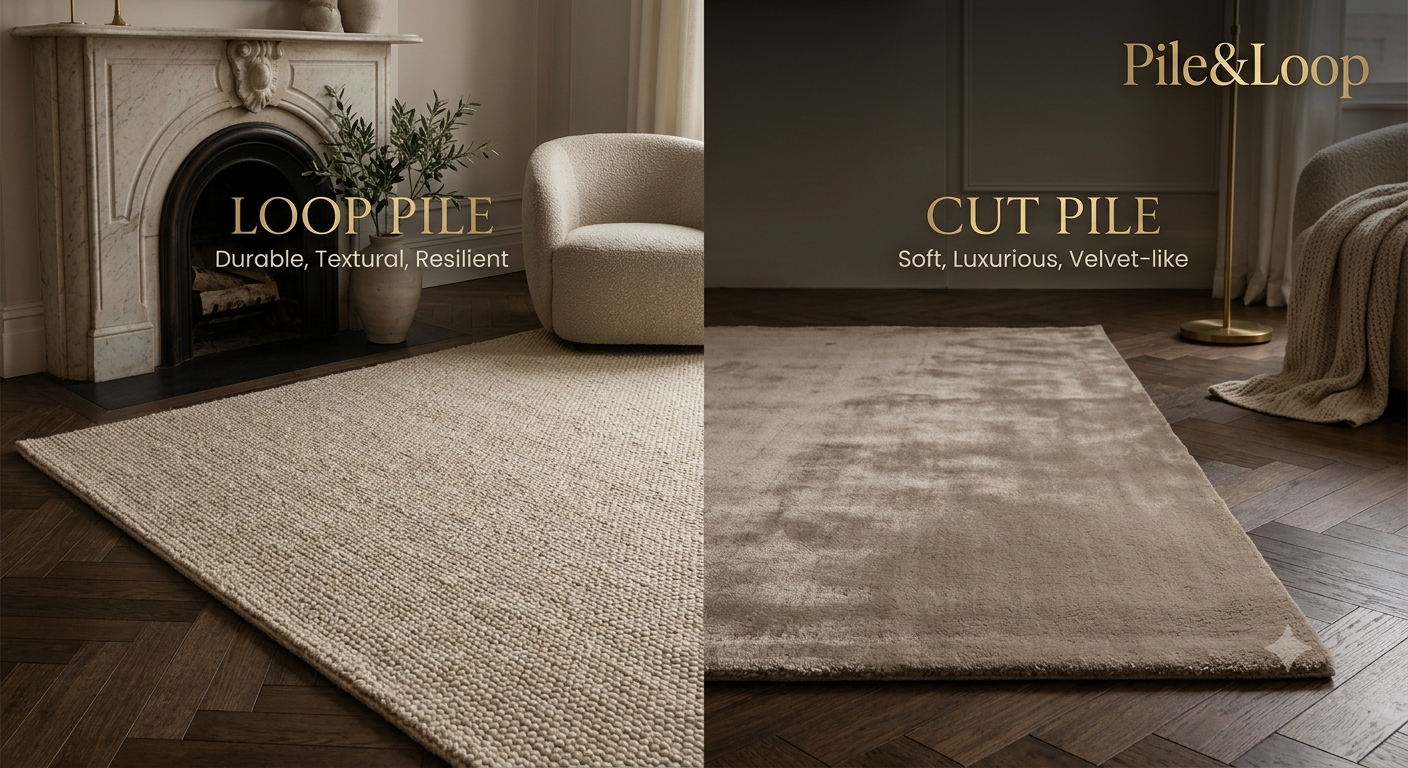
Cut pile carpet is made by cutting the tips of the yarn loops, so the fibers stand straight up instead of staying looped. This is what gives cut pile carpets that soft, plush, “sink your feet into it” kind of feel. Think of the carpet you see in a cozy bedroom or a fancy living room, it’s a cut pile.
There are actually a few types of cut pile carpets:
• Plush (Velvet):
Smooth, soft, and even. Feels luxurious but shows footprints and vacuum marks easily.
• Saxony:
Similar to plush but with slightly longer fibers, giving a soft, elegant look.
• Frieze:
It has tightly twisted fibers, giving it a curly, casual texture. This twist generally helps it resist matting a bit better than plush or Saxony, though quality and fiber type still play a big role.
Why do people love cut pile?
• Super soft and comfortable underfoot.
• Looks elegant and cozy.
• Comes in tons of colors, styles, and textures.
• Great for bedrooms, living rooms, and other low-to-medium traffic spaces.
Where does it fall short?
• Can show footprints, vacuum lines, and furniture marks more visibly.
• May flatten or mat down faster in busier areas, especially with lower-quality fibers.
• Needs more frequent vacuuming to keep it looking fresh.
What Is a Loop Pile Rug and Should I Buy One?
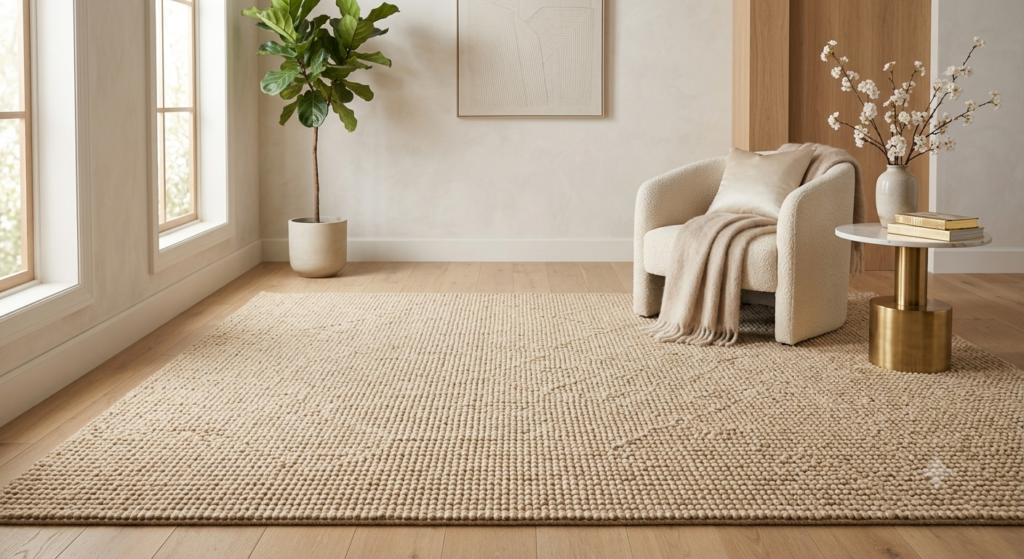
A loop pile rug is made in a completely different way. Instead of cutting the yarn, the loops are left exactly as they are uncut, from the backing all the way to the surface. This creates a firmer, more structured texture compared to the soft fluffiness of cut pile.
A very well known example of loop pile is Berber carpet, which has that classic low, nubby texture with little flecks of color mixed in. Loop pile is commonly made from fibers such as nylon, wool, or olefin (also called polypropylene) each with its own balance of durability, cost, and feel. You may also come across “sisal look” loop styles, which are usually synthetic carpets designed to mimic the appearance of natural sisal.
So, should you buy one? Here’s the honest answer: It depends on what you’re looking for. Loop pile is generally considered a durable, practical option. It tends to resist crushing and matting reasonably well, actual durability still depends on the specific fiber used, how tightly it is woven, and the overall build quality, not just the fact that it is a loop pile, after something heavy sits on it or someone walks over it repeatedly. However, if what you are really craving is that soft, sink-in feeling under your bare feet, loop pile might feel a little firmer and less cozy than you would like. Loop pile can be somewhat more prone to snagging if you have pets with sharp claws. Loop pile is the practical, hardworking choice. Cut pile is the comfort first, luxury choice. Your decision really comes down to what matters more to you and for that particular room.
Are Loop Pile Rugs Good for High Traffic Areas?
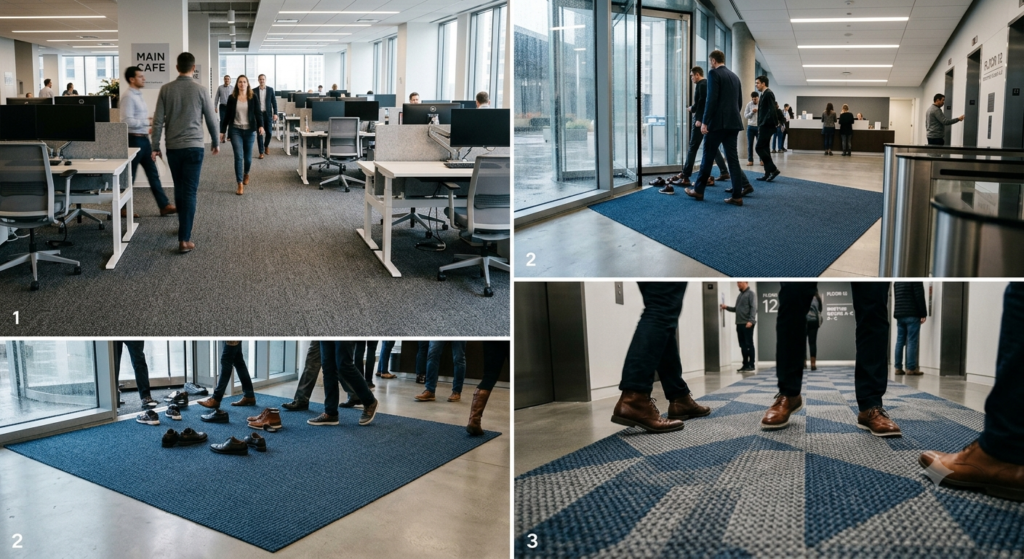
Generally, yes this is one of the areas where loop pile tends to perform well. High traffic areas like hallways, entryways, staircases, family rooms, offices, and playrooms go through a lot of wear every single day. People walking back and forth, kids running around, pets pacing, all of this puts a lot of stress on carpet fibers. Because loop pile carpet isn’t cut, the fibers stay more tightly locked into the backing, which generally makes them more resistant to crushing, matting, and flattening compared to softer cut pile styles. Despite that, how well a specific loop pile carpet holds up will still depend on factors like the fiber type, loop density, and overall quality, a poorly made loop pile can still wear out faster than a well-made cut pile.
This is exactly why you will often see loop pile carpets in:
• Offices and commercial spaces.
• Family rooms and playrooms.
• Hallways and staircases.
• Homes with pets and kids.
Cut Pile vs Loop Pile: A Quick Difference
Feel underfoot
• cut Pile: Soft, plush, cozy.
• Loop Pile: Firmer, more structured.
Durability
• Cut Pile: Moderate ( varies by type).
• Loop Pile: Often more resistant to crushing, but still depends on fiber and build.
Best for
• Cut Pile: Bedrooms, living rooms.
• Loop Pile: Hallways, offices, high traffic areas.
Shows footprints/vacuum marks
• Cut Pile: Yes, more visible.
• Loop Pile: Tends to bounce back over time.
Pet friendly
• Cut Pile: Generally fine.
• Loop Pile: Often a good fit, but watch for snagging with sharp claws.
So, Which One Should You Choose?
The simplest way to decide: think about how the room is actually used:
• If it is a bedroom, a formal living room, or any space where comfort and looks matter most, and it doesn’t get a ton of daily foot traffic, cut pile is often a good fit.
• If it is a hallway, staircase, family room, home office, or any space that deals with constant footsteps, kids, or pets, loop pile is often worth considering.
And if you really cannot decide, there is actually a third option many people don’t know about: cut loop (sculpted) carpet, which blends both styles together. It uses cut fibers and looped fibers side by side to create patterns, giving you a bit of both worlds though it is usually best suited for medium or low traffic rooms, since the cut sections can wear down a bit faster than the looped ones.
Looking to see these options? At Pile&Loop, you can browse a range of rug styles and textures, and our team is happy to help you think through what might work best for your specific space and lifestyle. At the end of the day, there’s no single “best” option” only the option that is best for your space, your lifestyle, and your household.
FAQs
What is a loop pile rug and should I buy one?
A loop pile rug is made from yarn that is looped and left uncut, giving it a firmer, textured surface. It is often a good option if you want something that generally holds up well over time and does not show footprints or vacuum lines as easily. It may feel less soft than cut pile, so it comes down to whether durability or plushness matters more to you.
Are loop pile rugs good for high traffic areas?
Generally, loop pile rugs are one of the best choices for high traffic areas. Their tightly looped construction resists crushing and matting, so they continue to look good even in busy spaces like hallways, offices, and family rooms. The only thing to watch out for is pets with sharp claws, which can occasionally snag a loop.
Is cut pile carpet more expensive than loop pile?
Not necessarily. Price mostly depends on the material, brand, and overall quality rather than whether it’s cut or loop pile. That said, loop pile carpets are sometimes slightly more budget friendly on average.
Can I use loop pile carpet in a bedroom?
Yes, though many people lean toward cut pile in bedrooms for its softer feel. It really comes down to personal preference.
Research Resources
Source Title
Cut Pile Vs Loop Pile Carpet: What Are The Differences?
Size your rug with your chair’s full roll radius in mind, not just your desk footprint
A floor rug and a keyboard rug solve different problems
Low pile rugs are normally easier to roll up and maintain than high pile rugs.
A regular cleaning routine helps a gaming rug hold up over time
Custom sizing and personalization are worth asking about if you want the floor and desk to match your setup
You’ve dialed in your monitor, your chair, your lighting. The floor and desk surface are usually the last things anyone thinks about — and the first things that start showing wear after months of rolling, spinning, and snack breaks.
Here’s how to think through pile height, sizing, durability, and cleaning, plus where floor rugs and keyboard rugs fit differently into a setup.
The best rug for a gaming setup may use a floor rug for the chair area and a keyboard rug to add a soft, personalised feature directly to the desk.
Size: Think About the Roll, Not Just the Desk
The most common sizing mistake is measuring the desk footprint and stopping there. Your chair moves — forward to reach the keyboard, back to lean, side to side to grab something off a shelf. If the rug does not fully cover the area, then the chair may grab the edge of the rug or roll onto bare flooring.
An easy way to understand this is to sit down in your chair and get into the postures you normally do during your sessions and mark the furthest points in each direction.
As general guidance (not an exact rule — measure your own setup, since chairs and desks vary), rug and furniture retailers commonly suggest:
Extending the rug roughly 24–30 inches behind a desk chair so the back casters stay on the rug when you lean back or push away from the desk
Leaving about 18–24 inches of rug beyond the desk footprint on each side
Single-desk setup: a rug that extends comfortably past your chair’s forward and backward roll is usually enough
L-desk or multi-monitor setup: you’re likely covering more floor space, so a larger area rug (rather than a compact mat) tends to work better
Shared or streaming-corner setup: size for the full visible area, since this rug is also part of what’s on camera
For the desk itself, a keyboard rug only needs to cover the area under your keyboard and mouse, so sizing here is about desk fit rather than chair movement.
Comfort: What You Feel Under Bare Feet vs. Under Wheels
Thick-pile rugs may be cozy to walk on, but they will cause chair wheels to stick and will flatten out the rug.
If you work or play around while sitting on a rolling chair, then smooth rugs are ideal.
Durability: Designed For Repeated Use, Not Just Walking On
A living room rug deals with people walking across it a few times a day. A rug under a rolling chair deals with the same handful of square feet getting rolled over and shifted against, repeatedly, over a long period. This type of wear differs from foot traffic use. Select a rug that is suitable for high-traffic and rolling chairs.
Questions to ask before purchase:
Is the pile dense enough to prevent snagging of rolling chairs?
Is it backed with a non-slip surface to avoid slipping on hardwood floors?
Is it described as appropriate for high traffic or rolling chairs?
Cleaning: A Routine, Not a Project
A regular cleaning routine helps any rug — gaming setup or otherwise — hold up over time.
General guidance from rug and carpet care resources includes:
Weekly (or 2-3 times a week in frequently used areas): Vacuum using suction or low-pile settings to remove dust before it settles into the rug’s fibers.
When necessary: clean stains using a damp cloth, but do not rub them.
Periodically: rotate the rug so wear and any fading don’t concentrate in one spot.
Every 12 to 18 months: Consider having a professional cleaning for the tough stains.
Always check the rug’s tag because certain fibers require a specific cleaning process.
Setup Style: Matching the Rug to the Room
Having all this in mind, you will be able to concentrate on the design aspects.
RGB/neon colors: the perfect combination for a dark carpet (charcoal, black, dark blue).
Minimalistic designs: a simple and non-patterned rug will help you avoid distractions.
Filming locations: choose a carpet that will look especially good in camera.
Room with a theme: a carpet with a design sets the theme of the room without wall posters.
Floor Rugs vs. Keyboard Rugs: Two Different Jobs
A floor rug covers the area under your chair and desk. When choosing one for a gaming setup, look for a low-to-medium pile, a construction described as suitable for high-traffic or rolling-chair use, and non-slip backing, whichever brand or collection you’re shopping from.
A keyboard rug sits directly on your desk under your keyboard and mouse. Pile & Loop’s keyboard rugs collection — which the brand also markets as gaming desk rugs and gaming setup rugs — includes designs made using customer-owned or authorized artwork, so you can personalize the desk with imagery you have the rights to use.
If you’re building a setup from the ground up, pairing a neutral floor rug with a personalized keyboard rug lets you add personality on the desk without the whole room feeling overdone.
Custom Gaming Setup Rug Options
This being a personal gaming setup, customized options become important. In case you wish for your rug to blend in with your setup, ask the manufacturers if they can provide:
Personalization using artwork, a gamer tag, initials, or a logo you own the rights to
Nonstandard sizes apart from standard ones
Colors which coordinate with your existing lighting (a perfect match cannot always be guaranteed between a digital representation and an actual, handmade or dyed product, so make sure you know what the seller can do)
Bulk or matching orders, useful for streamers outfitting a studio or teams ordering matching setups
Pile & Loop offers custom keyboard rug options — reach out via their contact page to ask what’s currently available for personalization on the desk side.
FAQ’s
What size rug do I need for a gaming chair?
There’s no single fixed number, but a common starting point is to size the rug so the chair’s back casters stay on it even when you lean back or push away from the desk — often cited as roughly 24-30 inches of rug behind the chair. Test it against your own chair, since sizes vary.
Do gaming rugs need non-slip backing?
An ordinary area rug can be used to place your gaming spot because of its non-slip surface that prevents it from sliding while you are playing on it.
Can a regular area rug work for a gaming setup?
Often, yes — as long as the pile height and construction suit high-traffic, rolling-chair use. A rug meant for light foot traffic may wear out faster under constant chair movement.
What’s the difference between a gaming rug and a keyboard rug?
A gaming rug is placed beneath the chair and table, while the keyboard rug is placed on the desk, below the keyboard and mouse.
Bottom Line
The perfect gaming rug is based on your chair’s freedom of movement, going for a low to medium pile carpet that is suited for heavy foot traffic and rolling chair movement, together with easy maintenance.
Ready to find the right one for your desk? Browse Pile & Loop’s keyboard rugs, or get in touch to ask about custom options.