
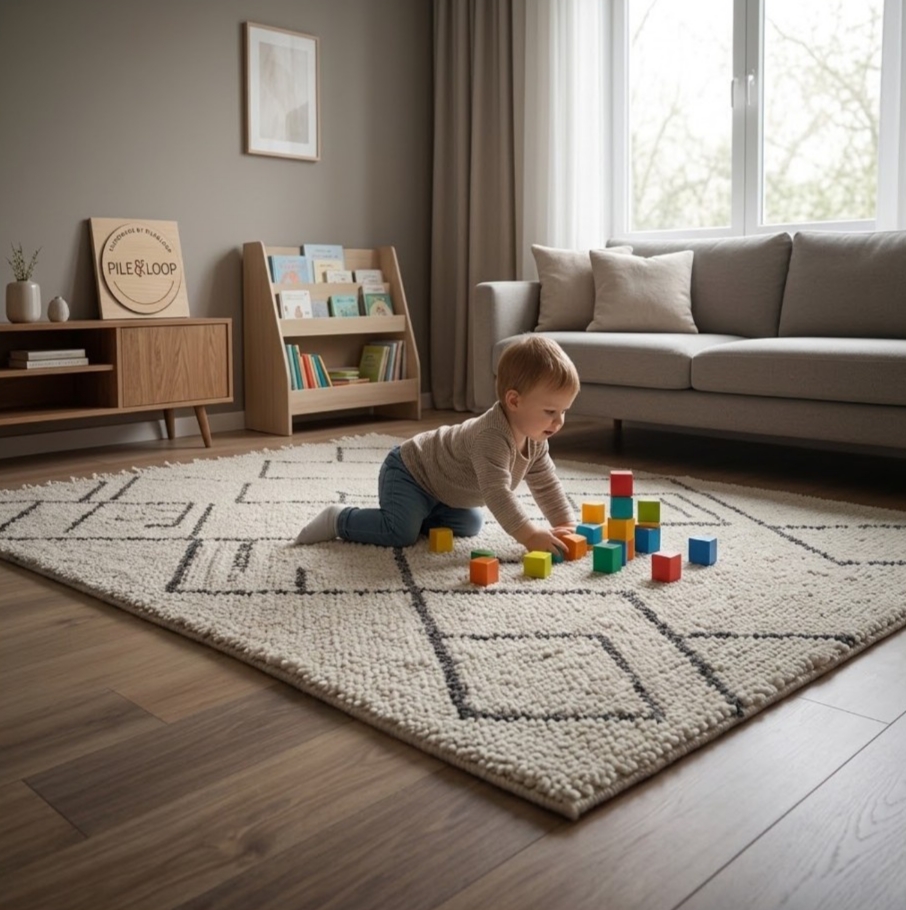
Kids spend a huge amount of their day down on the floor. Whether they are crawling as toddlers, building tall block towers, spreading out art supplies, or sitting down to read, the floor is usually center stage. Hardwood or tile floors can feel cold and uncomfortable after a while, which is why a good rug makes such a big difference.
A well chosen rug turns a hard surface into a cozy, welcoming spot to play. It also adds a splash of color and brings out your child’s personality in the room. But with so many choices out there, picking one that can handle spills, heavy foot traffic, and endless playtime can feel overwhelming. This guide breaks down everything you need to know to pick a rug that is both practical for you and fun for your child.
What Should Parents Look for in a Rug for a Kids’ Play Area?
Before buying the first pretty rug you see online, it helps to pause and think about how the room actually gets used day-to-day. A play area rug needs to do a lot more work than a standard living room rug. Here are the main things to keep in mind:
The size of the play area: A rug that is too small looks lost, while one that is too large can make a room feel crowded or get tucked awkwardly under furniture.
The rug’s material and construction: Children have sensitive skin, and they drop things constantly. You need a material that feels soft but can take a beating.
How the rug handles everyday use: Play spaces see heavy action. Look for materials that do not shed heavily or wear out quickly under sliding toys and busy feet.
Your child’s age and activities: A toddler needs a soft, cushioned surface for learning to walk and tumble. An older child might need a flatter surface so their toy cars and building blocks stay upright.
Overall room style: The rug should fit with the rest of your decor, whether you prefer bright, energetic colors or a quiet, neutral look.
Choosing the Right Rug Material for a Child’s Play Space
Different materials behave very differently when it comes to durability, softness, and cleaning. Checking the specific fiber before buying helps set realistic expectations for care.
Wool
What to expect: Natural, soft, durable, and naturally stain resistant.
Best for: Long term use, cozy spaces, natural fiber preference
Cotton
What to expect: Lightweight, soft, and comfortable. Often washable, though smaller ones may slide without a grip pad.
Best for: Casual play areas, budget friendly setups, quick cleaning.
Synthetic (Polyester, Nylon, Polypropylene)
What to expect: stain resistant, and easy to wipe down. Can feel less soft over time depending on quality.
Best for: High traffic zones, art and craft spaces, heavy spill risk
Why Does Material Matter?
The right material dictates how much time you will spend cleaning and how long the rug will last. Kids spill drinks, drop snacks, and track dirt around. Choosing a material that matches your home routine saves you a lot of stress down the road.
Pile Height and Texture: What Works Well for Play Areas?
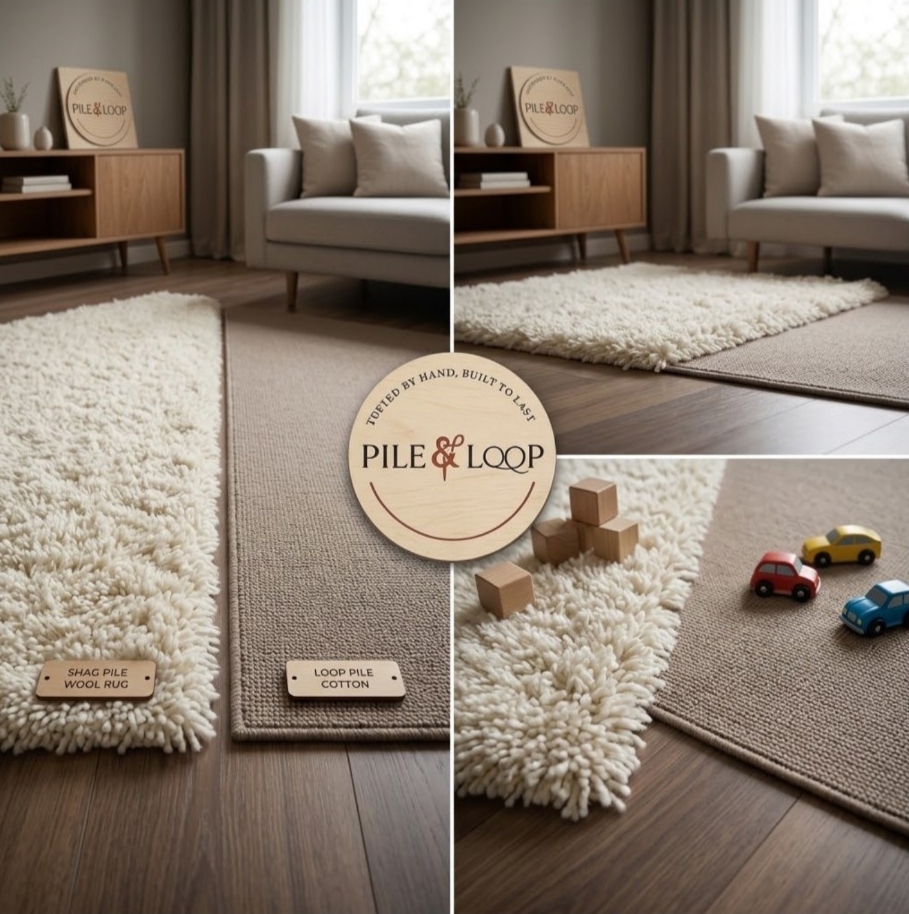
- Low Pile Rugs: These have short fibers and a flatter surface. They are generally the most practical choice for active play spaces. Toy cars roll smoothly over them, block towers do not tip as easily, and crumbs sit on top rather than sinking deep into the threads, making vacuuming quick and easy.
- High Pile or Plush Rugs: These are extra soft and cozy underfoot, making them wonderful for reading nooks or younger babies who spend a lot of time lying down. However, tiny toy pieces can get lost in thick pile fibers, and deep cleaning takes more effort.
- Loop vs. Cut Pile: Loop rugs (like Berber) are durable, but claws from pets or sharp toy edges can pull the loops. Cut pile rugs have open fiber ends, which generally offer a softer feel and avoid snagging.
Choosing the Right Rug Size for Your Child’s Play Area
Getting the dimensions right helps define the play space and keeps the room balanced.
- Measure the floor space: Use a tape measure to mark out the open floor space where your child actually plays. You can use painter’s tape on the floor to visualize different sizes.
- Leave a border: Try to leave bare floor between the edges of the rug and the walls. This keeps the room from looking cramped.
- Define the zone: If the play area is part of a larger bedroom or family room, a dedicated rug acts as a visual boundary that says, “This is where the toys live.”
- Work with furniture: Decide whether furniture legs will sit on or off the rug. Placing the front legs of a storage bin or child’s table on the rug helps hold it securely in place.
- Think about movement: Make sure the rug size gives your child enough room to roll around or build without constantly running off the edge onto cold flooring.
Colors and Designs That Make Play Areas More Fun
The pattern and color you choose can completely transform the mood of the room.
- Bright Colors: Vibrant yellows, blues, and reds bring energy to a room and are great at disguising minor wear and everyday spots.
- Soft and Neutral Colors: Muted tones like sage, soft gray, or cream create a calming, peaceful environment that blends smoothly with modern home styles.
- Animal Designs: Friendly animal motifs spark imagination and give the room a playful, charming touch.
- Educational Themes: Rugs featuring maps, alphabets, or numbers combine playtime with subtle learning opportunities.
- Shapes and Patterns: Geometric patterns, stripes, or polka dots add modern style without feeling overly juvenile as your child grows.
- Personalized Designs: Custom options let you tailor the colors and style to match your child’s exact interests or room layout.
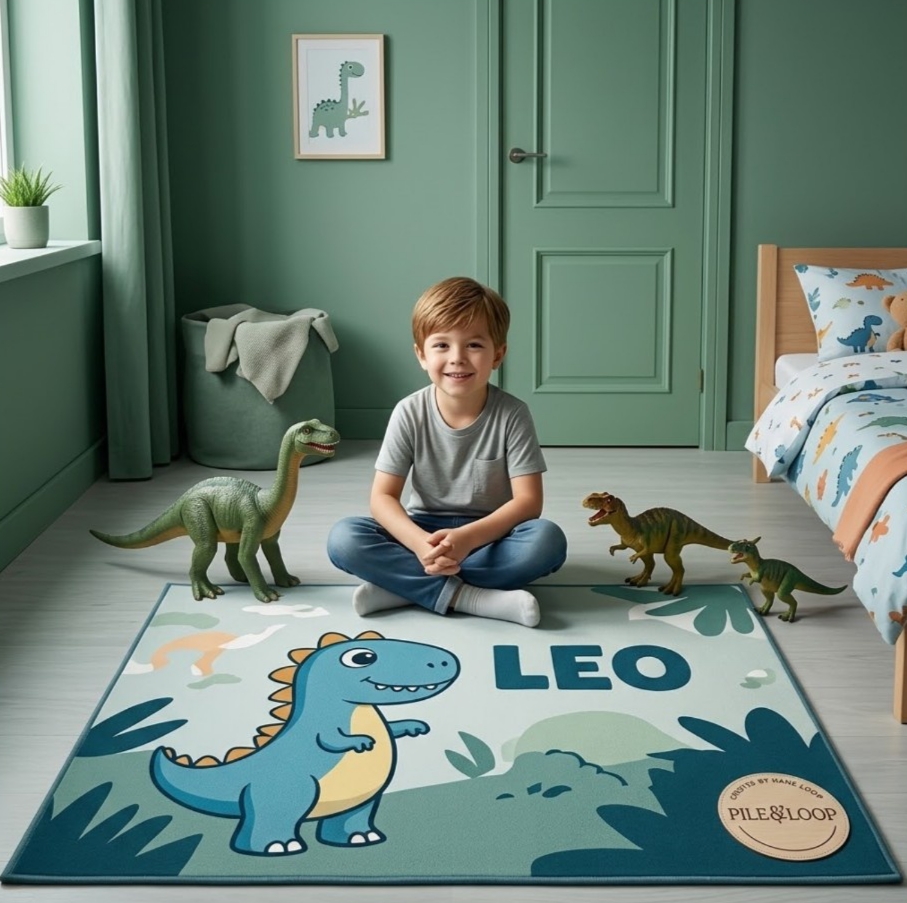
Custom Character Rugs: Turn Your Child’s Favorite into a Play Space
A custom rug lets you build a space that feels deeply personal to your child’s passions. Rather than settling for off-the-shelf options, customized themes let their imagination run wild.
- Favorite Animals: From woodland creatures to sea life.
- Cartoon Inspired Themes: Bringing beloved story styles or playful motifs to life.
- Favorite Colors: Mixing preferred shades to match bedroom walls or curtains.
- Fantasy Themes: Castles, stars, space adventures, or magical forests.
- Cars and Vehicles: Play mats featuring roads, tracks, or transport designs.
- Sports Themes: Incorporating court lines, field patterns, or team-inspired colors.
Easy Care Habits for Rugs in Children’s Play Areas
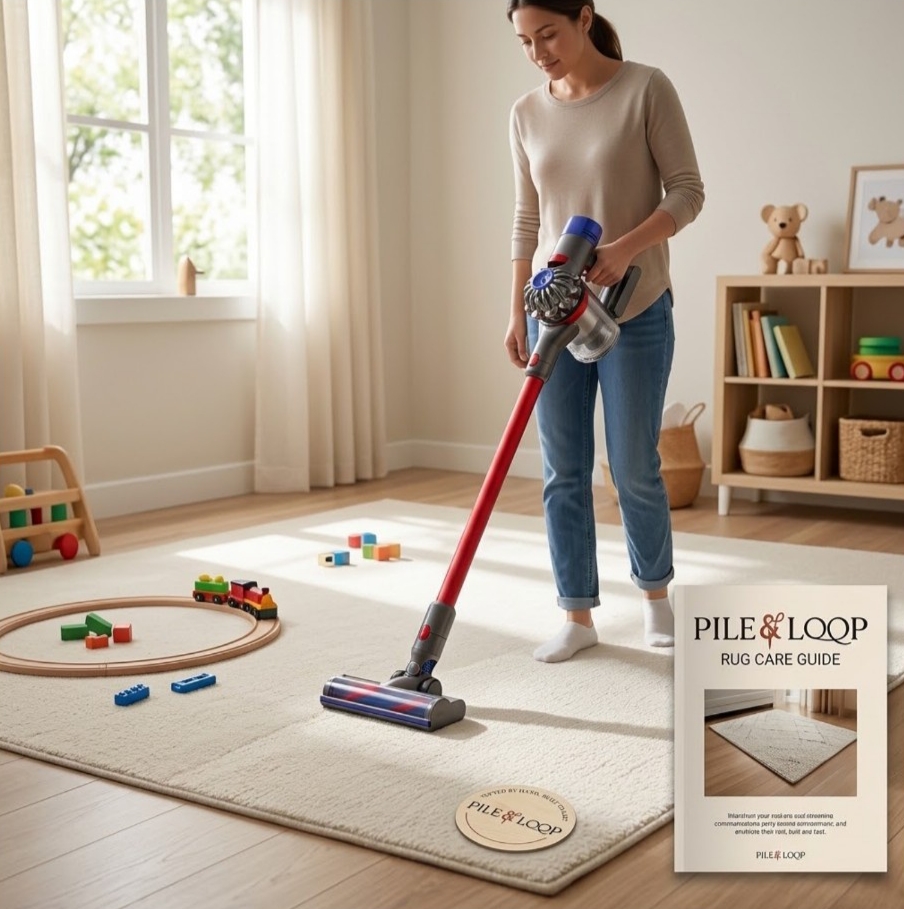
Keeping a play rug clean does not have to be a full-time job. A few simple routines help maintain it:
- Shake and Remove Loose Dirt: Give smaller rugs a quick shake outside once a week to knock out trapped crumbs and dust.
- Vacuum Regularly: Vacuum once or twice a week depending on use. Turn off the beater bar on delicate wool or long-pile rugs to protect the fibers.
Clean Spills Promptly: Blot (don’t rub) liquid spills right away with a clean cloth to stop stains from setting deep into the backing.
- Check Care Labels: Always read the manufacturer’s care tag before using spot cleaners, as harsh chemicals can strip colors or break down fibers.
- Use Professional Cleaning when Needed: For stubborn stains or deep annual freshening, consider professional cleaning services suited to your rug’s specific material.
How Pile & Loop Can Help You Create a Personalized Rug
When off-the-shelf rugs do not fit your specific vision or room dimensions, custom options offer a practical alternative. Pile & Loop focuses on helping you create customized pieces tailored for your personal spaces.Depending on your preference, Pile & Loop provides options to convert specific visual ideas or themes into a physical rug for your home. We focus on personalised details and give options to adapt colors, shapes, and patterns so the rug fits seamlessly into a child’s room.
Conclusion
Choosing a rug for a child’s play area is about finding a balance between comfort, practicality, size, maintenance, and design.Start by thinking about how your child uses the floor. Then consider the material, pile height, available space, and how much routine care you are comfortable doing. A rug that fits the child’s activities and the room may be easier to enjoy every day.
For parents who want something more personal, a custom rug can bring a child’s favorite interests into the room while allowing the design to be planned around the available space. With Pile & Loop custom rug services, parents can discuss their ideas and explore what may be suitable for their particular space and requirements.
FAQs
What type of rug is suitable for a children’s play area?
Low-pile synthetic or cotton rugs are often suitable choices for play spaces. They offer a smooth surface for rolling toys, are generally easy to clean, and handle everyday foot traffic well.
Are custom rugs a good option for children’s rooms?
Yes, custom rugs can be a practical option if you have an unusually shaped room, a specific color scheme to match, or if you want to feature a personalized theme that your child loves.
How often should I clean a rug in a children’s play area?
Vacuuming once or twice a week is usually enough for general maintenance. Spills should be blotted immediately, and a deeper clean can be done every 6 to 12 months as needed.
Can Pile & Loop make a personalized rug for a child’s play area?
Pile & Loop offers custom rug options where you can choose personalized designs, custom colors, and sizes suitable for children’s spaces and family homes.
Research Resources
- Source title
Playroom Rugs for Kids
- Publisher
Lahome.
https://lahomedecor.com/blogs/guide/playroom-rugs-for-kids?utm_source=chatgpt.com
- Information used
Comfort, safety, non-slip features, easy cleaning, durability, materials, pile height, and playroom sizing.
- Source title
Rug Pile Height Guide
- Publisher
Kapetto
https://kapettodesign.com/blog/rug-pile-height-guide/?utm_source=chatgpt.com
- Information used
Explanation of pile height and how different pile levels can affect rug performance, comfort, and maintenance.